
















Copyright: ©Author(s) 2026.
World J Hepatol. Nov 27, 2026; 18(11): 121224
Published online Nov 27, 2026. doi: 10.4254/wjh.121224
Published online Nov 27, 2026. doi: 10.4254/wjh.121224
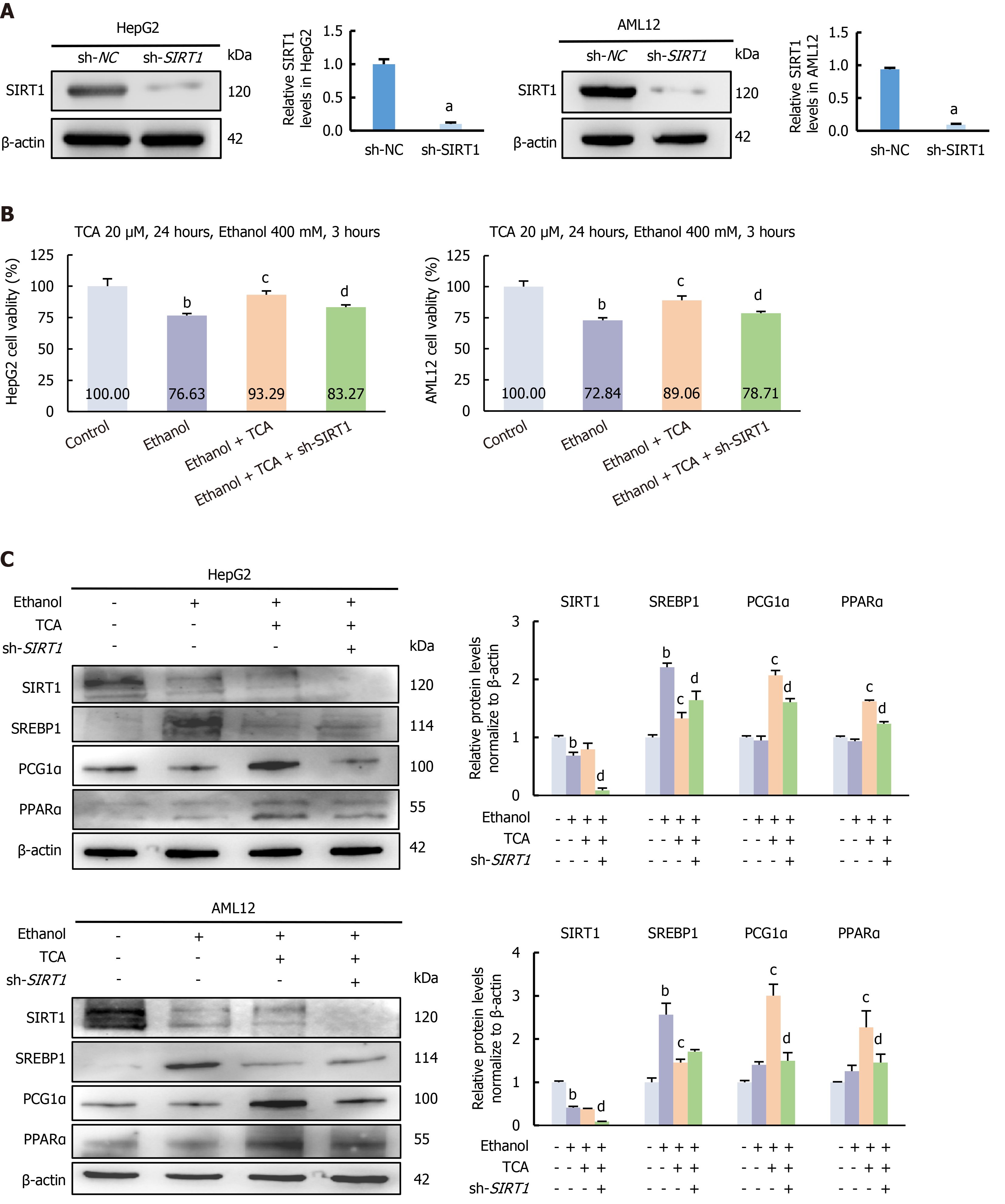
Figure 6 Sirtuin 1 depletion attenuated the hepatic protection effect of trans-cinnamaldehyde in vitro.
A: Protein levels of sirtuin 1 (SIRT1) in HepG2 and AML12 cells transfected with short hairpin RNA-negative control or SIRT1-targeting short hairpin RNA (sh-SIRT1) plasmids (n = 3/group); B: Cell viability of HepG2 and AML12 cells in each group detected by cell counting kit-8 assay; C: Protein levels of SIRT1, sterol regulatory element-binding protein 1, peroxisome proliferator-activated receptor γ coactivator 1α and peroxisome proliferator-activated receptor α in HepG2 and AML12 cells in each group (n = 3/group). aP < 0.05 compared with the short hairpin RNA-negative control group. bP < 0.05 vs the control group. cP < 0.05 the ethanol + trans-cinnamaldehyde group vs the ethanol group. dP < 0.05 the ethanol + trans-cinnamaldehyde + SIRT1-targeting short hairpin RNA group vs the ethanol + trans-cinnamaldehyde group. SIRT1: Sirtuin 1; sh-NC: Short hairpin RNA-negative control; sh-SIRT1: SIRT1-targeting short hairpin RNA; TCA: Trans-cinnamaldehyde; SREBP1: Sterol regulatory element-binding protein 1; PPAR: Peroxisome proliferator-activated receptor; PCG1α: Peroxisome proliferator-activated receptor γ coactivator 1α.
- Citation: Tien S, Deng BY, Pan XM, Yu HS, Zhou HX, Guo YW, Wu B. Trans-cinnamaldehyde alleviates hepatic steatosis and pyroptosis via SIRT1 activation in acute alcoholic liver injury. World J Hepatol 2026; 18(11): 121224
- URL: https://www.wjgnet.com/1948-5182/full/v18/i11/121224.htm
- DOI: https://dx.doi.org/10.4254/wjh.121224