
















Copyright: ©Author(s) 2026.
World J Hepatol. Nov 27, 2026; 18(11): 121224
Published online Nov 27, 2026. doi: 10.4254/wjh.121224
Published online Nov 27, 2026. doi: 10.4254/wjh.121224
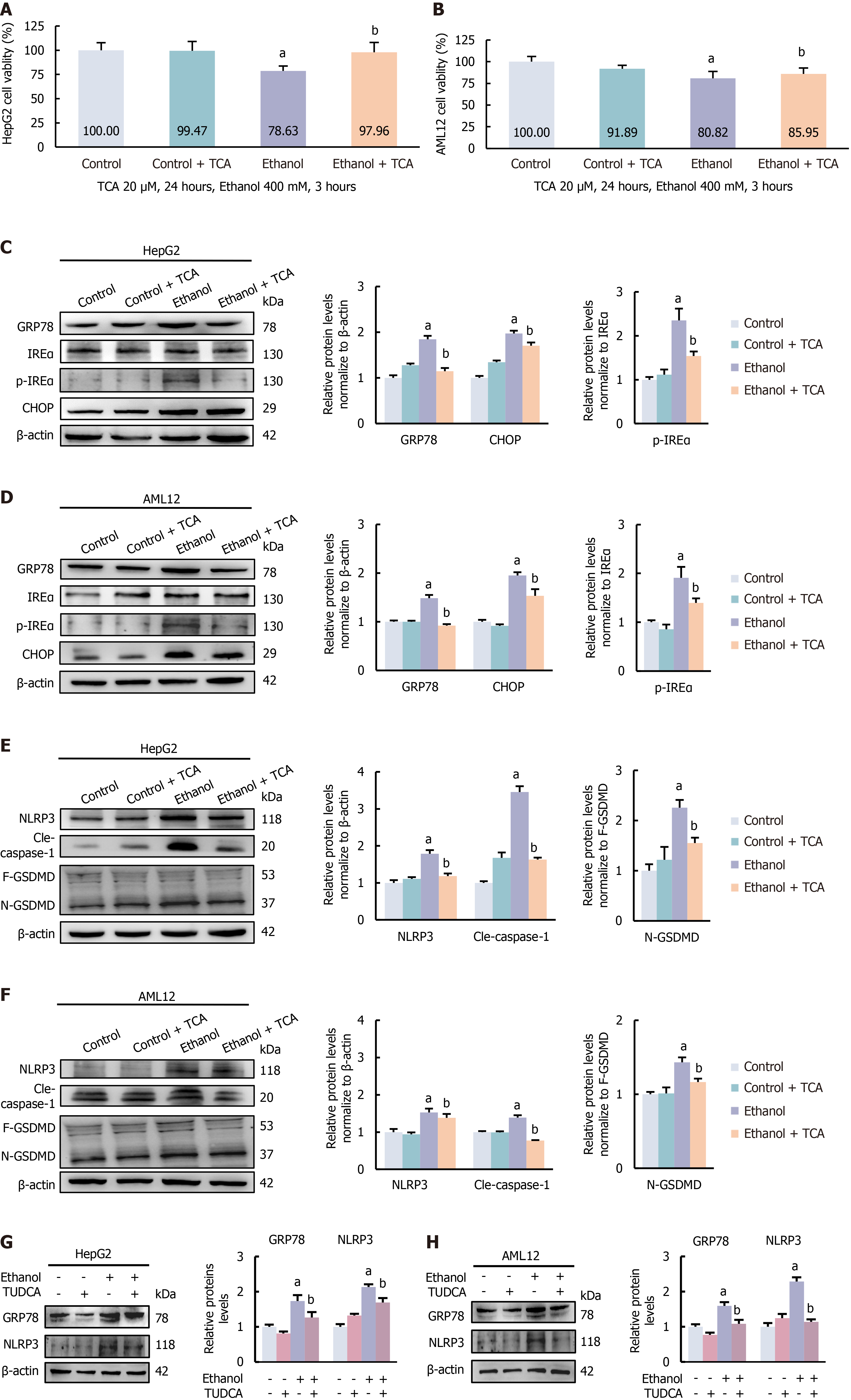
Figure 4 Trans-cinnamaldehyde alleviates ethanol-induced endoplasmic reticulum stress and pyroptosis in vitro.
A and B: Cell counting kit-8 assay for viability of HepG2 (A) and AML12 (B) cells treated with trans-cinnamaldehyde (TCA) followed by ethanol; C and D: Protein levels of endoplasmic reticulum (ER) stress-related proteins in HepG2 (C) and AML12 (D) cells treated with TCA followed by ethanol; E and F: Protein levels of pyroptosis-related proteins in HepG2 (E) and AML12 (F) cells treated with TCA followed by ethanol; G and H: Protein levels of glucose-regulated protein 78 and NOD-like receptor family pyrin domain containing 3 in HepG2 (G) and AML12 (H) cells treated with ER stress inhibitor tauroursodeoxycholic acid; n = 3/group. aP < 0.05 vs the control group. bP < 0.05 vs the ethanol group. GSDMD: Gasdermin D; TUDCA: Tauroursodeoxycholic acid; TCA: Trans-cinnamaldehyde; GRP78: Glucose-regulated protein 78; IRE1α: Inositol-requiring enzyme 1α; p-IRE1α: Phosphorylated inositol-requiring enzyme 1α; CHOP: C/EBP homologous protein; NLRP3: NOD-like receptor family pyrin domain containing 3; Cle-caspase-1: Cleaved cysteinyl aspartate specific proteinase-1.
- Citation: Tien S, Deng BY, Pan XM, Yu HS, Zhou HX, Guo YW, Wu B. Trans-cinnamaldehyde alleviates hepatic steatosis and pyroptosis via SIRT1 activation in acute alcoholic liver injury. World J Hepatol 2026; 18(11): 121224
- URL: https://www.wjgnet.com/1948-5182/full/v18/i11/121224.htm
- DOI: https://dx.doi.org/10.4254/wjh.121224