
















Copyright: ©Author(s) 2026.
World J Hepatol. Nov 27, 2026; 18(11): 121224
Published online Nov 27, 2026. doi: 10.4254/wjh.121224
Published online Nov 27, 2026. doi: 10.4254/wjh.121224
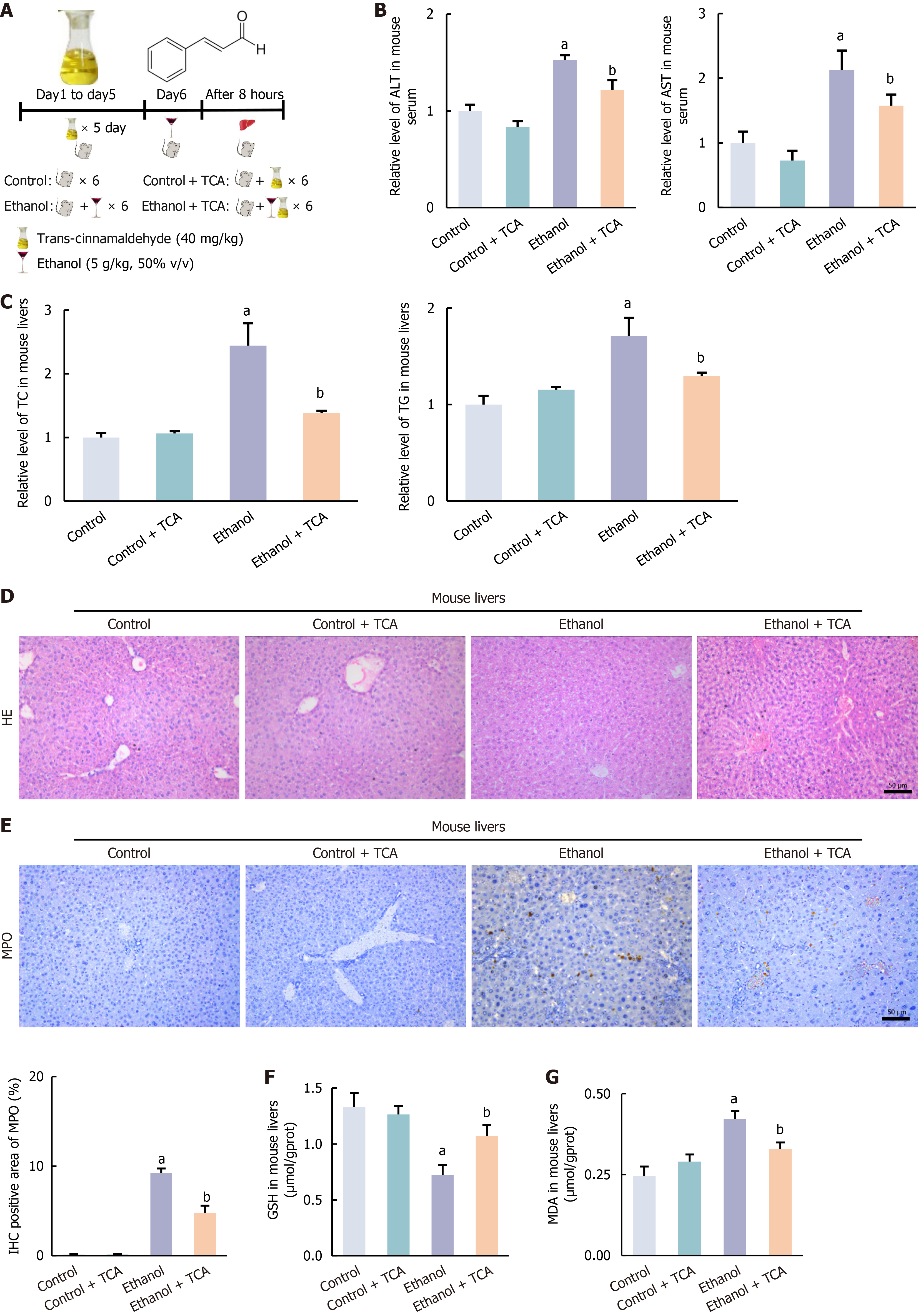
Figure 1 Trans-cinnamaldehyde alleviates ethanol-induced liver injury and oxidative stress in mice.
A: Physicochemical properties and molecular formula of trans-cinnamaldehyde, experimental timeline and group of acute ethanol-induced liver injury mice model; B: Relative serum alanine aminotransferase and aspartate aminotransferase levels in mouse; C: Relative level of total cholesterol and triglyceride levels in mouse liver; D: Representative hematoxylin and eosin-stained liver sections (scale bar: 50 μm); E: Myeloperoxidase immunohistochemistry staining and quantitative analysis in liver tissues (scale bar: 50 μm); F: Glutathione levels in mouse livers; G: Malondialdehyde levels in mouse livers; n = 6/group. aP < 0.05 vs the control group. bP < 0.05 vs the ethanol group. TCA: Trans-cinnamaldehyde; ALT: Alanine aminotransferase; AST: Aspartate aminotransferase; TC: Total cholesterol; TG: Triglyceride; MPO: Myeloperoxidase; HE: Hematoxylin and eosin; IHC: Immunohistochemistry; GSH: Glutathione; MDA: Malondialdehyde.
- Citation: Tien S, Deng BY, Pan XM, Yu HS, Zhou HX, Guo YW, Wu B. Trans-cinnamaldehyde alleviates hepatic steatosis and pyroptosis via SIRT1 activation in acute alcoholic liver injury. World J Hepatol 2026; 18(11): 121224
- URL: https://www.wjgnet.com/1948-5182/full/v18/i11/121224.htm
- DOI: https://dx.doi.org/10.4254/wjh.121224