
















Copyright: ©Author(s) 2026.
World J Hepatol. Oct 27, 2026; 18(10): 124709
Published online Oct 27, 2026. doi: 10.4254/wjh.124709
Published online Oct 27, 2026. doi: 10.4254/wjh.124709
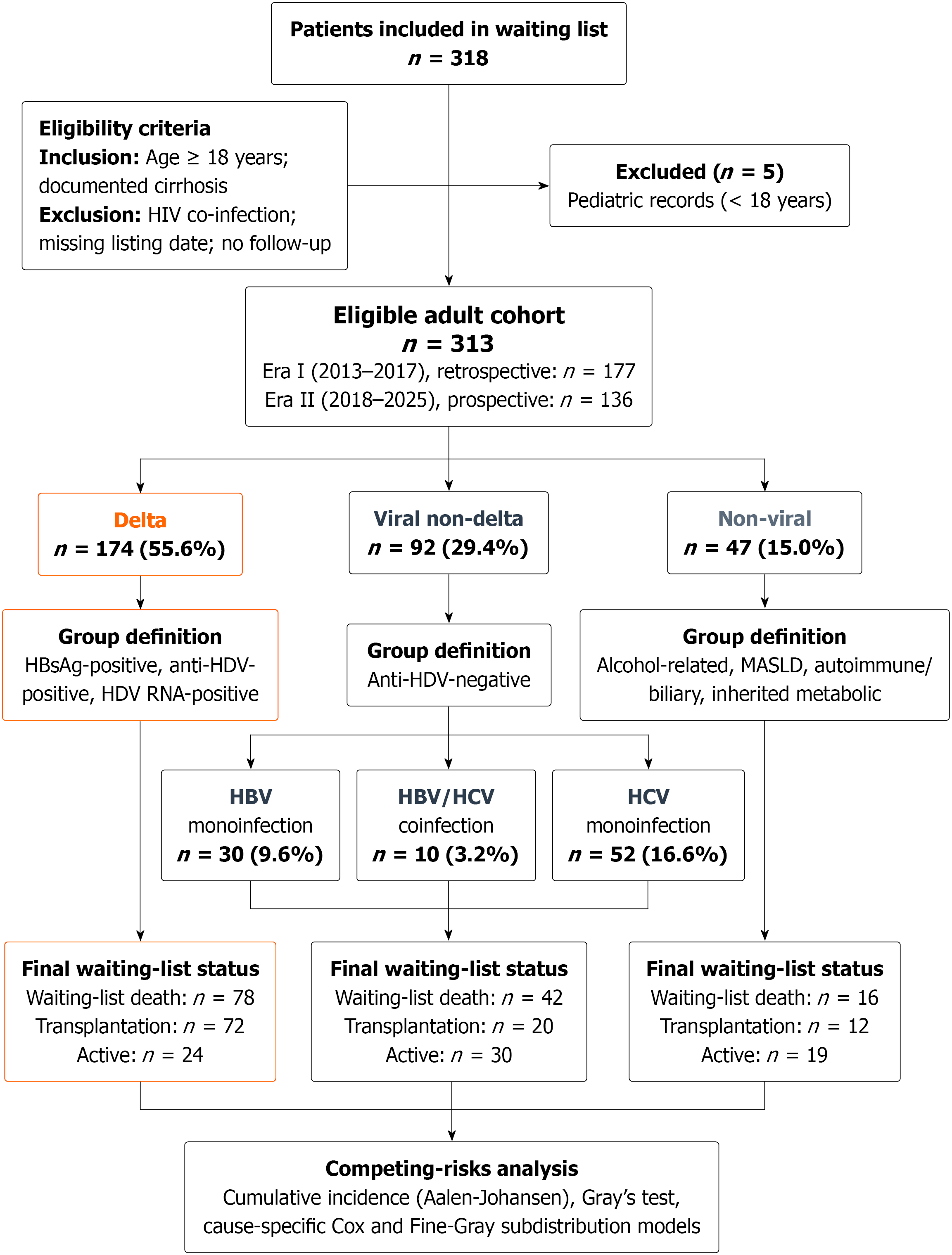
Figure 1 Flow diagram of the national liver transplant cohort.
Of 318 patients screened, five pediatric patients were excluded, resulting in a final study cohort of 313 adults. Patients were classified into three etiological groups: The delta group (anti- hepatitis delta virus (HDV) positive with detectable HDV RNA; n = 174, 55.6%), the non-delta viral group (n = 92, 29.4%), and the non-viral group (n = 47, 15.0%). The non-delta viral group included only anti-HDV-negative patients with hepatitis B virus (HBV) monoinfection (HBsAg positive with detectable HBV DNA; n = 30, 9.6%), HBV/hepatitis C virus (HCV) coinfection (n = 10, 3.2%), or HCV monoinfection (anti-HCV positive with detectable HCV RNA; n = 52, 16.6%). HCV: Hepatitis C virus; HBV: Hepatitis B virus.
- Citation: Peltec A, Buga D, Hotineanu A, Wedemeyer H. Impact of hepatitis delta virus infection on waiting list outcomes: A competing-risks analysis. World J Hepatol 2026; 18(10): 124709
- URL: https://www.wjgnet.com/1948-5182/full/v18/i10/124709.htm
- DOI: https://dx.doi.org/10.4254/wjh.124709