
















©The Author(s) 2026.
World J Hepatol. Jan 27, 2026; 18(1): 113896
Published online Jan 27, 2026. doi: 10.4254/wjh.v18.i1.113896
Published online Jan 27, 2026. doi: 10.4254/wjh.v18.i1.113896
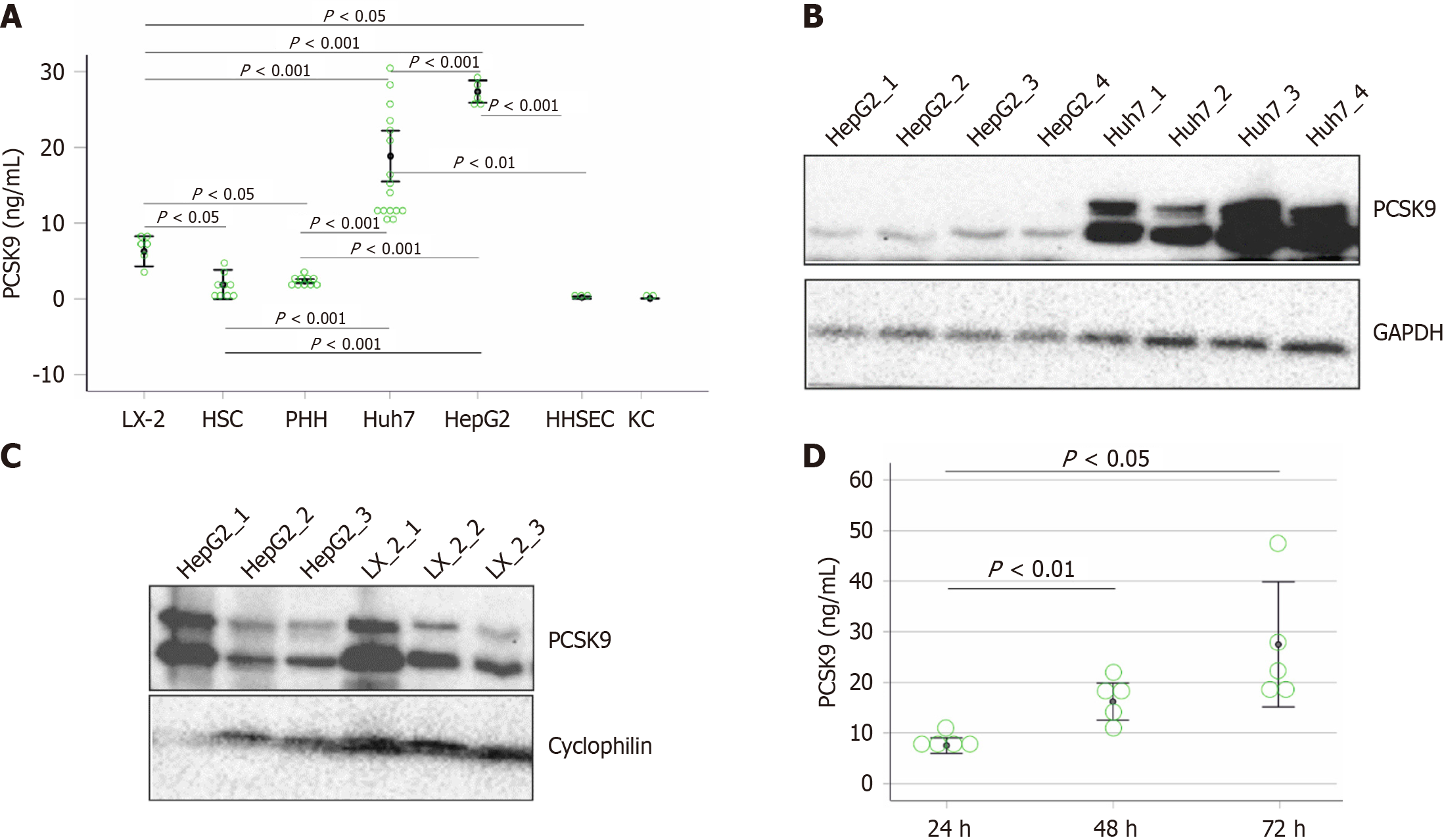
Figure 1 Proprotein convertase subtilisin/kexin type 9 in the supernatants of 106 liver cells cultivated for 24 hours, cellular levels of HepG2, Huh7, and LX-2 cells, and of LX-2 cells during culture.
A: Proprotein convertase subtilisin/kexin type 9 (PCSK9) in the supernatant of LX-2 cells (6 different cultures), primary human hepatic stellate cells from 9 donors, primary human hepatocytes from 10 donors, Huh7 cells (16 different cultures), HepG2 cells (5 different cultures), human hepatic sinusoidal endothelial cells from 3 donors and primary human Kupffer cells from 2 donors; B: Immunoblot of PCSK9 protein in Huh7 and HepG2 cells, glyceraldehyde-3-phosphate dehydrogenase was used for normalization; C: Immunoblot of PCSK9 protein in LX-2 and HepG2 cells, cyclophilin A was used for normalization; D: PCSK9 protein in the supernatant of LX-2 cells cultivated for 24 hours, 48 hours, and 72 hours. PCSK9: Proprotein convertase subtilisin/kexin type 9; HSC: Hepatic stellate cell; PHH: Primary human hepatic; HHSEC: Human hepatic sinusoidal endothelial cell; KC: Kupffer cell; GAPDH: Glyceraldehyde-3-phosphate dehydrogenase.
- Citation: Bundschuh J, Neumann M, Zimny S, Spirk M, Buechler C. Transforming growth factor beta reduces proprotein convertase subtilisin/kexin type 9 in the supernatant of hepatic stellate cells. World J Hepatol 2026; 18(1): 113896
- URL: https://www.wjgnet.com/1948-5182/full/v18/i1/113896.htm
- DOI: https://dx.doi.org/10.4254/wjh.v18.i1.113896