
















©The Author(s) 2026.
World J Hepatol. Jan 27, 2026; 18(1): 113753
Published online Jan 27, 2026. doi: 10.4254/wjh.v18.i1.113753
Published online Jan 27, 2026. doi: 10.4254/wjh.v18.i1.113753
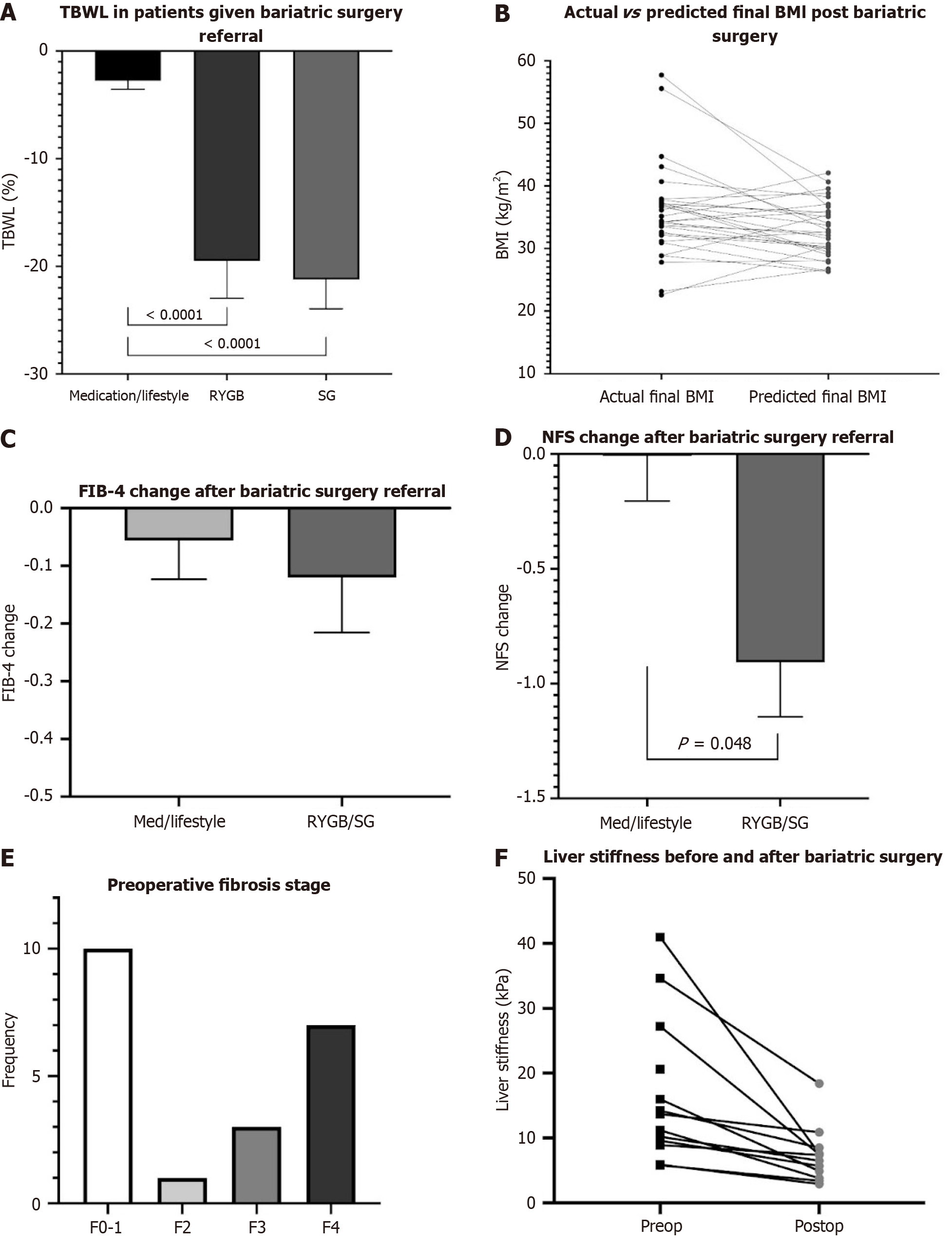
Figure 2 Weight and liver-related outcomes in patients with metabolic dysfunction-associated steatotic liver disease undergoing bariatric surgery vs lifestyle management/medication.
A: Comparison between total body weight loss in patients who underwent gastric bypass or sleeve gas
- Citation: Schwartz AW, Park EY, Ilagan-Ying YC, Zimmerman ZE, Bollinger B, Ying LD, Deng YD, Duffy AJ, Morton JM, Mehal WZ, Do A, Banini BA. Impact of multidisciplinary steatotic liver disease management on bariatric surgery referral and clinical outcomes: A retrospective cohort study. World J Hepatol 2026; 18(1): 113753
- URL: https://www.wjgnet.com/1948-5182/full/v18/i1/113753.htm
- DOI: https://dx.doi.org/10.4254/wjh.v18.i1.113753