
















©The Author(s) 2025.
World J Hepatol. Sep 27, 2025; 17(9): 107671
Published online Sep 27, 2025. doi: 10.4254/wjh.v17.i9.107671
Published online Sep 27, 2025. doi: 10.4254/wjh.v17.i9.107671
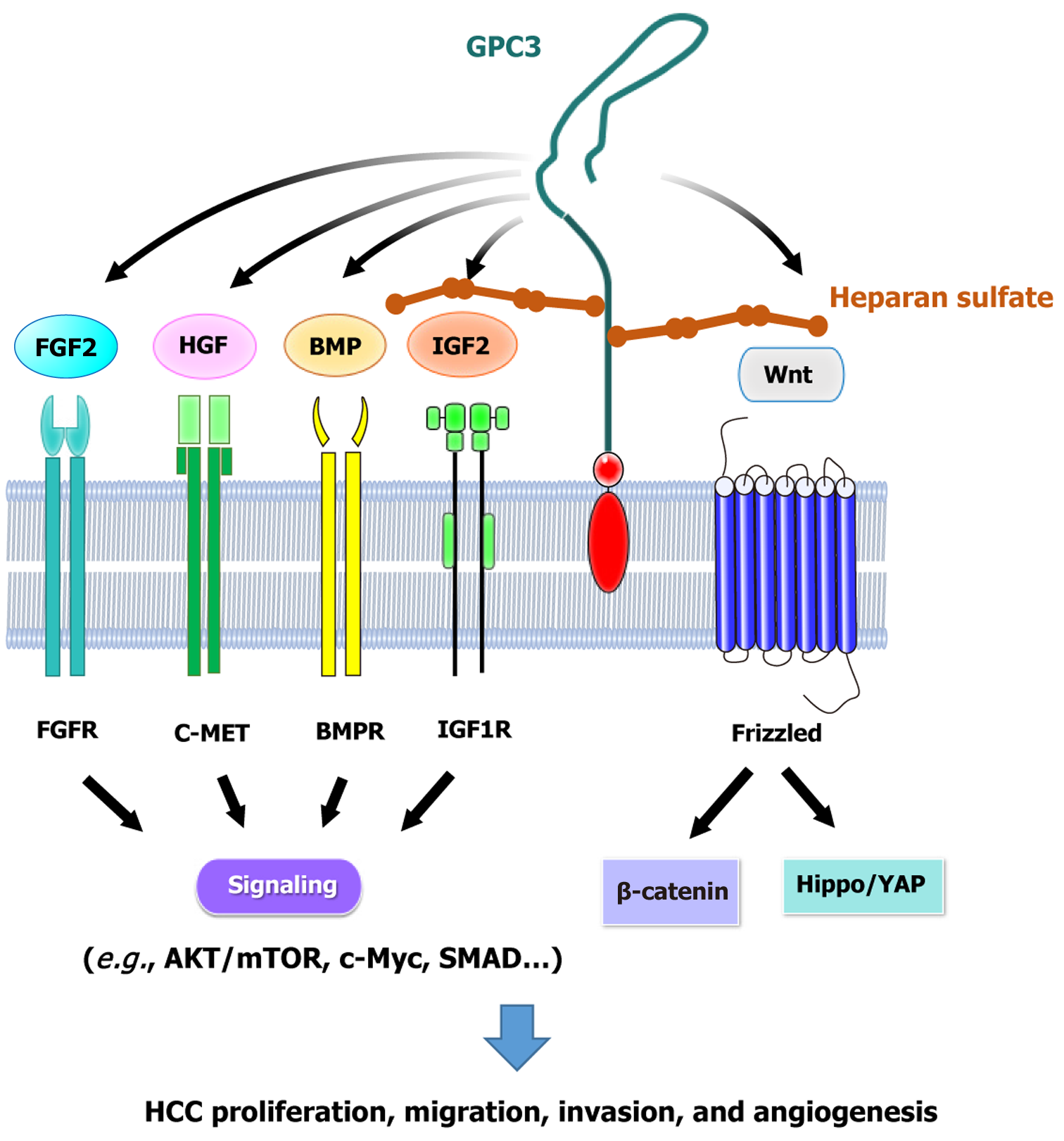
Figure 1 Diverse growth factor signaling pathways coordinated by glypican-3 in hepatocellular carcinoma.
Glypican-3 (GPC3) plays a crucial role in hepatocellular carcinoma (HCC) by interacting with multiple ligands through modulation by GPC3-conjugated heparan sulfate. These ligands include Wnt, fibroblast growth factor 2 (FGF 2), hepatocyte growth factor (HGF), bone morphogenetic protein (BMP), and insulin-like growth factor (IGF). Through these interactions, GPC3 regulates key oncogenic signaling pathways, thereby contributing to tumor proliferation, migration, invasion, and angiogenesis. Specifically, FGF2, HGF, BMP, and IGF activate their respective receptors (FGFR, C-MET, BMPR, and IGF1R), triggering downstream signaling cascades such as AKT/mTOR, c-Myc, and SMAD pathways, which ultimately drive tumor progression. Moreover, GPC3 enhances Wnt signaling by facilitating Wnt ligand binding to Frizzled receptors, leading to the activation of the β-catenin and Hippo/YAP pathways, which further promote oncogenic signaling in HCC. GPC3: Glypican-3; HGF: Hepatocyte growth factor; IGF: Insulin-like growth factor.
- Citation: Wu CS, Lee TY, Chao HW. Targeting glypican-3 as a new frontier in liver cancer therapy. World J Hepatol 2025; 17(9): 107671
- URL: https://www.wjgnet.com/1948-5182/full/v17/i9/107671.htm
- DOI: https://dx.doi.org/10.4254/wjh.v17.i9.107671