
















©The Author(s) 2025.
World J Hepatol. Dec 27, 2025; 17(12): 113359
Published online Dec 27, 2025. doi: 10.4254/wjh.v17.i12.113359
Published online Dec 27, 2025. doi: 10.4254/wjh.v17.i12.113359
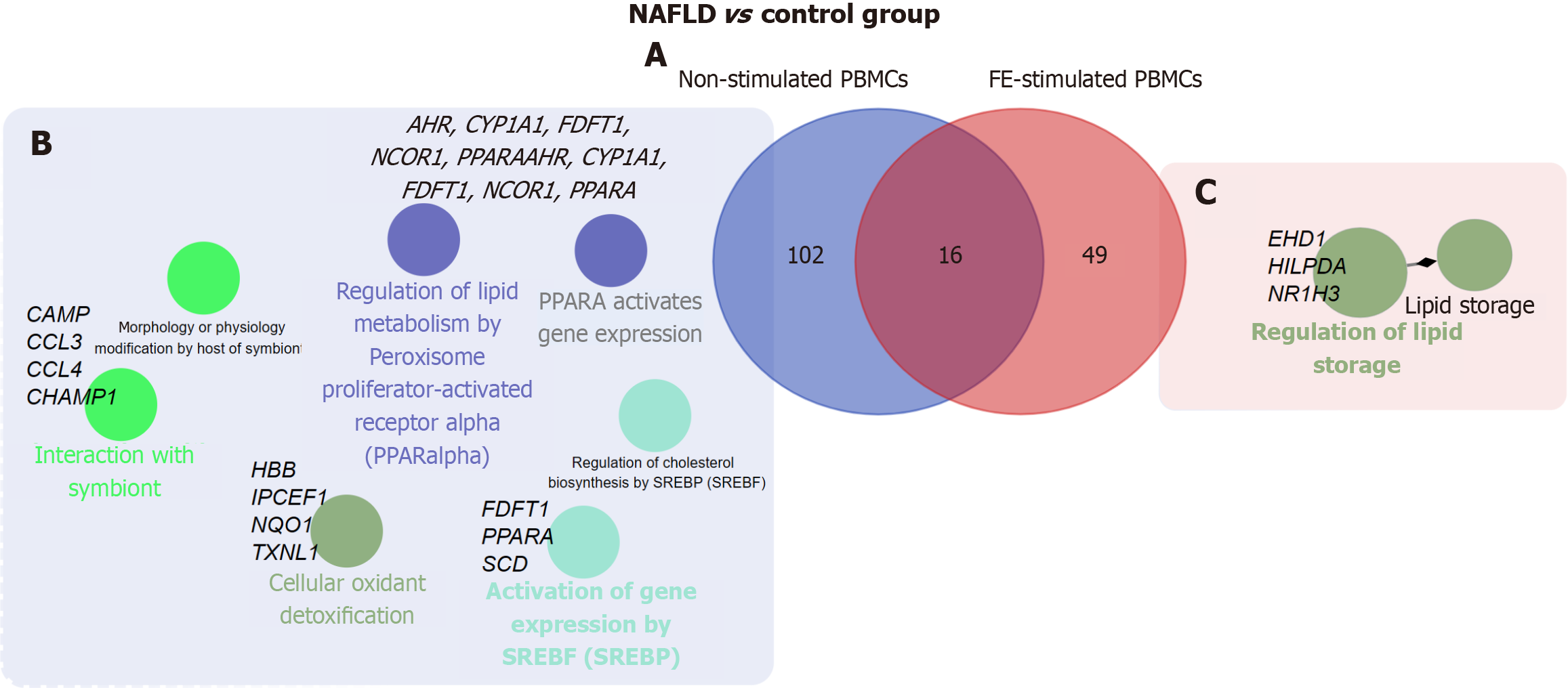
Figure 3 Analysis of differentially expressed genes and pathway enrichment characteristics in peripheral blood mononuclear cells (unstimulated/fecal extracts-stimulated) from patients with non-alcoholic fatty liver disease and healthy controls.
A: Venn diagram of the unique and shared differentially expressed genes in the comparison of patients with non-alcoholic fatty liver disease patients and controls using non-stimulated and fecal extracts-stimulated peripheral blood mononuclear cells; B and C: Overrepresented pathways identified through Gene Ontology: Biological process and molecular function term categories as well as Reactome pathways for unique differentially expressed genes in the comparison of patients with non-alcoholic fatty liver disease patients and controls using (B) non-stimulated and (C) fecal extracts-stimulated peripheral blood mononuclear cells. Associated genes contributing to the most significantly enriched pathways are annotated next to the respective terms. The pathways shown correspond to those with the lowest corrected P-values (Benjamini-Hochberg adjustment). NAFLD: Non-alcoholic fatty liver disease; PBMCs: Peripheral blood mononuclear cells; FE: Fecal extracts; PPAR: Peroxisome proliferator-activated receptor alpha; SREBP: Sterol regulatory element-binding protein.
- Citation: Zeber-Lubecka N, Michalkiewicz J, Dabrowska M, Goryca K, Wierzbicka-Rucińska A, Jańczyk W, Jankowska I, Świąder-Leśniak A, Kubiszewska I, Ziemska-Legięcka J, Socha P, Ostrowski J. Transcriptome profiles of peripheral blood mononuclear cells differentiate male adolescents with non-alcoholic fatty liver disease from healthy peers. World J Hepatol 2025; 17(12): 113359
- URL: https://www.wjgnet.com/1948-5182/full/v17/i12/113359.htm
- DOI: https://dx.doi.org/10.4254/wjh.v17.i12.113359