
















©The Author(s) 2025.
World J Hepatol. Dec 27, 2025; 17(12): 112835
Published online Dec 27, 2025. doi: 10.4254/wjh.v17.i12.112835
Published online Dec 27, 2025. doi: 10.4254/wjh.v17.i12.112835
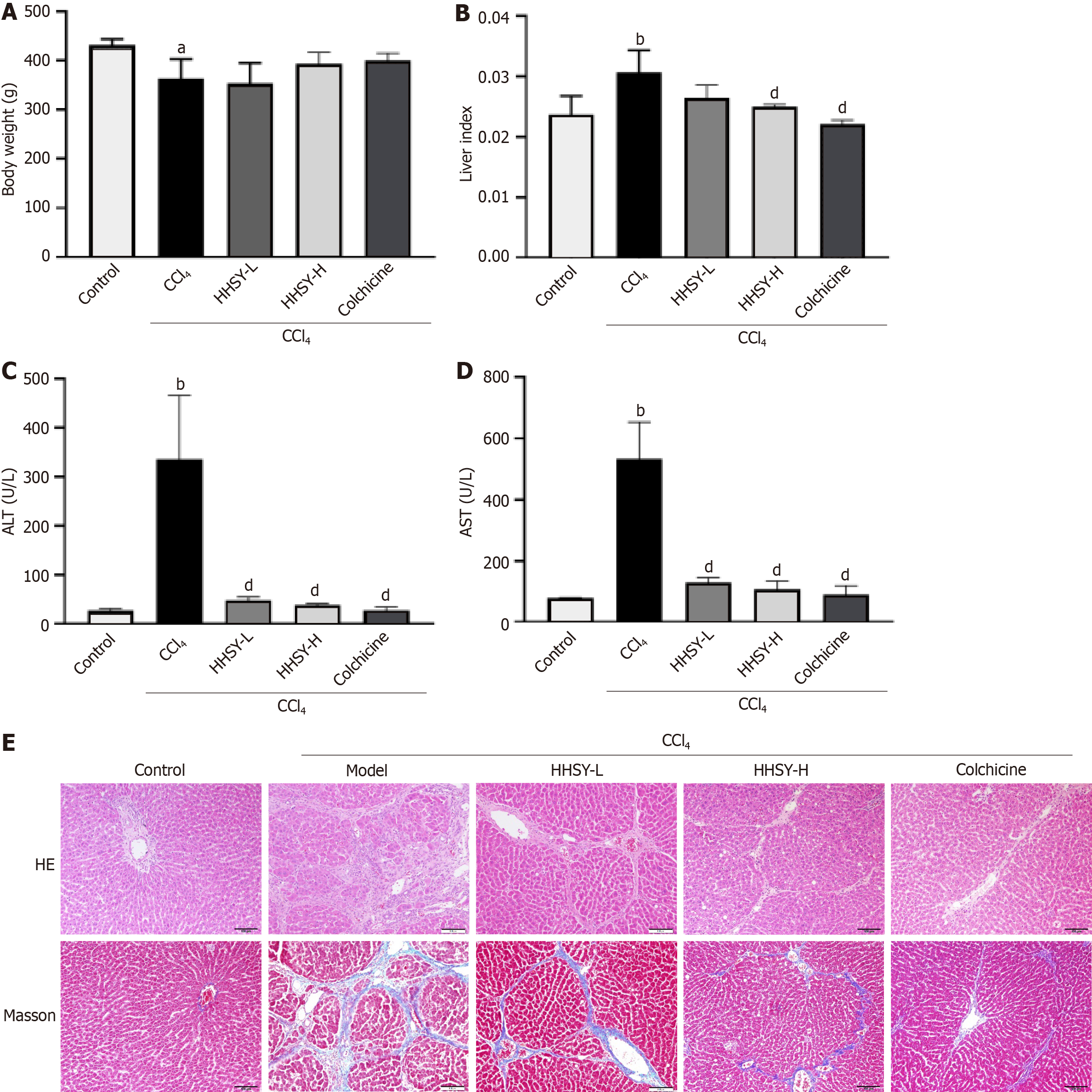
Figure 2 He-He-Shu-Yang formula alleviates carbon tetrachloride-induced liver fibrosis in Sprague-Dawley rats.
aP < 0.05, bP < 0.01 vs control group; dP < 0.01 vs model group. Data are presented as median (inter quartile range), n = 9-10 rats/group. Rats were divided into five treatment groups: Control, model, low-dose He-He-Shu-Yang formula, high-dose He-He-Shu-Yang formula, and colchicine. A: Body weight in each group; B: Liver index in each group; C: Serum alanine aminotransferase level in each group; D: Serum aspartate aminotransferase level in each group; E: Representative images of liver pathology. Hematoxylin and eosin and Masson staining of liver tissues (magnification: 100’, scale bar: 100 μm). HHSY-L: Low-dose He-He-Shu-Yang formula; HHSY-H: High-dose He-He-Shu-Yang formula; CCl4: Carbon tetrachloride; HE: Hematoxylin and eosin.
- Citation: Zeng FL, Shi MJ, Mo YS, Xiao HM, Xie YB, Chi XL. He-He-Shu-Yang formula alleviates liver fibrosis by inhibiting hepatic stellate cell activation in vivo and in vitro. World J Hepatol 2025; 17(12): 112835
- URL: https://www.wjgnet.com/1948-5182/full/v17/i12/112835.htm
- DOI: https://dx.doi.org/10.4254/wjh.v17.i12.112835