
















©The Author(s) 2025.
World J Hepatol. Nov 27, 2025; 17(11): 111576
Published online Nov 27, 2025. doi: 10.4254/wjh.v17.i11.111576
Published online Nov 27, 2025. doi: 10.4254/wjh.v17.i11.111576
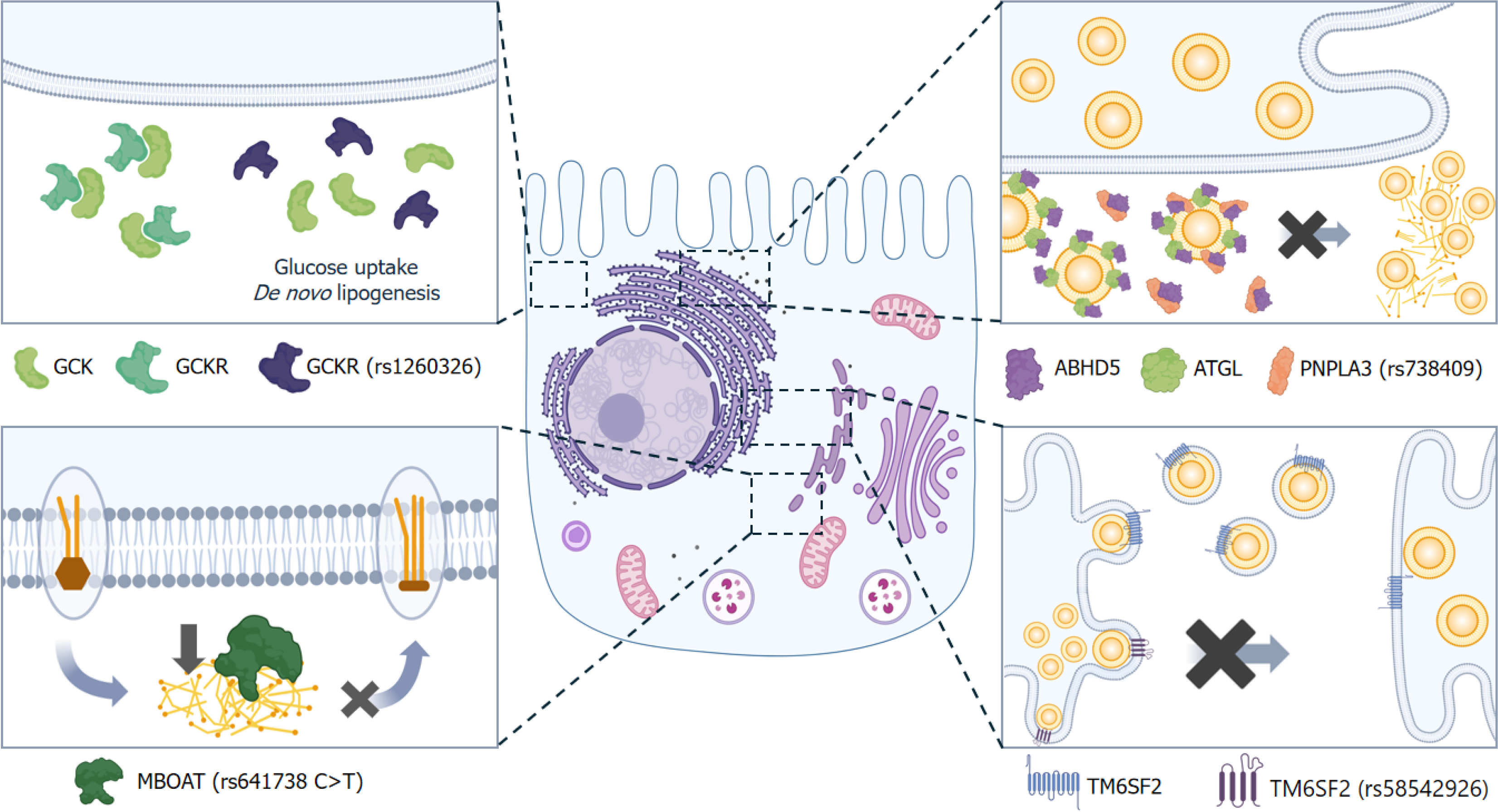
Figure 2 Schematic representation of intracellular pathways highlighting the key genes PNPLA3, TM6SF2, GCKR, and GCKR involved in susceptibility to metabolic dysfunction-associated steatotic liver disease development.
The schematic highlights how variants in PNPLA3 (rs738409), TM6SF2 (rs58542926), GCKR (rs641738C>T), and GCKR (rs1260326) disrupt lipid metabolism in hepatocytes. PNPLA3 impairs triglyceride hydrolysis, TM6SF2 impairs very low-density lipoprotein secretion, GCKR impairs phospholipid metabolism, while GCKR increases glucose uptake and lipogenesis. This figure was created by BioRender.com (Supplementary material).
- Citation: Kumar G, Shah YR, Shahzad A, Jameel K, Guevara-Lazo D, Khan NA, Dahiya DS, Gangwani MK, Ravichandran R, Patel R, Hayat U, Thandassery RB. Genetic predeterminants and recent advancements in steatotic liver disease: A roadmap toward precision hepatology. World J Hepatol 2025; 17(11): 111576
- URL: https://www.wjgnet.com/1948-5182/full/v17/i11/111576.htm
- DOI: https://dx.doi.org/10.4254/wjh.v17.i11.111576