
















©The Author(s) 2025.
World J Hepatol. Oct 27, 2025; 17(10): 109898
Published online Oct 27, 2025. doi: 10.4254/wjh.v17.i10.109898
Published online Oct 27, 2025. doi: 10.4254/wjh.v17.i10.109898
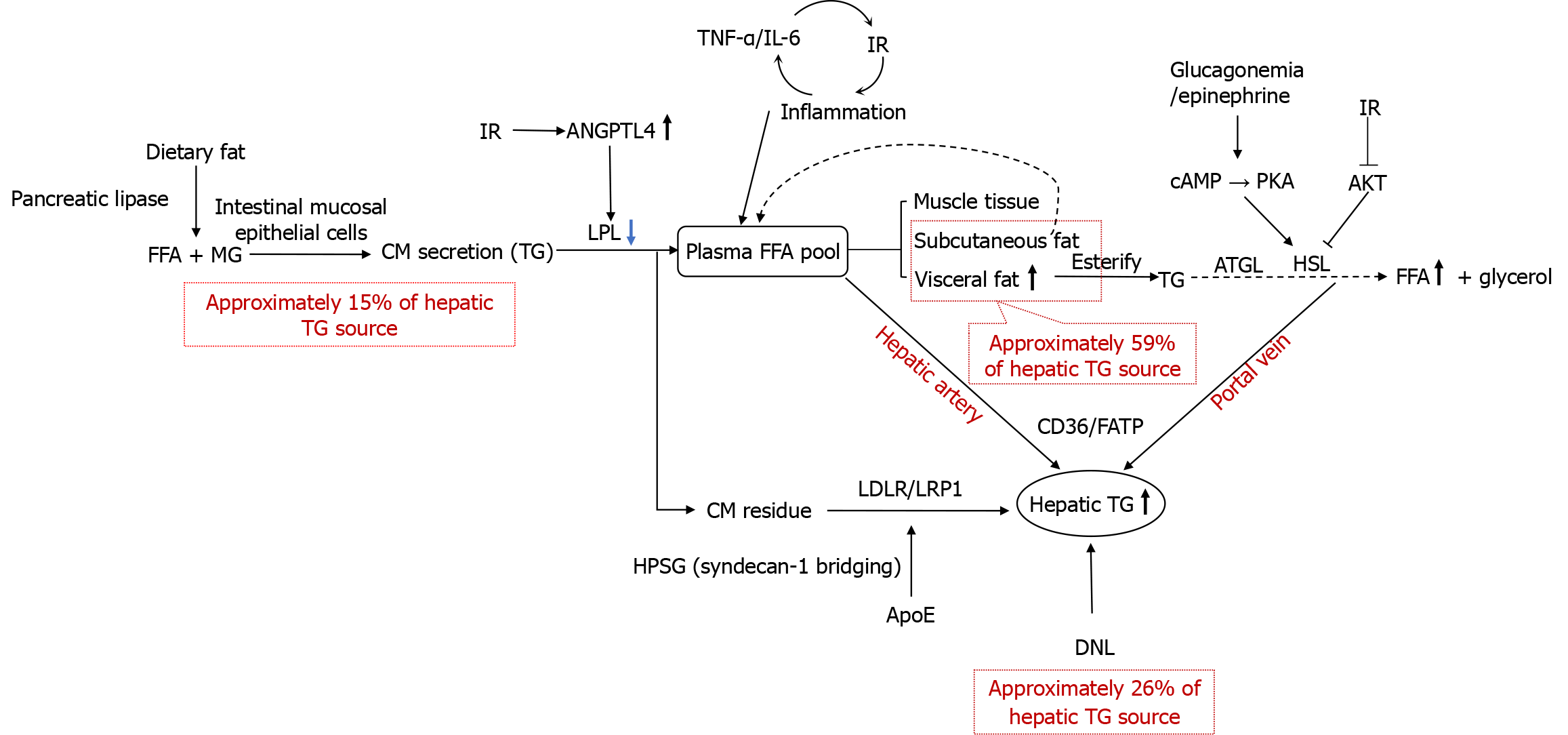
Figure 1 Dysregulation of extrahepatic lipid metabolism drives hepatic triglyceride deposition.
Extrahepatic lipid metabolic dysregulation drives liver triglyceride deposition via adipose tissue lipolysis (free fatty acid release) and chylomicron remnant uptake. Insulin resistance exacerbates lipoprotein lipase suppression and chylomicron remnant accumulation, while visceral adipose tissue hypermetabolism and inflammation synergistically promote the progression of metabolic dysfunction-associated steatotic disease. TNF-α: Tumor necrosis factor alpha; IL-6: Interleukin-6; IR: Insulin resistance; ANGPTL4: Angiopoietin-like protein 4; FFA: Free fatty acid; MG: Monoglyceride; CM: Chylomicron; TG: Triglyceride; LPL: Lipoprotein lipase; cAMP: Cyclic adenosine monophosphate; PKA: Protein kinase A; AKT: Protein kinase B; ATGL: Adipose triglyceride lipase; HSL: Hormone-sensitive lipase; FATP: Fatty acid transport protein; LDLR: Low-density lipoprotein receptors; LRP1: Low-density lipoprotein receptor-related protein 1; ApoE: Apolipoproteins E; DNL: De novo lipogenesis.
- Citation: Li SQ, Wu JH, Zhou Y, Wang CX, Xie L, Liu SY, Su YZ, He W, Chen H, Zhong WW, He YH. Hepatocyte nuclear factors dynamically regulate triglyceride metabolic reprogramming in metabolic dysfunction-associated steatotic liver disease: Mechanisms and implications. World J Hepatol 2025; 17(10): 109898
- URL: https://www.wjgnet.com/1948-5182/full/v17/i10/109898.htm
- DOI: https://dx.doi.org/10.4254/wjh.v17.i10.109898