
















©The Author(s) 2025.
World J Hepatol. Oct 27, 2025; 17(10): 108810
Published online Oct 27, 2025. doi: 10.4254/wjh.v17.i10.108810
Published online Oct 27, 2025. doi: 10.4254/wjh.v17.i10.108810
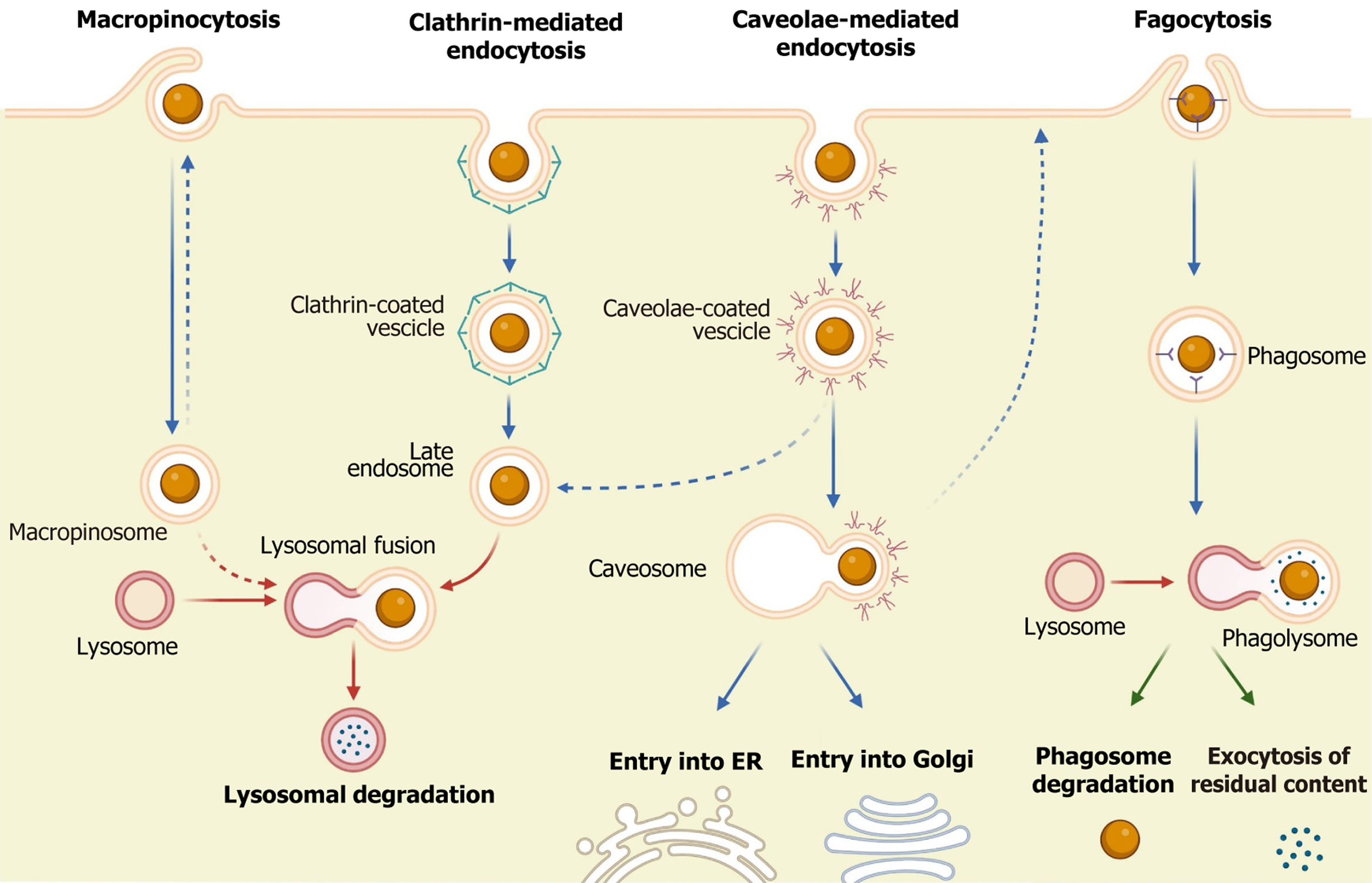
Figure 2 Major cellular internalization pathways of nanoparticles and their intracellular fate.
Nanoparticles can be internalized through four primary mechanisms: Macropinocytosis, clathrin-mediated endocytosis, caveolae-mediated endocytosis, and phagocytosis. These pathways determine the intracellular routing of nanoparticles, leading to lysosomal degradation, entry into the endoplasmic reticulum (ER), the Golgi apparatus, or exocytosis. Clathrin-mediated endocytosis and macropinocytosis typically result in fusion with lysosomes, whereas caveolae-mediated uptake may bypass the lysosomal route, enabling alternative trafficking. Phagocytosis, mainly performed by specialized cells, leads to phagolysosome formation, with possible degradation or release of residual content. Created in BioRender.com (Supplementary material).
- Citation: Armillotta MG, Lizzi L, Massimi M. Nanoparticle-based systems for liver therapy: Overcoming fibrosis and enhancing drug efficacy. World J Hepatol 2025; 17(10): 108810
- URL: https://www.wjgnet.com/1948-5182/full/v17/i10/108810.htm
- DOI: https://dx.doi.org/10.4254/wjh.v17.i10.108810