
















Copyright: ©Author(s) 2026.
World J Stem Cells. Sep 26, 2026; 18(9): 122513
Published online Sep 26, 2026. doi: 10.4252/wjsc.122513
Published online Sep 26, 2026. doi: 10.4252/wjsc.122513
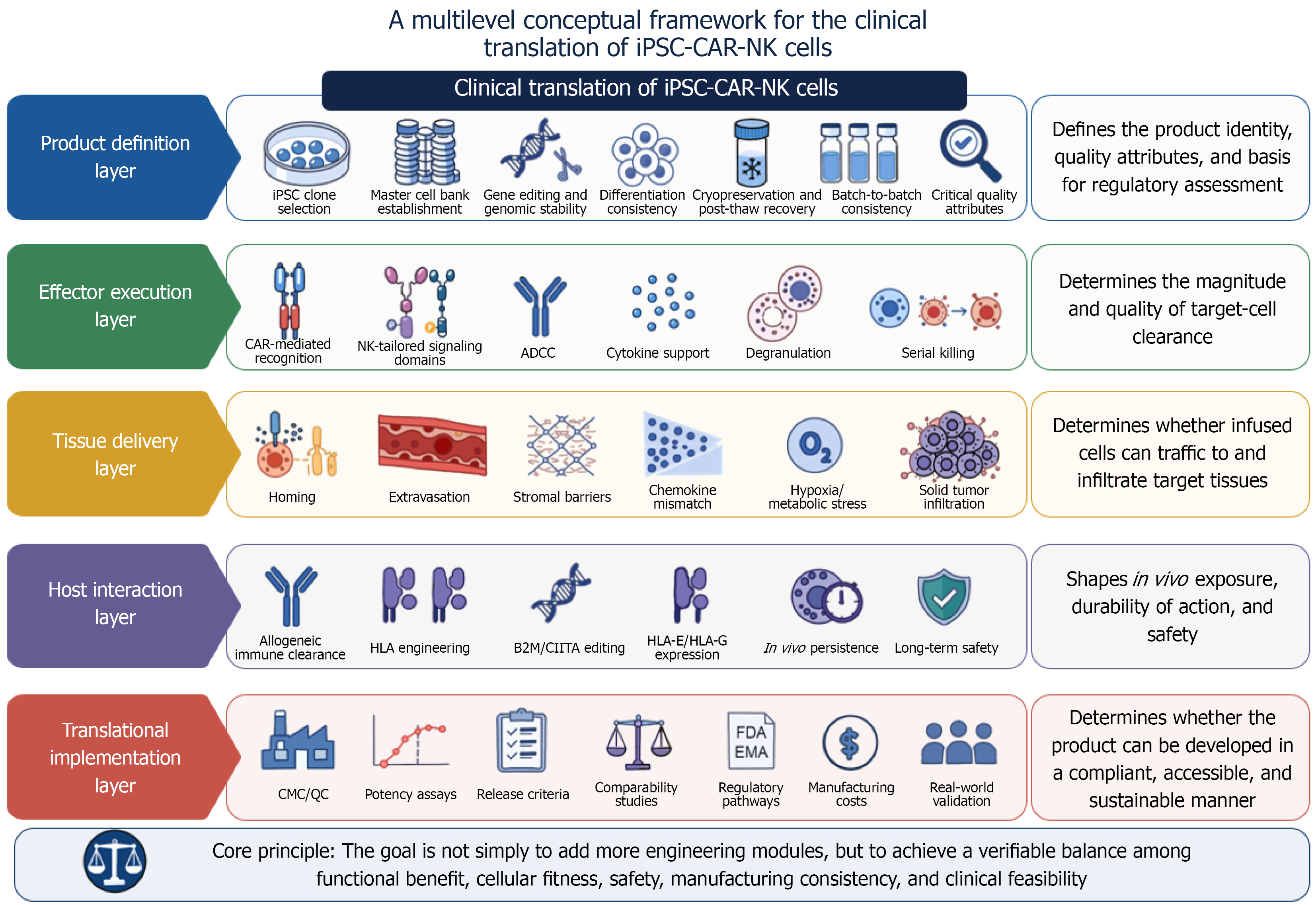
Figure 3 Multilevel conceptual framework for the clinical translation of induced pluripotent stem cell-derived chimeric antigen receptor natural killer cells.
This figure summarizes the multilevel analytical model for the clinical translation of induced pluripotent stem cell-derived chimeric antigen receptor natural killer (iPSC-CAR-NK) cells proposed in this review. This framework is not a linear manufacturing workflow, but rather a conceptual integration model for understanding different limiting layers and their interrelationships during the transition of iPSC-CAR-NK cells from engineering design to clinical application. The framework includes the product definition layer, effector execution layer, tissue delivery layer, host interaction layer, and translational implementation layer, which correspond to product quality attributes and manufacturing consistency, target-cell clearance function, lesion-site delivery capacity, in vivo host interactions, and conditions for translational implementation, respectively. This framework emphasizes that the clinical translation of iPSC-CAR-NK cells should not be understood as a simple accumulation of engineering modules, but should instead be pursued through a verifiable balance among functional benefits, cellular fitness, safety, manufacturing consistency, and clinical implementability. iPSCs: Induced pluripotent stem cells; NK: Natural killer; CAR: Chimeric antigen receptor; ADCC: Antibody-dependent cellular cytotoxicity; B2M: Beta-2 microglobulin; HLA: Human leukocyte antigen; CMC: Chemistry, Manufacturing and Controls; QC: Quality control; FDA: Food and Drug Administration; EMA: European Medicines Agency.
- Citation: Liu XL, Han SM, Ye GH, Wang QL, Luo Y, Liu YM. Induced pluripotent stem cell-derived chimeric antigen receptor natural killer cells: Engineering innovations, translational hurdles and clinical prospects in immune therapy. World J Stem Cells 2026; 18(9): 122513
- URL: https://www.wjgnet.com/1948-0210/full/v18/i9/122513.htm
- DOI: https://dx.doi.org/10.4252/wjsc.122513