











BPG is committed to discovery and dissemination of knowledge
Review
Copyright: ©Author(s) 2026.
World J Stem Cells. Sep 26, 2026; 18(9): 122513
Published online Sep 26, 2026. doi: 10.4252/wjsc.122513
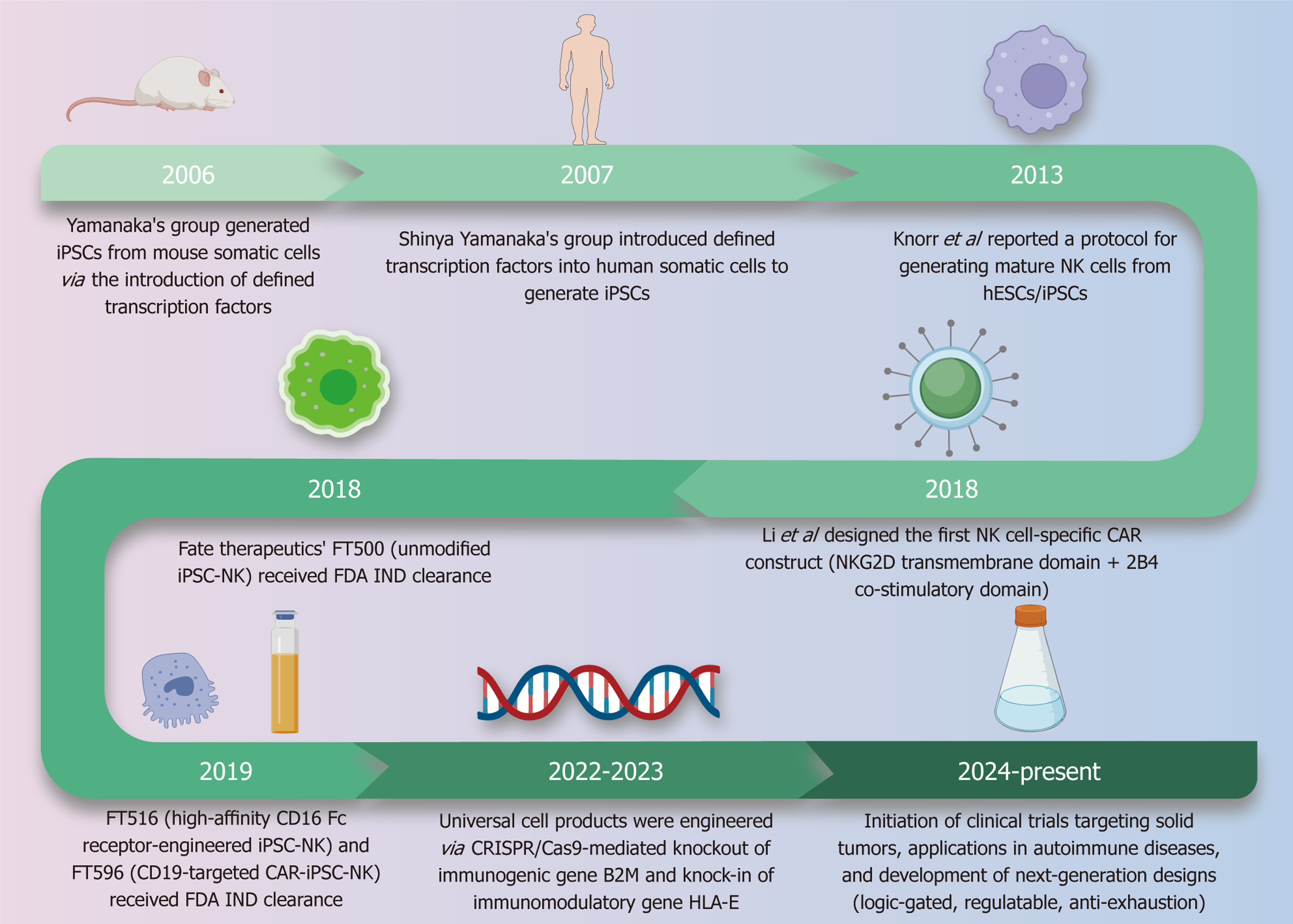
Figure 1
Figure 1 Developmental timeline of induced pluripotent stem cell-derived chimeric antigen receptor natural killer cells. The figure summarizes representative milestones in the development of induced pluripotent stem cell-derived chimeric antigen receptor natural killer (iPSC-CAR-NK) cell technology. Key foundational milestones include the generation of iPSCs from mouse somatic cells in 2006 and from human somatic cells in 2007, followed by the establishment of protocols for generating mature NK cells from human embryonic stem cells and iPSCs in 2013. In 2018, the unmodified iPSC-derived NK cell product FT500 received investigational new drug (IND) clearance, and an NK cell-specific CAR structure was designed to better match NK-cell signaling biology. In 2019, FT516 and FT596 received IND clearance. Subsequent advances included gene-editing strategies for universal cell products, including beta-2 microglobulin knockout and human leukocyte antigen E knock-in, followed by current efforts involving solid tumor trials, immune-mediated disease applications, and next-generation designs such as logic-gated, regulatable, and anti-exhaustion strategies. iPSCs: Induced pluripotent stem cells; NK: Natural killer; hESCs: Human embryonic stem cells; FDA: Food and Drug Administration; IND: Investigational new drug; CAR: Chimeric antigen receptor; B2M: Beta-2 microglobulin; HLA-E: Human leukocyte antigen E.


Write to the Help Desk