
















Copyright: ©Author(s) 2026.
World J Stem Cells. Aug 26, 2026; 18(8): 123046
Published online Aug 26, 2026. doi: 10.4252/wjsc.123046
Published online Aug 26, 2026. doi: 10.4252/wjsc.123046
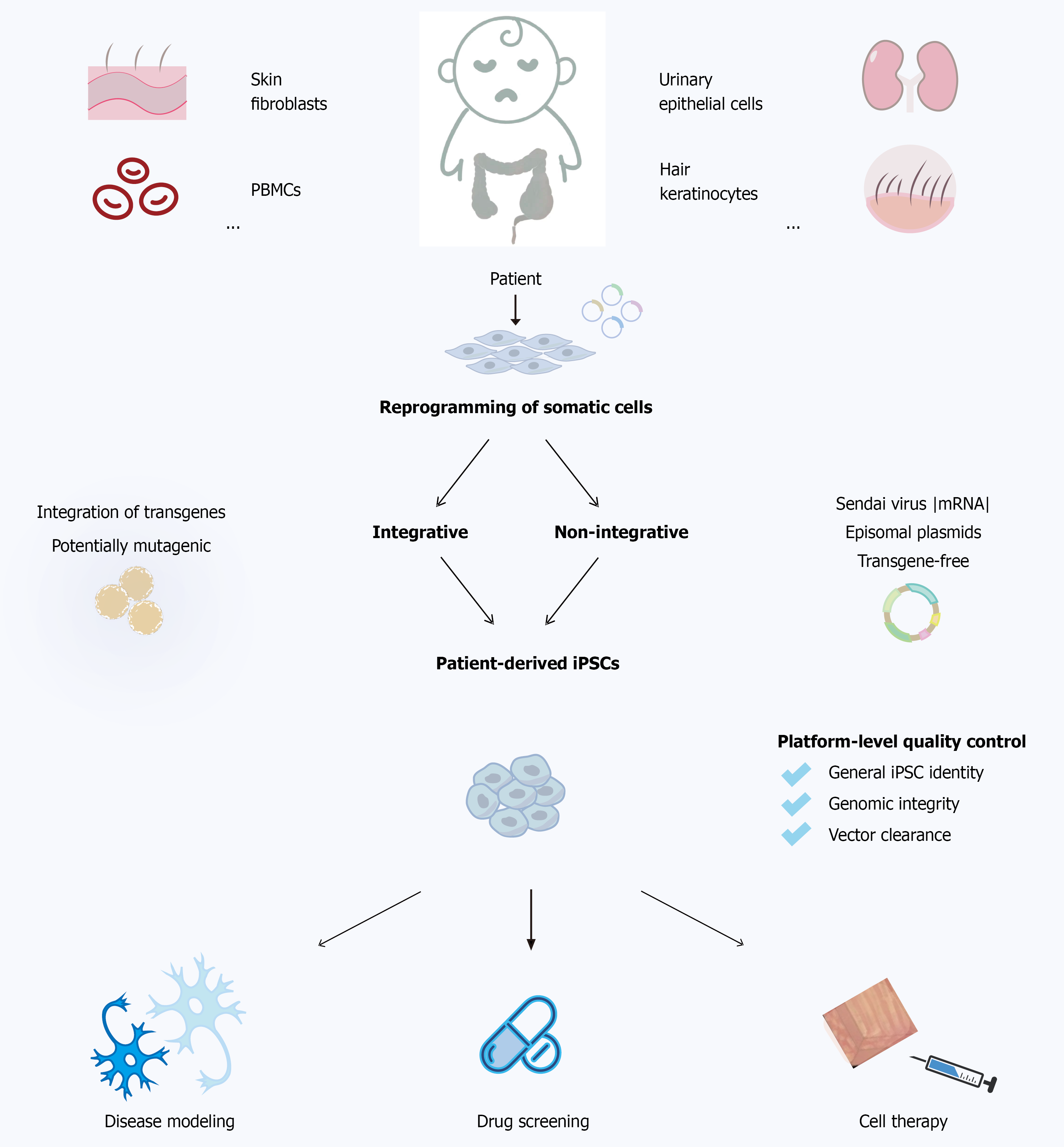
Figure 2 General workflow for establishing patient-derived induced pluripotent stem cell platforms for Hirschsprung disease research.
Somatic cells can be obtained from patients with Hirschsprung disease using several sources, including skin fibroblasts, peripheral blood mononuclear cells, urinary epithelial cells, and hair keratinocytes. These donor cells are reprogrammed into patient-derived induced pluripotent stem cells (iPSCs) using either integrative or non-integrative strategies. Integrative approaches may achieve reprogramming but carry potential risks related to transgene insertion and mutagenesis. Non-integrative approaches, such as Sendai virus-based reprogramming, messenger RNA-based reprogramming, or episomal plasmid-based reprogramming, can generate transgene-free iPSC lines and are generally more suitable for downstream translational applications. Platform-level quality control should include confirmation of general iPSC identity, genomic integrity, and clearance of reprogramming vectors when applicable. After quality control, patient-derived iPSCs can be differentiated and applied to disease modeling, drug screening, and preclinical evaluation of cell-based therapeutic strategies. The figure emphasizes that donor cell source, reprogramming strategy, and quality control standards directly influence reproducibility, scalability, and translational suitability. PBMCs: Peripheral blood mononuclear cells; iPSC: Induced pluripotent stem cell.
- Citation: Qiu YX, Zhi ZK, Leng YM, Zhang XT, Du CX, Tang J, Li HX, Tang WB. Induced pluripotent stem cells in Hirschsprung disease: Modeling, mechanisms, and translational challenges. World J Stem Cells 2026; 18(8): 123046
- URL: https://www.wjgnet.com/1948-0210/full/v18/i8/123046.htm
- DOI: https://dx.doi.org/10.4252/wjsc.123046