
















Copyright: ©Author(s) 2026.
World J Stem Cells. Aug 26, 2026; 18(8): 123046
Published online Aug 26, 2026. doi: 10.4252/wjsc.123046
Published online Aug 26, 2026. doi: 10.4252/wjsc.123046
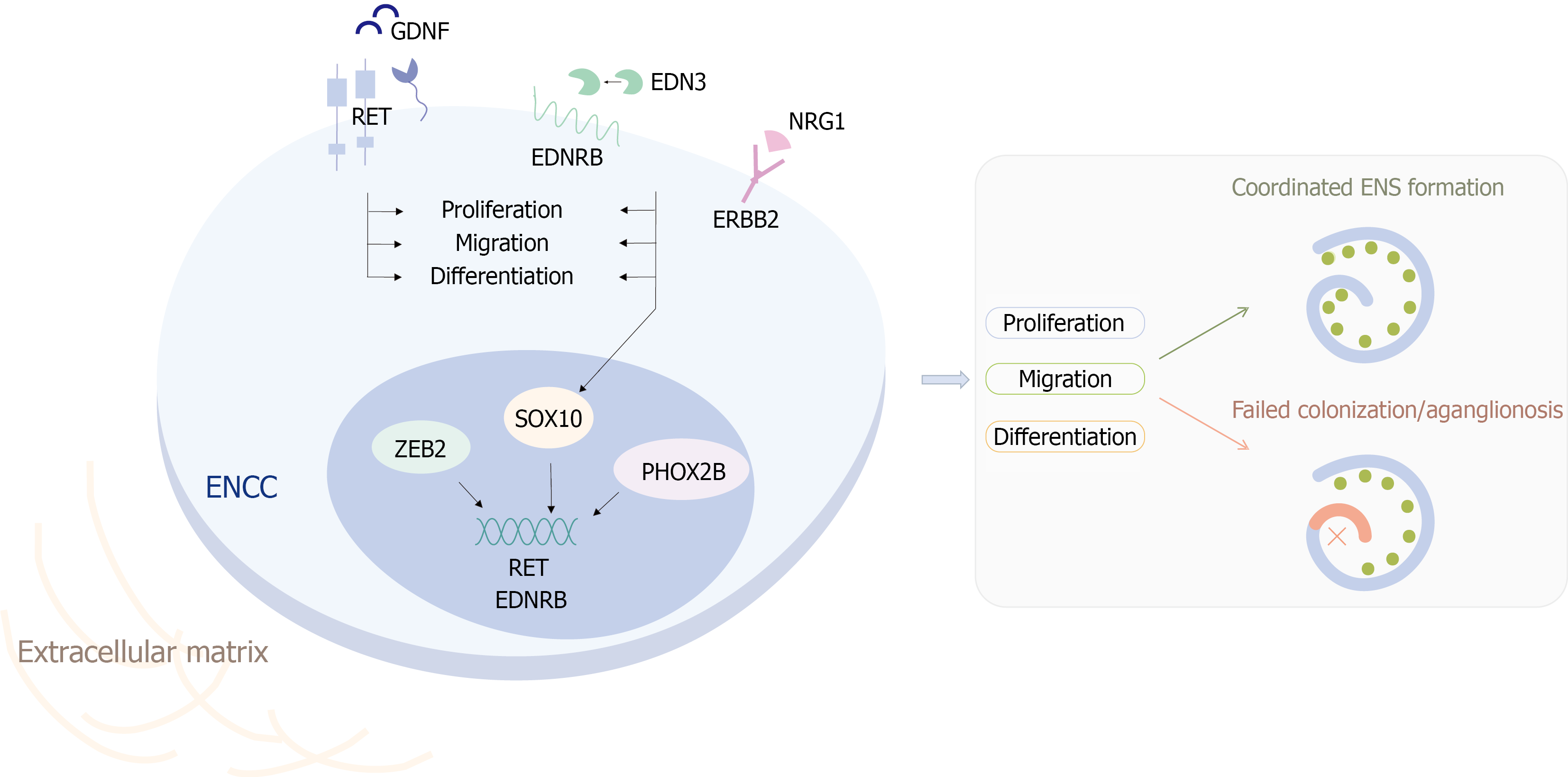
Figure 1 Major Hirschsprung disease-associated genes and signaling pathways regulating enteric neural crest cell development.
This schematic summarizes representative genetic and microenvironmental regulators involved in enteric neural crest cell (ENCC) proliferation, migration, differentiation, and survival during enteric nervous system (ENS) formation. Glial cell line-derived neurotrophic factor-RET proto-oncogene signaling, endothelin 3-endothelin receptor type B signaling, and neuregulin 1-erb-b2 receptor tyrosine kinase 2 signaling are shown as major pathways influencing ENCC behavior. Key transcriptional regulators, including SRY-box transcription factor 10, paired-like homeobox 2B, and zinc finger E-box-binding homeobox 2, are illustrated within the ENCC regulatory network. Extracellular matrix cues are also depicted as part of the intestinal microenvironment that modulates ENCC colonization. Coordinated ENCC proliferation, migration, and differentiation support normal ENS formation, whereas impaired pathway activity or disrupted regulatory interactions can lead to failed distal bowel colonization and aganglionosis in Hirschsprung disease (HSCR). This figure highlights representative mechanisms rather than all genetic or regulatory factors involved in HSCR pathogenesis. GDNF: Glial cell line-derived neurotrophic factor; RET: RET proto-oncogene; EDN3: Endothelin 3; EDNRB: Endothelin receptor type B; NRG1: Neuregulin 1; ERBB2: Erb-b2 receptor tyrosine kinase 2; ENCC: Enteric neural crest cell; ZEB2: Zinc finger E-box-binding homeobox 2; SOX10: SRY-box transcription factor 10; PHOX2B: Paired-like homeobox 2B; ENS: Enteric nervous system.
- Citation: Qiu YX, Zhi ZK, Leng YM, Zhang XT, Du CX, Tang J, Li HX, Tang WB. Induced pluripotent stem cells in Hirschsprung disease: Modeling, mechanisms, and translational challenges. World J Stem Cells 2026; 18(8): 123046
- URL: https://www.wjgnet.com/1948-0210/full/v18/i8/123046.htm
- DOI: https://dx.doi.org/10.4252/wjsc.123046