
















Copyright: ©Author(s) 2026.
World J Stem Cells. Aug 26, 2026; 18(8): 121077
Published online Aug 26, 2026. doi: 10.4252/wjsc.121077
Published online Aug 26, 2026. doi: 10.4252/wjsc.121077
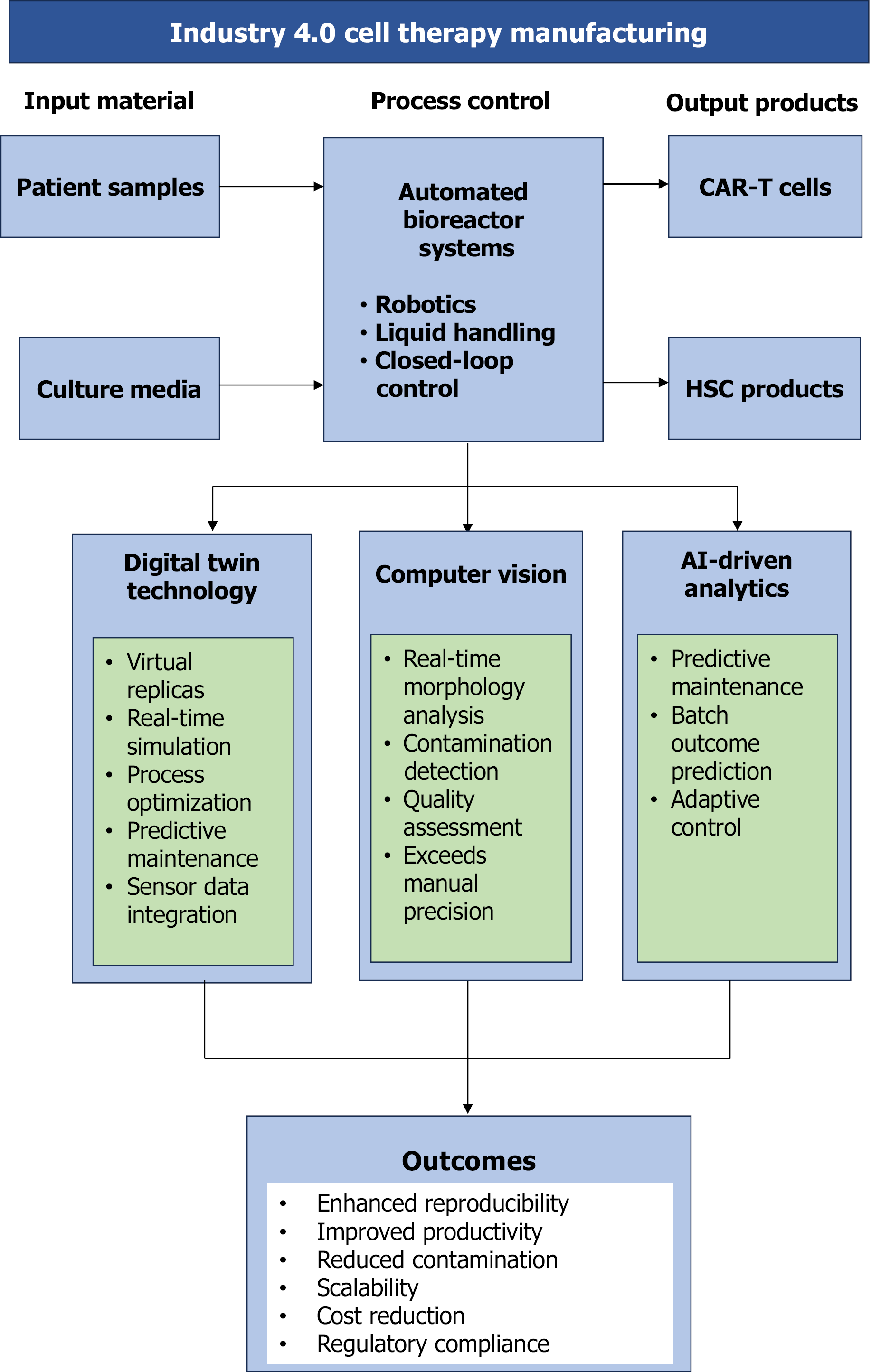
Figure 2 Schematic representation of the artificial intelligence-driven biomanufacturing pipeline for cell therapies incorporating Industry 4.
0 principles. The manufacturing process integrates three key artificial intelligence technologies: (1) Digital twin technology for virtual process simulation, real-time optimization, and predictive maintenance of bioreactors; (2) Computer vision systems powered by deep learning for automated quality assessment, real-time morphological analysis, and contamination detection with precision exceeding manual inspection; (3) Artificial intelligence-driven analytics for predictive maintenance and adaptive process control. These technologies enable closed-loop manufacturing systems that minimize manual intervention, enhance reproducibility and productivity of chimeric antigen receptor-T and hematopoietic stem cell products, and facilitate scalable production suitable for commercial manufacturing. CAR-T: Chimeric antigen receptor-T; HSC: Hematopoietic stem cell; AI: Artificial intelligence.
- Citation: Abd El Ghaffar HA, Arafat AMA, Khattab EHA, Khattab MA, Khallaf AM, Mahgoub SMA. Artificial intelligence in hematopoietic stem cell research and associated malignancies: From disease modeling to cell manufacturing. World J Stem Cells 2026; 18(8): 121077
- URL: https://www.wjgnet.com/1948-0210/full/v18/i8/121077.htm
- DOI: https://dx.doi.org/10.4252/wjsc.121077