
















Copyright: ©Author(s) 2026.
World J Stem Cells. Aug 26, 2026; 18(8): 120270
Published online Aug 26, 2026. doi: 10.4252/wjsc.120270
Published online Aug 26, 2026. doi: 10.4252/wjsc.120270
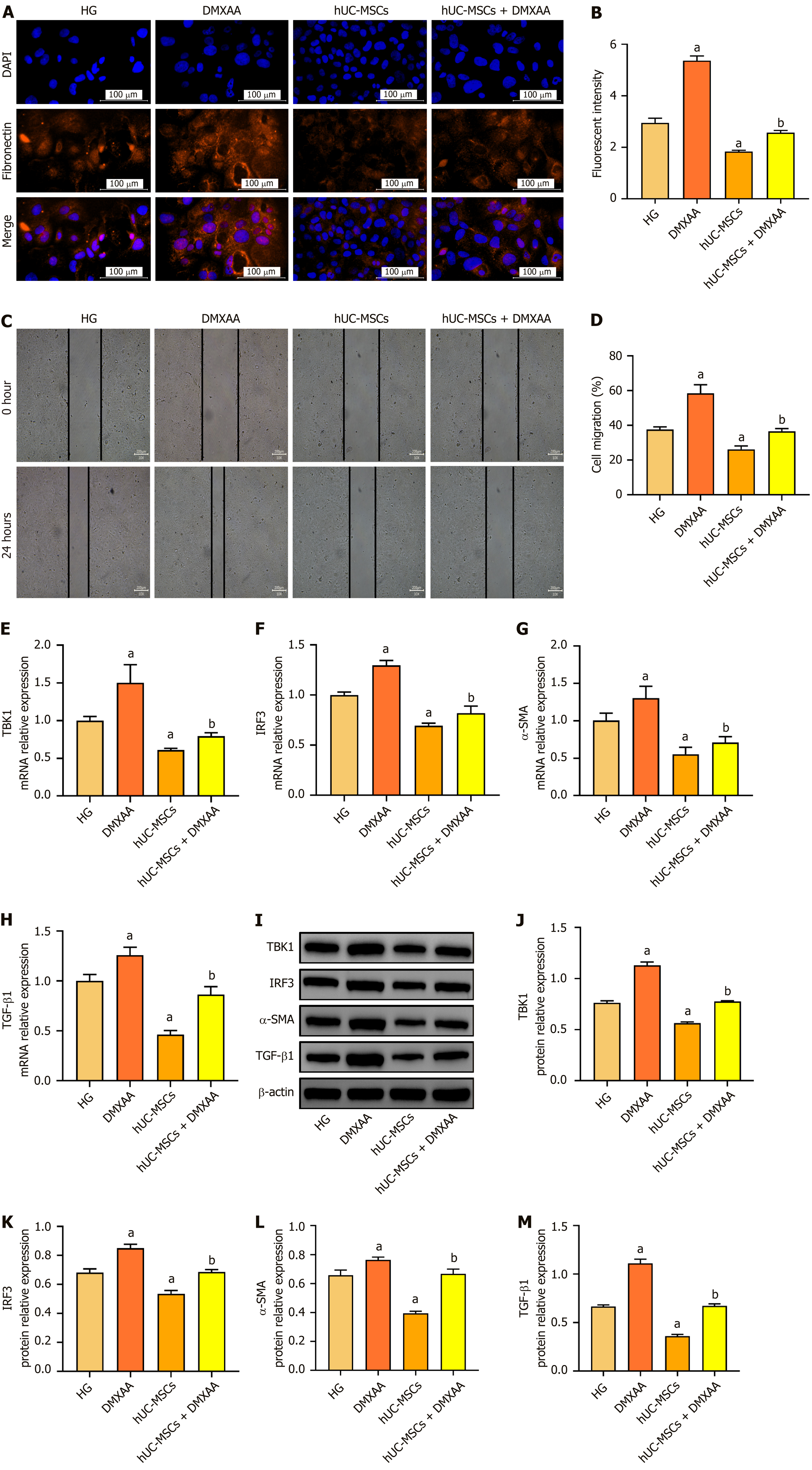
Figure 5 Human umbilical cord-derived mesenchymal stem cells suppress high-glucose-induced epithelial-mesenchymal transition in HMrSV5 cells by inhibiting the cyclic GMP-AMP synthase-stimulator of interferon genes signaling pathway.
A: Representative immunofluo
- Citation: Dong FX, Zheng LL, Nie K, Wan JX. Protective effect of hUC-MSCs regulating peritoneal mesothelial cell EMT through cGAS-STING signaling pathway in high glucose-induced peritoneal fibrosis. World J Stem Cells 2026; 18(8): 120270
- URL: https://www.wjgnet.com/1948-0210/full/v18/i8/120270.htm
- DOI: https://dx.doi.org/10.4252/wjsc.120270