















Copyright: ©Author(s) 2026.
World J Stem Cells. Aug 26, 2026; 18(8): 116228
Published online Aug 26, 2026. doi: 10.4252/wjsc.116228
Published online Aug 26, 2026. doi: 10.4252/wjsc.116228
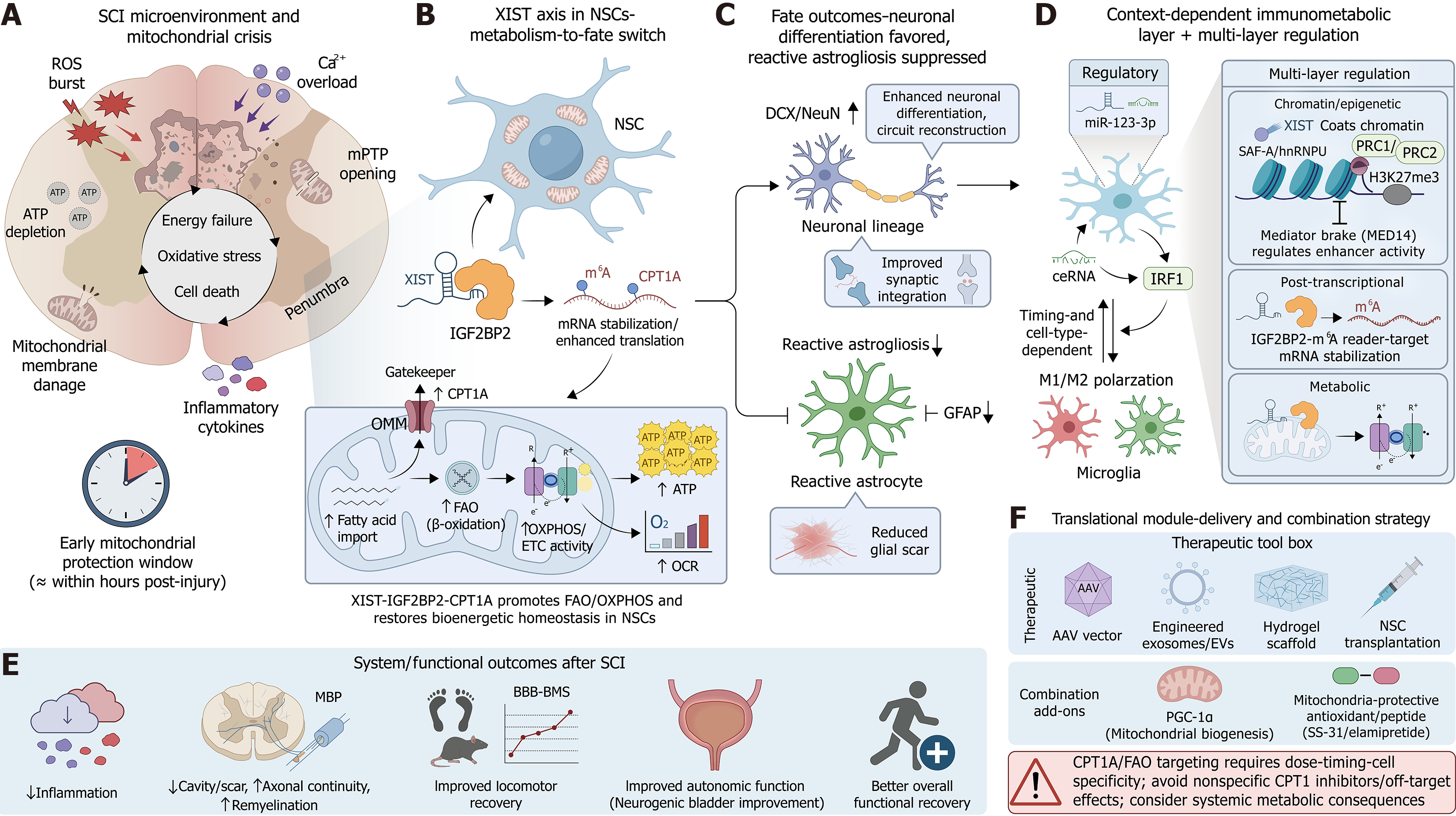
Figure 1 X-inactive specific transcript-insulin-like growth factor 2 mRNA-binding protein 2-carnitine palmitoyl transferase 1A-driven bioenergetic rewiring links neural stem cell fate to multi-scale recovery after spinal cord injury.
A: Spinal cord injury triggers a hostile microenvironment around the lesion core and penumbra, featuring reactive oxygen species burst, Ca2+ overload, mitochondrial permeability transition pore opening, ATP depletion, mitochondrial membrane damage, and inflammatory cytokines, forming an “energy failure → oxidative stress → cell death” loop within an early mitochondrial protection window; B: In neural stem cells, X-inactive specific transcriptional cooperates with insulin-like growth factor 2 mRNA-binding protein 2 to promote carnitine palmitoyl transferase 1A (CPT1A) mRNA stabilization/enhanced translation, increasing CPT1A at the outer mitochondrial membrane and driving fatty-acid import, fatty acid oxidation, and oxidative phosphorylation/electron transport chain activity, thereby restoring ATP production and oxygen consumption rate; C: This metabolism-to-fate switch favors neuronal lineage commitment (doublecortin/neuronal nuclei ↑) and suppresses reactive astrogliosis (glial fibrillary acidic protein ↓), supporting circuit reconstruction and reduced glial scarring; D: A context-dependent immunometabolic layer highlights microglial polarization regulated via a competing endogenous RNA pathway (X-inactive specific transcript-miR-124-3p-interferon regulatory factor 1) and a multi-layer regulatory module including chromatin/epigenetic control (scaffold attachment factor A/heterogeneous nuclear ribonucleoprotein U, polycomb repressive complex 1/2, trimethylation of histone H3 lysine 27, mediator complex subunit 14) and post-transcriptional N6-methyladenosine-linked regulation; E: System/functional outcomes include reduced inflammation, diminished cavity/scar, improved axonal continuity/remyelination (myelin basic protein), enhanced locomotor recovery (Basso-Beattie-Bresnahan locomotor rating scale-Basso Mouse Scale), and improved autonomic function; F: Translational modules summarize delivery options (adeno-associated virus, engineered exosomes/extracellular vesicles, hydrogel scaffolds, neural stem cell transplantation) and rational combination add-ons (e.g., peroxisome proliferator-activated receptor gamma coactivator 1-alpha; elamipretide), with caution that CPT1A/fatty acid oxidation targeting requires dose-timing-cell specificity and avoidance of nonspecific CPT1 inhibition/off-target systemic metabolic effects. Solid arrows denote activation (→) and blunt lines denote inhibition (⊣). SCI: Spinal cord injury; ROS: Reactive oxygen species; mPTP: Mitochondrial permeability transition pore; ATP: Adenosine triphosphate; XIST: X-inactive specific transcript; NSC: Neural stem cell; CPT1A: Carnitine palmitoyltransferase 1A; IGF2BP2: Insulin-like growth factor 2 mRNA-binding protein 2; OMM: Outer mitochondrial membrane; FAO: Fatty acid oxidation; OXPHOS: Oxidative phosphorylation; ETC: Electron transport chain; OCR: Oxygen consumption rate; DCX: Doublecortin; NeuN: Neuronal nuclei; GFAP: Glial fibrillary acidic protein; SAF-A: Scaffold attachment factor A; hnRNPU: Heterogeneous nuclear ribonucleoprotein U; PRC1/PRC2: Polycomb repressive complex 1/2; H3K27me3: Trimethylation of histone H3 lysine 27; m6A: N6-methyladenosine; MED14: Mediator complex subunit 14; ceRNA: Competing endogenous RNA; IRF1: Interferon regulatory factor 1; MBP: Myelin basic protein; BBB: Basso-Beattie-Bresnahan locomotor rating scale; BMS: Basso Mouse Scale; AAV: Adeno-associated virus; EVs: Extracellular vesicles; PGC-1α: Peroxisome proliferator-activated receptor gamma coactivator 1-alpha; SS-31: Elamipretide.
- Citation: Sun JK, Shi Z, Tang XD, Lv BK, Lu PY, Tian YG, Fan YW, Yan P. X inactive specific transcript drives mitochondrial metabolic rewiring and neural stem cell fate after spinal cord injury. World J Stem Cells 2026; 18(8): 116228
- URL: https://www.wjgnet.com/1948-0210/full/v18/i8/116228.htm
- DOI: https://dx.doi.org/10.4252/wjsc.116228