















Copyright: ©Author(s) 2026.
World J Stem Cells. Jul 26, 2026; 18(7): 122823
Published online Jul 26, 2026. doi: 10.4252/wjsc.122823
Published online Jul 26, 2026. doi: 10.4252/wjsc.122823
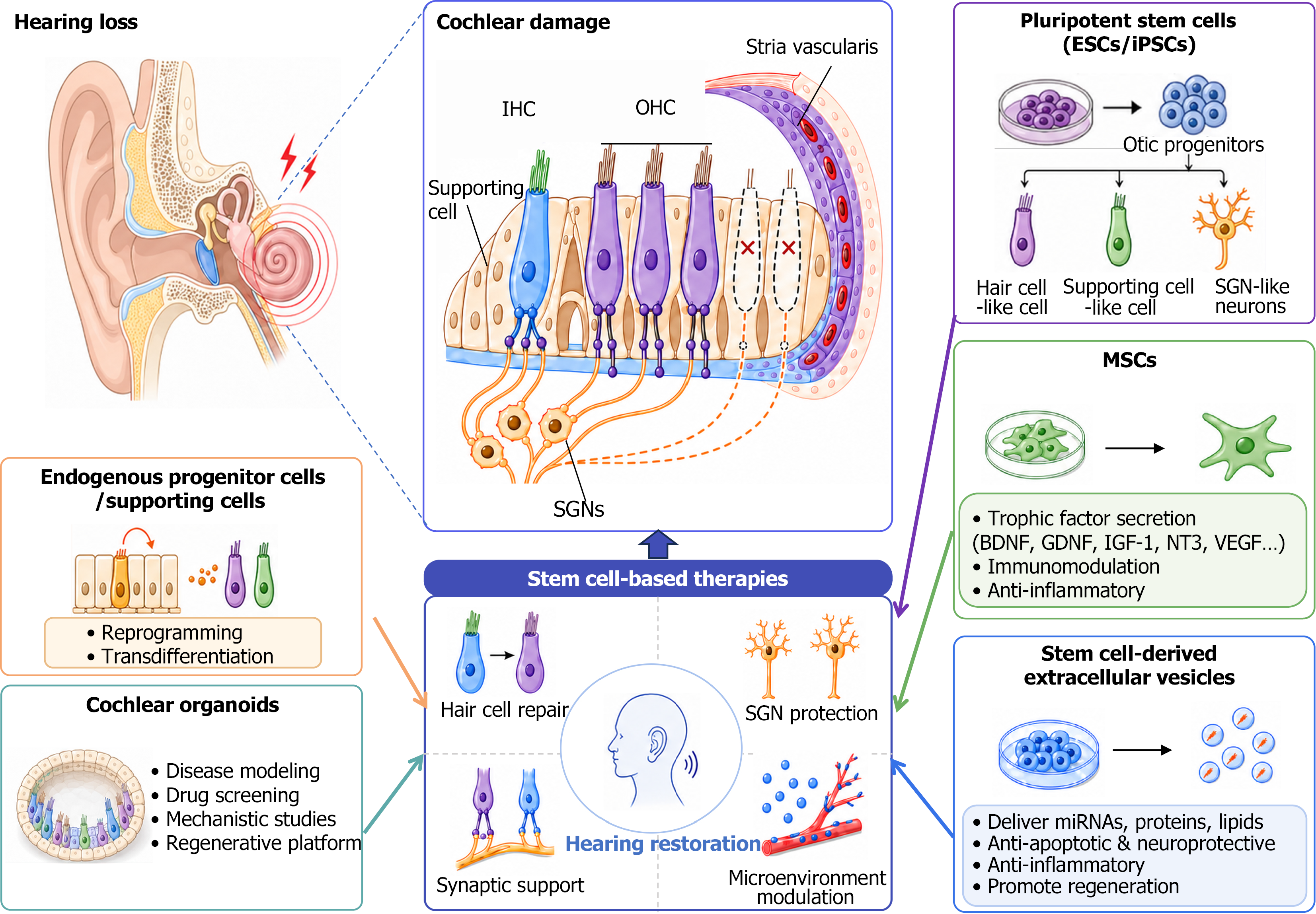
Figure 2 Stem cell-based strategies for cochlear repair and hearing restoration.
This schematic summarizes major regenerative approaches for sensorineural hearing loss. Cochlear injury involves hair-cell loss, spiral ganglion neuron damage, synaptic disruption, and microenvironmental dysfunction. Pluripotent stem cells, mesenchymal stem/stromal cells, stem cell-derived extracellular vesicles, endogenous progenitor/supporting cells, and cochlear organoids provide complementary strategies for cell replacement, trophic support, cell-free protection, in situ reprogramming, and preclinical modeling. These approaches converge on hair-cell repair, spiral ganglion neuron protection, synaptic support, microenvironmental modulation, and ultimately hearing restoration. IHC: Inner hair cell; OHC: Outer hair cell; SGN: Spiral ganglion neuron; ESCs: Embryonic stem cells; iPSCs: Induced pluripotent stem cells; MSCs: Mesenchymal stem/stromal cells; BDNF: Brain-derived neurotrophic factor; GDNF: Glial cell line-derived neurotrophic factor; IGF-1: Insulin-like growth factor 1; VEGF: Vascular endothelial growth factor; miRNA: MicroRNA.
- Citation: Qu YJ, Wang JY, Wang Z, Yao W, Xia ZF. Stem cell-based strategies for hearing restoration: Current advances and future perspectives. World J Stem Cells 2026; 18(7): 122823
- URL: https://www.wjgnet.com/1948-0210/full/v18/i7/122823.htm
- DOI: https://dx.doi.org/10.4252/wjsc.122823