















Copyright: ©Author(s) 2026.
World J Stem Cells. Jul 26, 2026; 18(7): 122823
Published online Jul 26, 2026. doi: 10.4252/wjsc.122823
Published online Jul 26, 2026. doi: 10.4252/wjsc.122823
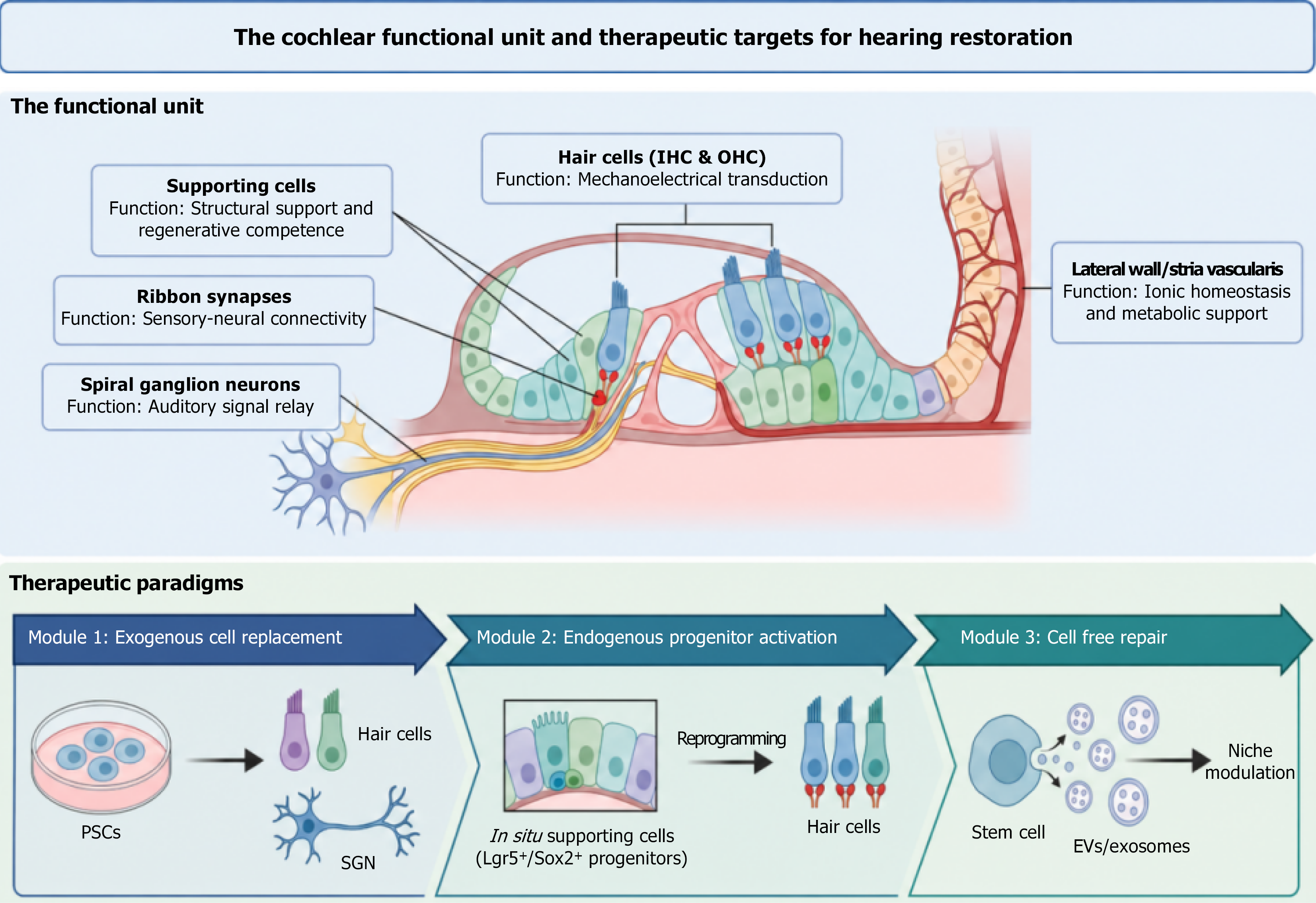
Figure 1 Cochlear functional unit and therapeutic targets for hearing restoration.
The upper panel illustrates the cross-sectional anatomy of the organ of Corti, highlighting that hearing restoration requires the integrated reconstruction of a multicellular unit rather than a single cell type. Key targets include hair cells (mechanoelectrical transduction), supporting cells (structural support and regenerative competence), spiral ganglion neurons (auditory signal relay), ribbon synapses (sensory-neural connectivity), and the stria vascularis/Lateral wall (ionic homeostasis and metabolic support). The lower panel summarizes three major stem cell-based therapeutic paradigms: Exogenous cell replacement utilizing pluripotent stem cells (module 1); endogenous progenitor activation and supporting-cell reprogramming (module 2); and cell-free repair mediated by stem cell-derived extracellular vesicles for niche modulation (module 3). IHC: Inner hair cell; OHC: Outer hair cell; PSCs: Pluripotent stem cells; SGN: Spiral ganglion neuron; EV: Extracellular vesicle.
- Citation: Qu YJ, Wang JY, Wang Z, Yao W, Xia ZF. Stem cell-based strategies for hearing restoration: Current advances and future perspectives. World J Stem Cells 2026; 18(7): 122823
- URL: https://www.wjgnet.com/1948-0210/full/v18/i7/122823.htm
- DOI: https://dx.doi.org/10.4252/wjsc.122823