
















Copyright: ©Author(s) 2026.
World J Stem Cells. Jul 26, 2026; 18(7): 119892
Published online Jul 26, 2026. doi: 10.4252/wjsc.119892
Published online Jul 26, 2026. doi: 10.4252/wjsc.119892
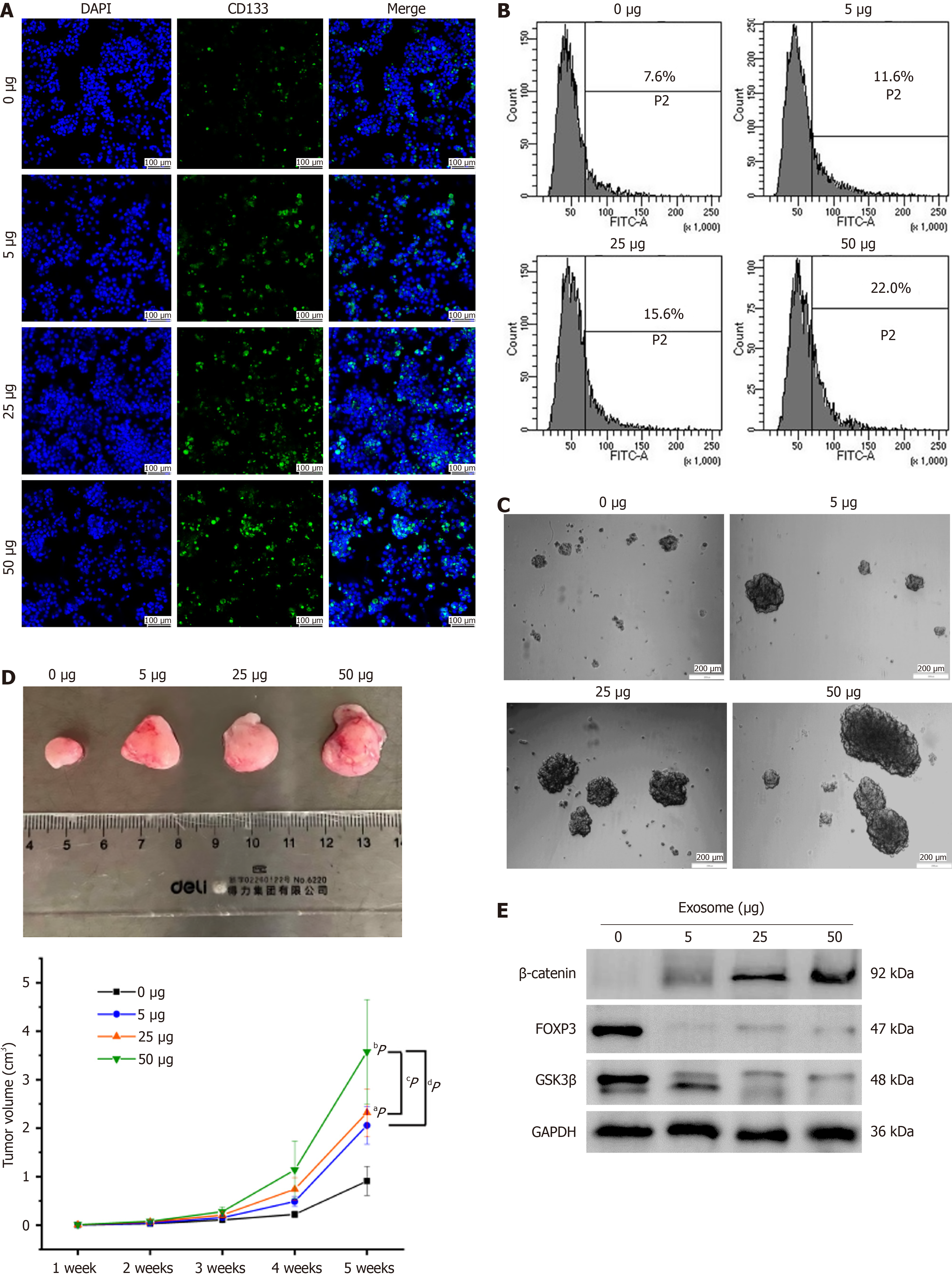
Figure 3 Regulatory T cell-derived exosomes enhanced the stem-like properties of hepatocellular carcinoma cells in a dose-dependent manner.
A: Immunofluorescence staining was used to identify CD133+ cancer stem cells in hepatocellular carcinoma (HCC)-LM3 cells. Scale bar = 100 μm, n = 3; B: Flow cytometry analysis of the proportion of CD133+ cancer stem cells in HCC-LM3 cells, n = 3; C: Sphere-formation assay assessing the in vitro tumor sphere formation capability of HCC-LM3 cells. Scale bar = 200 μm, n = 3; D: In vivo tumorigenicity was assessed by monitoring tumor volume changes in nude mice over 5 weeks after subcutaneous injection of 2 × 10⁶ HCC-LM3 cells. aP < 0.05, compared to the control group; bP < 0.01, compared to the control group; cP < 0.05, compared with the 5 μg group; dP < 0.01, compared with the 25 μg group, n = 5; E: Western blot analysis of forkhead box P3, glycogen synthase kinase-3 beta, and β-catenin expression in HCC-LM3 cells, n = 3. Biological replicates were used in all experiments. 0 μg group: HCC cells co-cultured without regulatory T (Treg) cell-derived exosomes; 5 μg group: HCC cells co-cultured with 5 μg of Treg-derived exosomes; 25 μg group: HCC cells co-cultured with 25 μg of Treg-derived exosomes; 50 μg group: HCC cells co-cultured with 50 μg of Treg-derived exosomes. FOXP3: Forkhead box P3; GSK3β: Glycogen synthase kinase-3 beta.
- Citation: Tu YJ, Liu YQ, Cai HY, Pan YY, Liu C. Regulatory T cell-derived exosomes regulate β-catenin expression to promote the stem cell-like properties of hepatocellular carcinoma. World J Stem Cells 2026; 18(7): 119892
- URL: https://www.wjgnet.com/1948-0210/full/v18/i7/119892.htm
- DOI: https://dx.doi.org/10.4252/wjsc.119892