
















Copyright: ©Author(s) 2026.
World J Stem Cells. Jul 26, 2026; 18(7): 119865
Published online Jul 26, 2026. doi: 10.4252/wjsc.119865
Published online Jul 26, 2026. doi: 10.4252/wjsc.119865
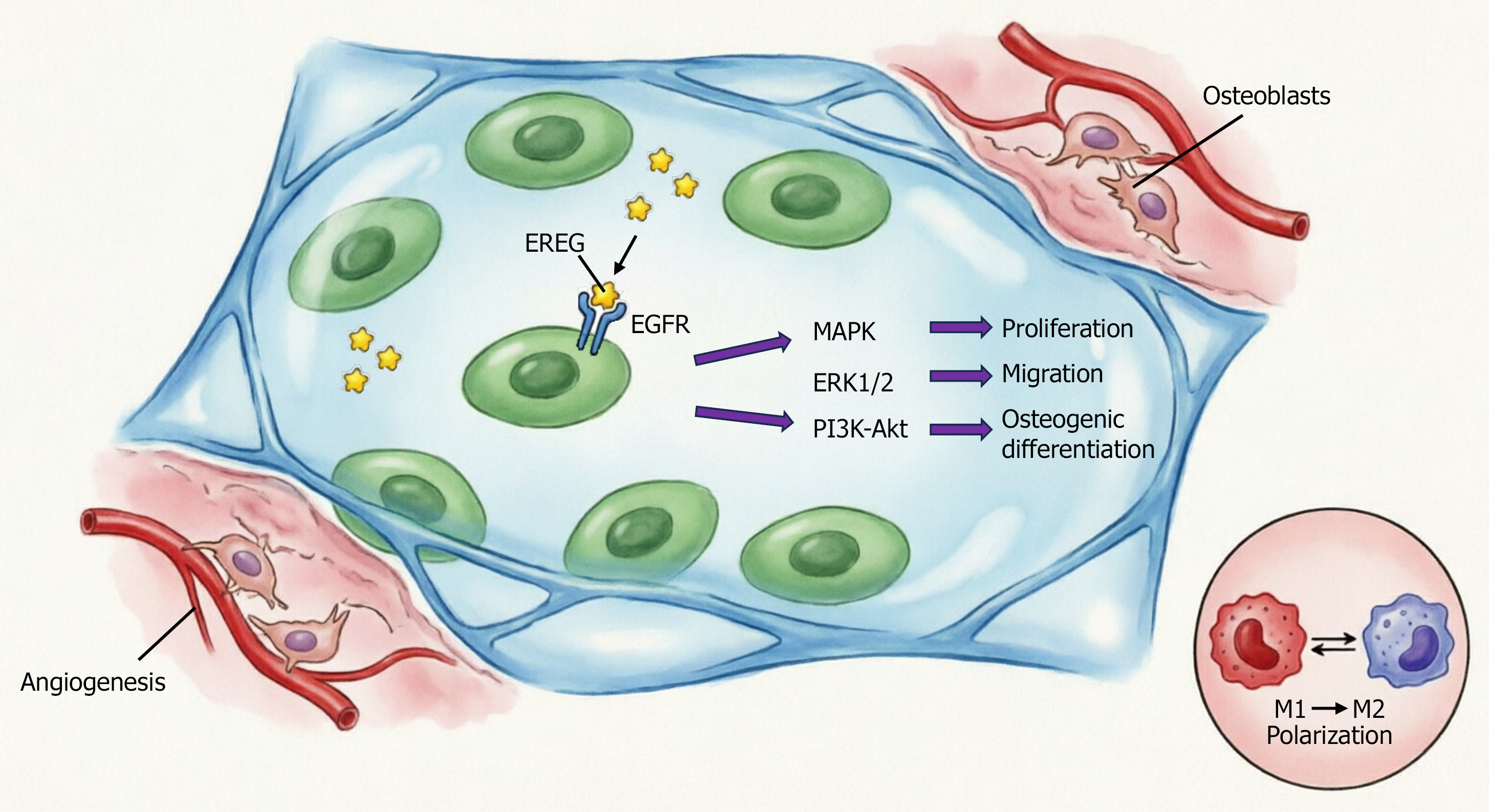
Figure 5 Schematic illustration of the epiregulin-mesenchymal stem cell-hydrogel therapeutic platform for bone/periodontal regeneration.
Biodegradable hydrogel scaffolds serve as a delivery system for mesenchymal stem cells (MSCs) and epiregulin (EREG). EREG binds to epidermal growth factor receptors on MSCs, activating mitogen-activated protein kinase, extracellular signal-regulated kinase 1/2, and phosphatidylinositol 3-kinase/protein kinase B signaling pathways that promote cell proliferation, migration, and osteogenic differentiation. The synergistic actions of the MSC secretome and exogenous EREG modulate the inflammatory microenvironment (M1→M2 macrophage polarization), stimulate angiogenesis, and enhance deposition of mineralized extracellular matrix. This integrated approach enables targeted regeneration of bone and periodontal tissues in inflammatory conditions. Akt: Protein kinase B; EGFR: Epidermal growth factor receptor; EREG: Epiregulin; ERK1/2: Extracellular signal-regulated kinase 1/2; MAPK: Mitogen-activated protein kinase; PI3K: Phosphatidylinositol 3-kinase.
- Citation: Dudun AA, Bonartseva GA, Bonartsev AP. Enhancing mesenchymal stem cell function with epiregulin in tissue engineering: From tissue regeneration to gut microbiota modulation. World J Stem Cells 2026; 18(7): 119865
- URL: https://www.wjgnet.com/1948-0210/full/v18/i7/119865.htm
- DOI: https://dx.doi.org/10.4252/wjsc.119865