
















Copyright: ©Author(s) 2026.
World J Stem Cells. Jul 26, 2026; 18(7): 119865
Published online Jul 26, 2026. doi: 10.4252/wjsc.119865
Published online Jul 26, 2026. doi: 10.4252/wjsc.119865
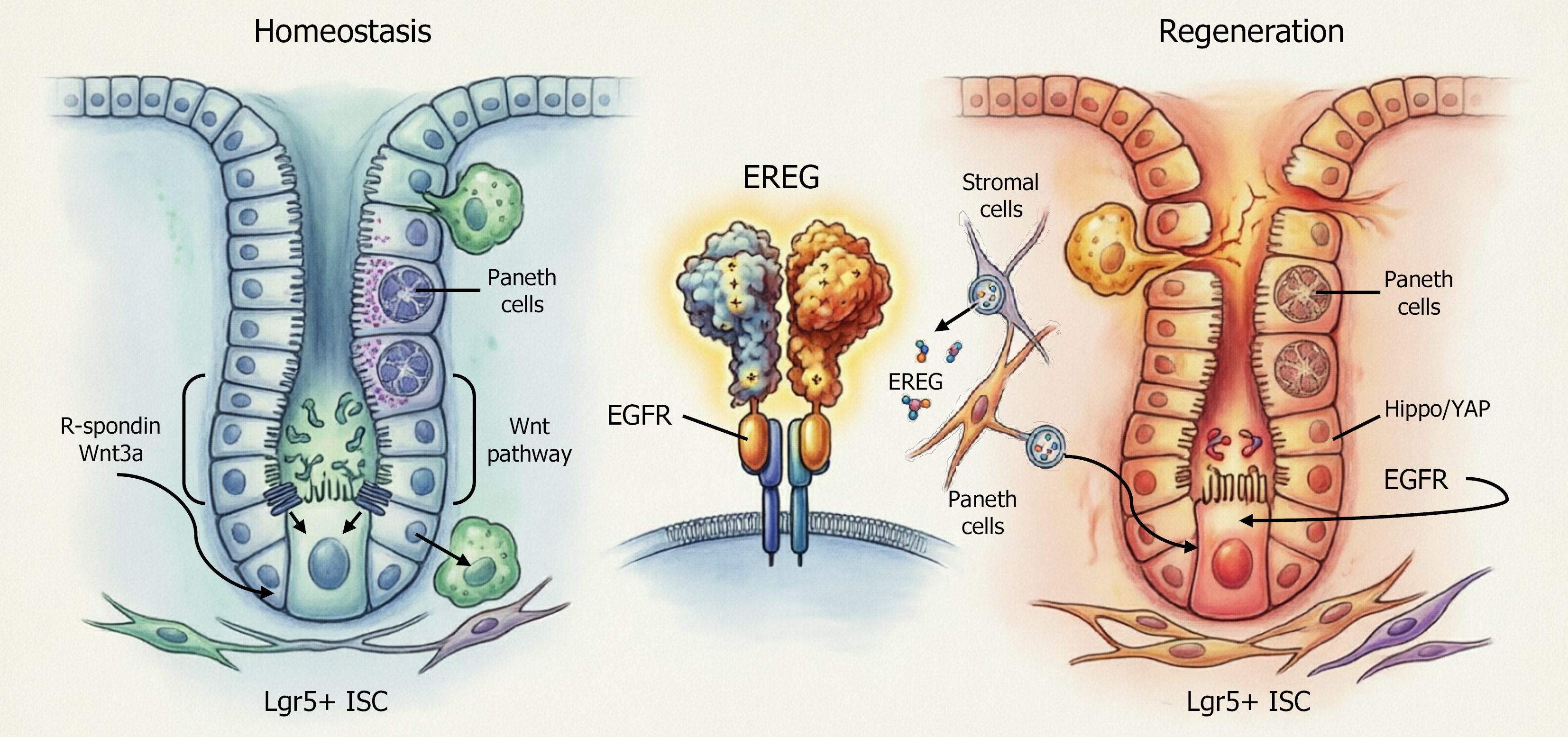
Figure 3 Schematic representation of the mechanisms underlying regeneration of the intestinal epithelium.
Left panel (homeostasis): Intestinal epithelial homeostasis is maintained through canonical Wnt signaling in Lgr5+ intestinal stem cells (ISCs) located at the crypt base. R-spondin and Wnt3a, which are produced by the niche, activate the Wnt pathway, thereby supporting ISC self-renewal and differentiation into epithelial lineages, including Paneth cells. Right panel (regeneration): Following injury, the Hippo pathway effector Yes-associated protein (YAP) transiently reprograms Lgr5+ ISCs. This suppresses excessive Paneth cell differentiation and activates a regenerative program that stimulates proliferation, survival, and epidermal growth factor receptor (EGFR) signaling. Epiregulin (EREG) serves as a critical mediator of YAP-dependent regeneration by binding to EGFR on ISCs. Stromal cells surrounding crypts secrete EREG in response to injury, particularly radiation damage, providing non-cell-autonomous compensation that can rescue organoid formation even in YAP-deficient conditions. Central inset: EREG binds to the EGFR receptors on Lgr5+ ISCs, thereby activating downstream signaling cascades. The ability of EREG to regulate the transition between homeostatic and regenerative states makes it a promising therapeutic target for treating radiation enteropathy, inflammatory bowel disease, and post-surgical intestinal restoration. EGFR: Epidermal growth factor receptor; EREG: Epiregulin; ISC: Intestinal stem cell; YAP: Yes-associated protein.
- Citation: Dudun AA, Bonartseva GA, Bonartsev AP. Enhancing mesenchymal stem cell function with epiregulin in tissue engineering: From tissue regeneration to gut microbiota modulation. World J Stem Cells 2026; 18(7): 119865
- URL: https://www.wjgnet.com/1948-0210/full/v18/i7/119865.htm
- DOI: https://dx.doi.org/10.4252/wjsc.119865