











Copyright: ©Author(s) 2026.
World J Stem Cells. Jul 26, 2026; 18(7): 119865
Published online Jul 26, 2026. doi: 10.4252/wjsc.119865
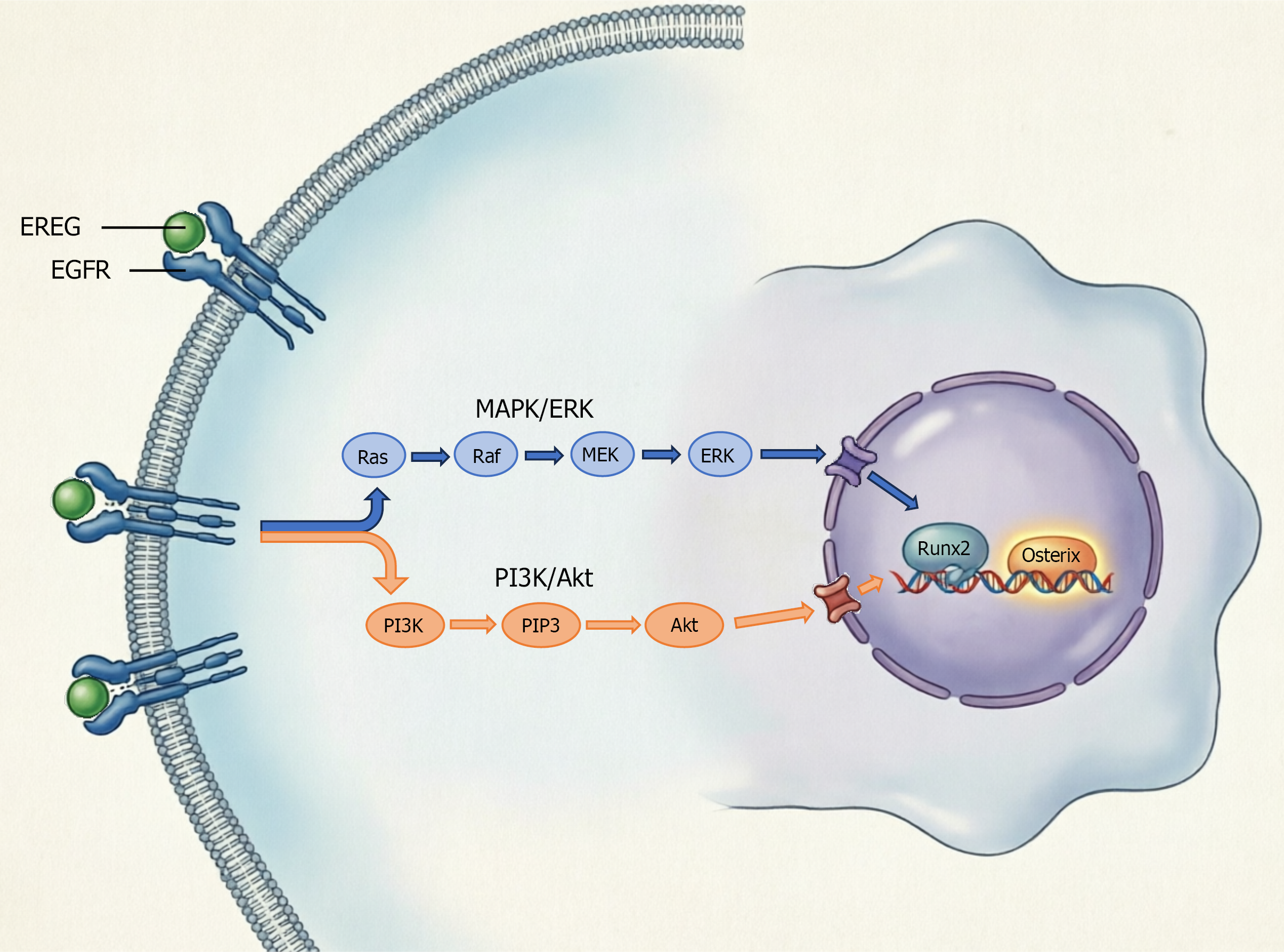
Figure 2 Schematic representation of the molecular mechanisms underlying epiregulin-induced osteogenic differentiation of mesen chymal stem cells.
Epiregulin binds to the epidermal growth factor receptor (EGFR) on the cell membrane, inducing dimerization and activation of the receptor. Due to its lower binding affinity than that of high-affinity ligands (e.g., epidermal growth factor), epiregulin promotes the formation of specific EGFR dimers and reduces the rate of receptor internalization, thereby ensuring the prolonged activation of downstream signaling pathways. Activation of the EGFR triggers two major signaling cascades: (1) the mitogen-activated protein kinase/extracellular signal-regulated kinase pathway, involving sequential activation of Ras, Raf, MEK, and extracellular signal-regulated kinase; and (2) the phosphatidylinositol 3-kinase/protein kinase B pathway involving phosphatidylinositol 3-kinase, phosphatidylinositol 3,4,5-trisphosphate, and protein kinase B. Both pathways converge in the nucleus, where they promote the expression and nuclear translocation of the key osteogenic transcription factors Runt-related transcription factor 2 and Osterix. These transcription factors then bind to DNA and initiate the transcriptional program that drives mesenchymal stem cell differentiation into osteoblasts. This sustained signaling mechanism is critical for maintaining osteogenic differentiation signals in tissue engineering constructs. Akt: Protein kinase B; EGFR: Epidermal growth factor receptor; EREG: Epiregulin; ERK: Extracellular signal-regulated kinase; MAPK: Mitogen-activated protein kinase; PI3K: Phosphatidylinositol 3-kinase; PIP3: Phosphatidylinositol 3,4,5-trisphosphate; Runx2: Runt-related transcription factor 2.
- Citation: Dudun AA, Bonartseva GA, Bonartsev AP. Enhancing mesenchymal stem cell function with epiregulin in tissue engineering: From tissue regeneration to gut microbiota modulation. World J Stem Cells 2026; 18(7): 119865
- URL: https://www.wjgnet.com/1948-0210/full/v18/i7/119865.htm
- DOI: https://dx.doi.org/10.4252/wjsc.119865