
















Copyright: ©Author(s) 2026.
World J Stem Cells. Jul 26, 2026; 18(7): 119260
Published online Jul 26, 2026. doi: 10.4252/wjsc.119260
Published online Jul 26, 2026. doi: 10.4252/wjsc.119260
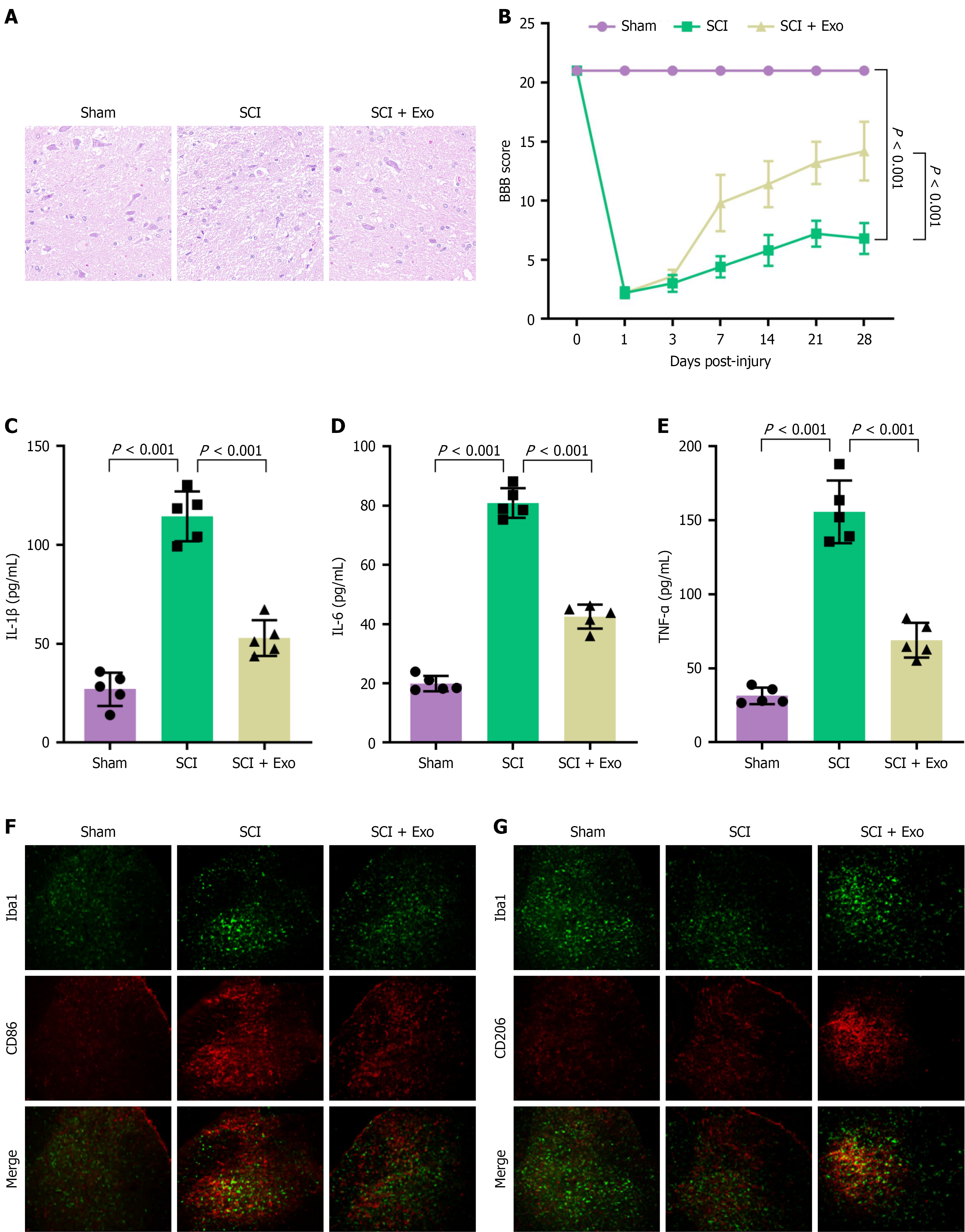
Figure 6 Exosomes promote tissue repair and functional recovery in rats with spinal cord injury.
A: Representative images of spinal cord tissue sections from different groups, assessed by hematoxylin and eosin staining, scale bar = 100 μm; B: Hindlimb motor function recovery of rats evaluated by the Basso, Beattie, Bresnahan locomotor rating scale at indicated time points after surgery; C-E: The expression levels of inflammatory cytokines (tumor necrosis factor-alpha, interleukin-1β, interleukin-6) in spinal cord tissues measured by enzyme-linked immunosorbent assay on day 28 post-surgery; F and G: Representative immunofluorescence staining of spinal cord sections from sham, spinal cord injury, and spinal cord injury + exosome groups: Iba-1 (green) and CD86 (red, M1 marker) (F); Iba-1 (green) and CD206 (red, M2 marker) (G). Merged images show co-localization. Data are presented as mean ± SD. SCI: Spinal cord injury; Exo: Exosome; BBB: Basso, Beattie, Bresnahan; TNF-α: Tumor necrosis factor-alpha; IL: Interleukin.
- Citation: Wang W, Wang B, Yin H. Exosomal miR-181d-5p promotes spinal cord injury repair by driving microglial polarization from M1 to M2 phenotype. World J Stem Cells 2026; 18(7): 119260
- URL: https://www.wjgnet.com/1948-0210/full/v18/i7/119260.htm
- DOI: https://dx.doi.org/10.4252/wjsc.119260