
















Copyright: ©Author(s) 2026.
World J Stem Cells. Jul 26, 2026; 18(7): 119260
Published online Jul 26, 2026. doi: 10.4252/wjsc.119260
Published online Jul 26, 2026. doi: 10.4252/wjsc.119260
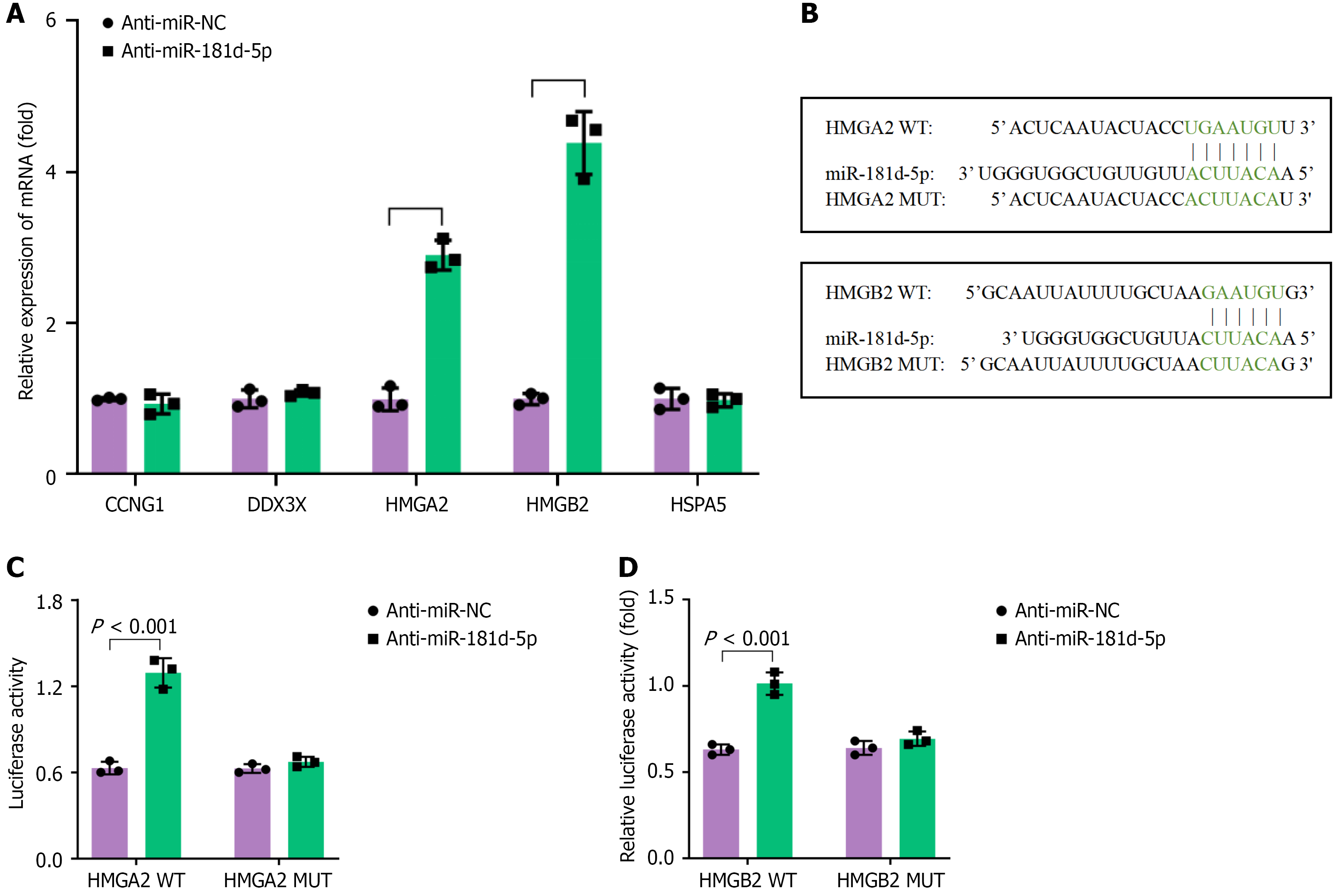
Figure 5 miR-181d-5p directly targets HMGA2 and HMGB2.
A: The mRNA expression levels of candidate target genes (cyclin G1, DEAD-Box Helicase 3 X-linked, HMGA2, HMGB2, heat shock protein family A member 5) in microglia after miR-181d-5p knockdown (anti-miR-181d-5p) were measured by reverse transcription and quantitative polymerase chain reaction; B: The predicted binding sites of miR-181d-5p within the wild-type 3’ untranslated regions (UTRs) of HMGA2 and HMGB2, and the designed mutant 3’UTR sequences are shown; C: Luciferase reporter assay was performed to verify the direct binding of miR-181d-5p to the HMGA2 3’UTR; D: Luciferase reporter assay was performed to verify the direct binding of miR-181d-5p to the HMGB2 3’UTR. Data are presented as mean ± SD. CCNG1: Cyclin G1; DDX3X: DEAD-Box Helicase 3 X-linked; HSPA5: Heat shock protein family A member 5; WT: Wild-type; MUT: Mutant.
- Citation: Wang W, Wang B, Yin H. Exosomal miR-181d-5p promotes spinal cord injury repair by driving microglial polarization from M1 to M2 phenotype. World J Stem Cells 2026; 18(7): 119260
- URL: https://www.wjgnet.com/1948-0210/full/v18/i7/119260.htm
- DOI: https://dx.doi.org/10.4252/wjsc.119260