
















Copyright: ©Author(s) 2026.
World J Stem Cells. Jun 26, 2026; 18(6): 118674
Published online Jun 26, 2026. doi: 10.4252/wjsc.118674
Published online Jun 26, 2026. doi: 10.4252/wjsc.118674
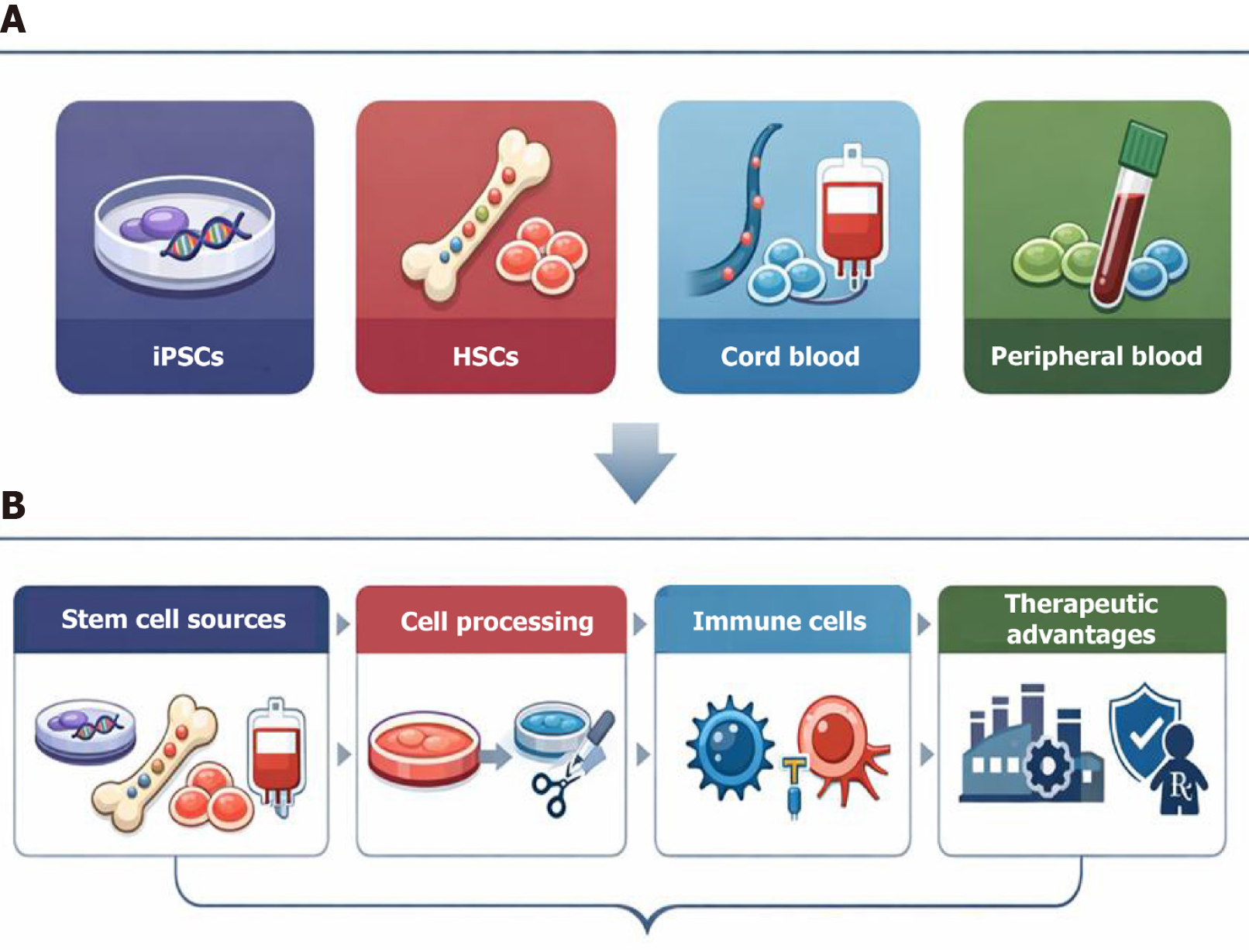
Figure 1 Overview of stem cell sources and a streamlined workflow for manufacturing immune effector cells.
A: Summarizing the main cellular inputs, including induced pluripotent stem cells, hematopoietic stem cells, umbilical cord blood, and adult peripheral blood, highlighting their unique biological features and translational benefits that impact production scalability, product uniformity, and clinical feasibility; B: Illustrating the stepwise manufacturing process, beginning with cell procurement or somatic cell reprogramming, followed by expansion and master cell bank generation, lineage-specific immune differentiation, genetic engineering and functional maturation, good manufacturing practice-compliant quality control, cryopreservation, and final product formulation. Collectively, the figure emphasizes the translational advantages of stem cell-based platforms, including large-scale manufacturability, minimized donor-to-donor variation, reproducible therapeutic products and advanced genetic engineering capabilities that increase immune cell efficacy, durability and safety. iPSCs: Induced pluripotent stem cells; HSCs: Hematopoietic stem cells.
- Citation: Tolan DA, Ebrahim NAA, AlAli NS, Ahmed HA, Alharshan GA, Arafat AMA. Stem cell-derived immune cells in pediatric cancer therapy: From bench to bedside. World J Stem Cells 2026; 18(6): 118674
- URL: https://www.wjgnet.com/1948-0210/full/v18/i6/118674.htm
- DOI: https://dx.doi.org/10.4252/wjsc.118674