
















Copyright: ©Author(s) 2026.
World J Stem Cells. May 26, 2026; 18(5): 118307
Published online May 26, 2026. doi: 10.4252/wjsc.v18.i5.118307
Published online May 26, 2026. doi: 10.4252/wjsc.v18.i5.118307
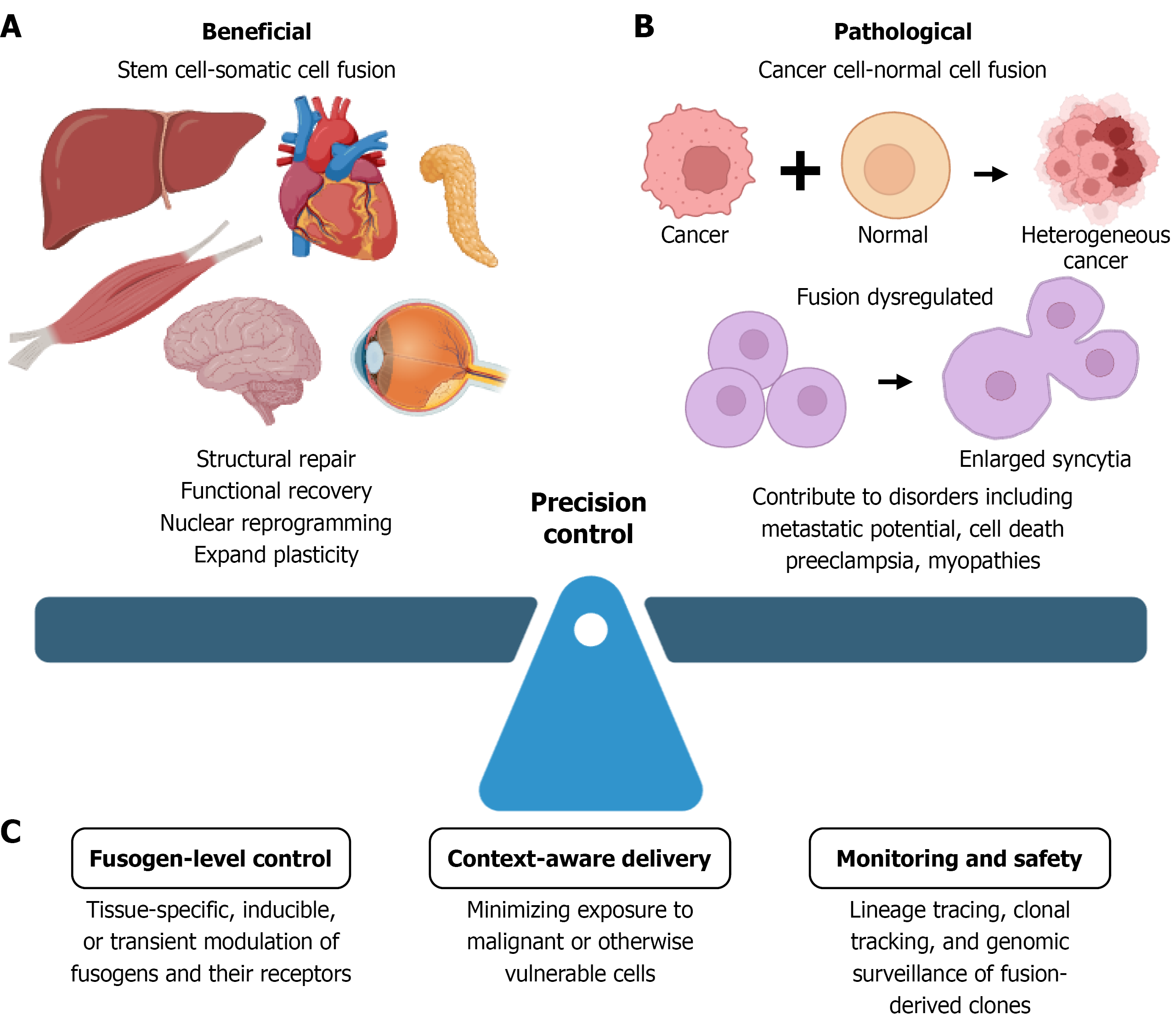
Figure 4 Balancing beneficial and pathological cell-cell fusion for safer regenerative therapies.
Cell-cell fusion can act as a double-edged sword in vivo, providing opportunities for tissue regeneration while also posing significant safety risks. A: On the beneficial side, controlled fusion between stem cells or bone marrow-derived cells and somatic cells in injured tissues can generate hybrids that participate in structural repair and functional recovery, as shown in the central nervous system, skeletal muscle, heart, liver, and other organs. In these contexts, fusion-derived heterokaryons or synkaryons can undergo nuclear reprogramming and expand stem cell plasticity beyond classical paracrine or differentiation-mediated mechanisms; B: On the pathological side, cancer cell-normal cell fusion can produce hybrid tumor cells with increased genomic diversity, metastatic potential, and therapy resistance; viral fusogens can drive syncytia formation that disrupts tissue barriers and leads to cell death; and dysregulated endogenous fusogens in tissues such as placenta, skeletal muscle, or bone can contribute to disorders including preeclampsia, myopathies, and bone remodeling defects; C: To safely harness fusion in regenerative medicine, future strategies must move beyond globally enhancing or suppressing fusion and instead aim to precisely control fusion partners, timing, and microenvironmental context. Key levers include: (1) Fusogen-level control, using tissue-specific, inducible, or transient modulation of fusogens and their receptors; (2) Context-aware delivery, aligning cell therapy with injury- or inflammation-induced fusion-permissive niches while minimizing exposure to malignant or otherwise vulnerable cells; and (3) Monitoring and safety, incorporating lineage tracing, clonal tracking, and genomic surveillance of fusion-derived clones. Together, these principles highlight how insights into both physiological and pathological fusion can guide the design of fusion-aware cell-based therapies with improved efficacy and safety.
- Citation: Kim JS, Hwang IS, Kim SJ, Moon MH, Park HD, Jin BH, Kim DY, Lee MJ, Eum SY, Yoo SJ, Cha BH. Cell-cell fusion and stem cell plasticity: Emerging paradigms in tissue regeneration. World J Stem Cells 2026; 18(5): 118307
- URL: https://www.wjgnet.com/1948-0210/full/v18/i5/118307.htm
- DOI: https://dx.doi.org/10.4252/wjsc.v18.i5.118307