
















Copyright: ©Author(s) 2026.
World J Stem Cells. May 26, 2026; 18(5): 118307
Published online May 26, 2026. doi: 10.4252/wjsc.v18.i5.118307
Published online May 26, 2026. doi: 10.4252/wjsc.v18.i5.118307
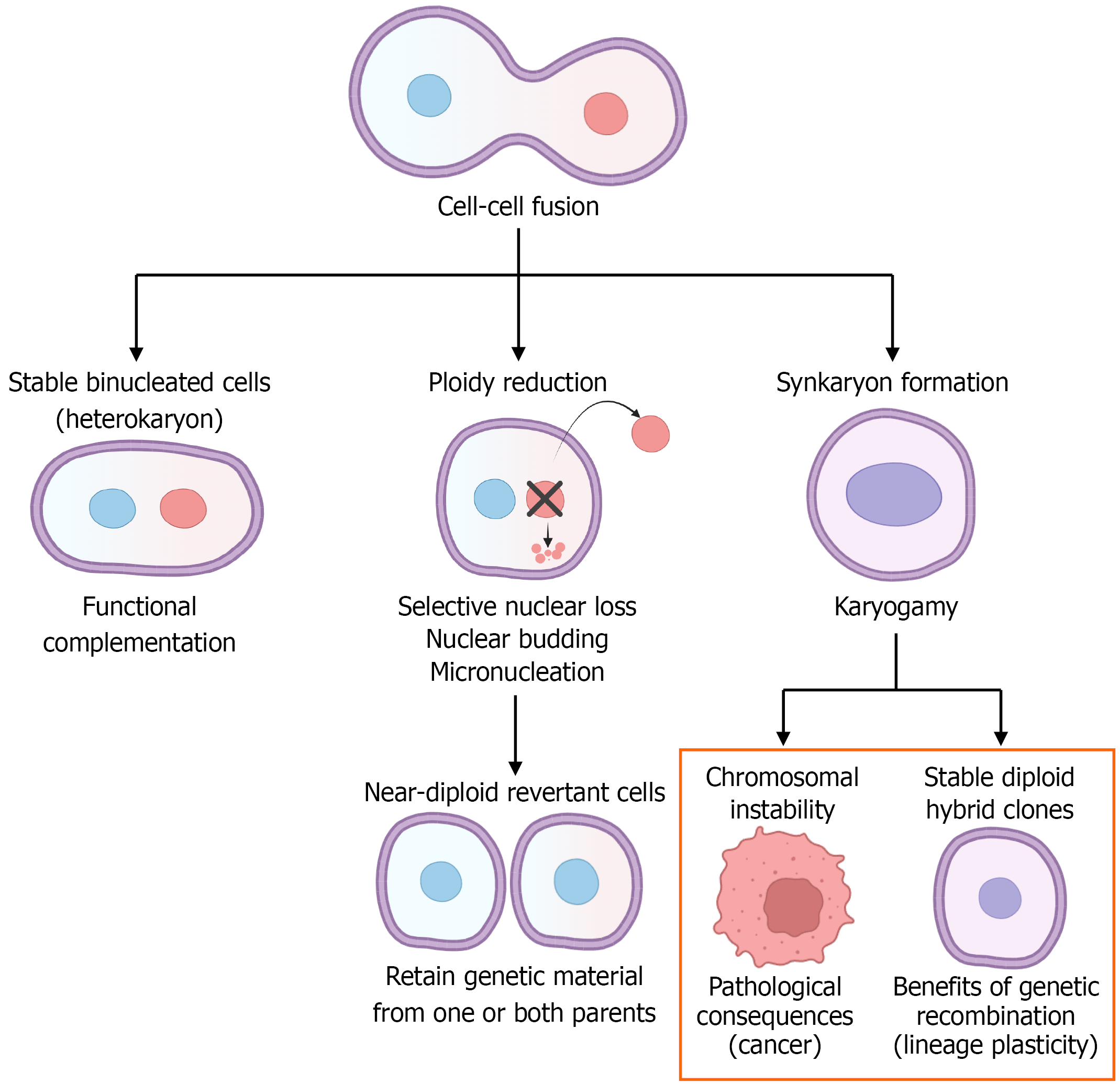
Figure 2 Heterokaryon-to-synkaryon fates after cell-cell fusion.
Following membrane fusion and cytoplasmic continuity, the immediate product of cell-cell fusion is a heterokaryon, in which parental nuclei coexist within a shared cytoplasm. From this state, several fates are possible. In one trajectory, heterokaryons persist as stable binucleated cells, maintaining separate nuclei but integrating cytoplasmic signaling and metabolic networks, which can enable functional complementation between fusion partners. In a second trajectory, ploidy reduction occurs through selective nuclear loss, nuclear budding, or micronucleation, ultimately yielding near-diploid revertant cells that retain genetic material from one or both partners. In a third trajectory, karyogamy leads to formation of a single synkaryon harboring a combined tetraploid (4N) genome. Subsequent cell divisions from synkaryons can result either in chromosomal instability and aneuploid or mosaic progeny, or in error-corrected segregation and stable diploid hybrid clones that carry recombined parental genomes. These divergent fates underlie both beneficial outcomes, such as regeneration and lineage plasticity, and pathological consequences, including genomic instability and tumor progression.
- Citation: Kim JS, Hwang IS, Kim SJ, Moon MH, Park HD, Jin BH, Kim DY, Lee MJ, Eum SY, Yoo SJ, Cha BH. Cell-cell fusion and stem cell plasticity: Emerging paradigms in tissue regeneration. World J Stem Cells 2026; 18(5): 118307
- URL: https://www.wjgnet.com/1948-0210/full/v18/i5/118307.htm
- DOI: https://dx.doi.org/10.4252/wjsc.v18.i5.118307