
















Copyright: ©Author(s) 2026.
World J Stem Cells. May 26, 2026; 18(5): 117584
Published online May 26, 2026. doi: 10.4252/wjsc.v18.i5.117584
Published online May 26, 2026. doi: 10.4252/wjsc.v18.i5.117584
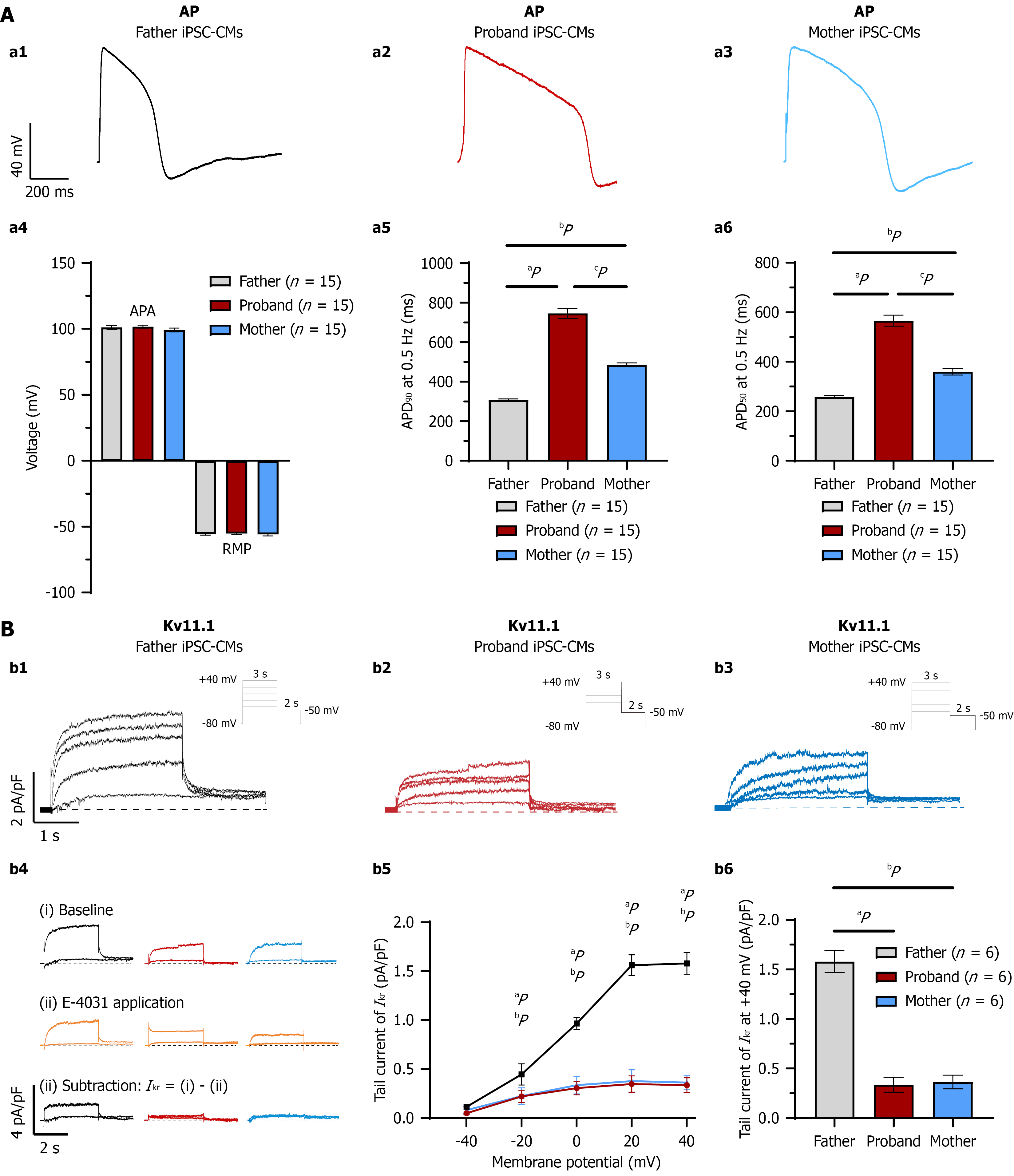
Figure 3 Action potentials and rapid delayed rectifier potassium current characteristics of family trio induced pluripotent stem cell-derived cardiomyocytes.
A: Representative action potentials under 0.5-Hz pacing from father induced pluripotent stem cell-derived cardiomyocytes (iPSC-CMs) (a1), proband iPSC-CMs (a2), and mother iPSC-CMs (a3). Panel shows resting membrane potential and action potential amplitude (a4), while panels present statistical analysis of APD90 and APD50 (a5 and a6). Data represent n = 15 from 3 independent differentiations; B: Representative total potassium currents from father iPSC-CMs (b1), proband iPSC-CMs (b2), and mother iPSC-CMs (b3). Panel shows the IKr current, obtained by subtracting the current before and after E4031 treatment (b4). Panel represents the difference in IKr tail current density (b5 and b6). Data represent n = 6 from 3 independent differentiations. iPSC-CMs: Induced pluripotent stem cell-derived cardiomyocytes; APA: Action potential amplitude; RMP: Resting membrane potential.
- Citation: Li Q, Guo CT, Ren JC, Wang YF, Zhao ZJ, Lv CH, Wang QY, Liu Q, Li K, Yang J, He R, Liu FL, Lv TT, Zhang P. Calcium dysregulation underlies phenotypic diversity in LQT2: Insights from induced pluripotent stem cell-derived cardiomyocytes of a KCNH2 p.Y427H family trio. World J Stem Cells 2026; 18(5): 117584
- URL: https://www.wjgnet.com/1948-0210/full/v18/i5/117584.htm
- DOI: https://dx.doi.org/10.4252/wjsc.v18.i5.117584