
















©Author(s) (or their employer(s)) 2026.
World J Stem Cells. Feb 26, 2026; 18(2): 116184
Published online Feb 26, 2026. doi: 10.4252/wjsc.v18.i2.116184
Published online Feb 26, 2026. doi: 10.4252/wjsc.v18.i2.116184
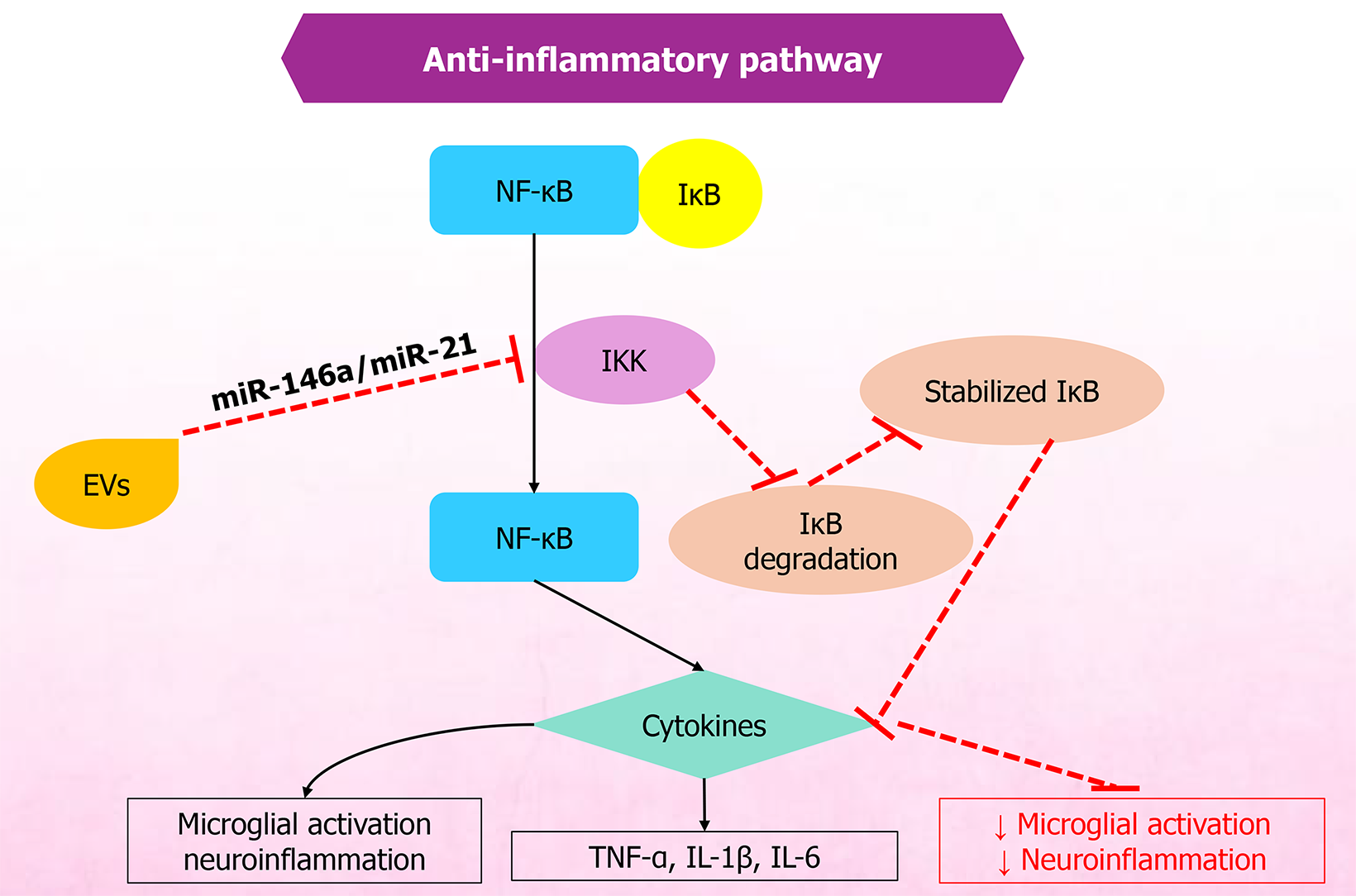
Figure 1 Schematic representation of extracellular vesicle-mediated modulation of nuclear factor kappa B-light chain enhancer of activated B cells signaling pathway.
Under inflammatory stimulation, receptor activation triggers the inhibitor of kappa B (IκB) kinase complex, leading to IκB phosphorylation and degradation, allowing nuclear factor kappa B to translocate into the nucleus and induce the expression of pro-inflammatory cytokines. Extracellular vesicle-derived microRNAs inhibit IκB kinase activity, thus stabilizing IκB and suppressing nuclear factor kappa B activation and downstream cytokine release. This mechanism helps reduce microglial activation and mitigate neuroinflammation. NF-кB: Nuclear factor kappa B; IκB: Inhibitor of kappa B; IKK: Inhibitor of kappa B kinase; EVs: Extracellular vesicles; TNF: Tumor necrosis factor; IL: Interleukin.
- Citation: Khan SA, Gangadaran P, Tiwari P, Rajendran RL, Jamal A, Hattiwale SH, Anand K, Jha SK, Hong CM, Ahn BC, Parvez S. Therapeutic applications of mesenchymal stem cell-derived extracellular vesicles in pain management: A narrative review of emerging evidence and future directions. World J Stem Cells 2026; 18(2): 116184
- URL: https://www.wjgnet.com/1948-0210/full/v18/i2/116184.htm
- DOI: https://dx.doi.org/10.4252/wjsc.v18.i2.116184