
















©Author(s) (or their employer(s)) 2026.
World J Stem Cells. Feb 26, 2026; 18(2): 112940
Published online Feb 26, 2026. doi: 10.4252/wjsc.v18.i2.112940
Published online Feb 26, 2026. doi: 10.4252/wjsc.v18.i2.112940
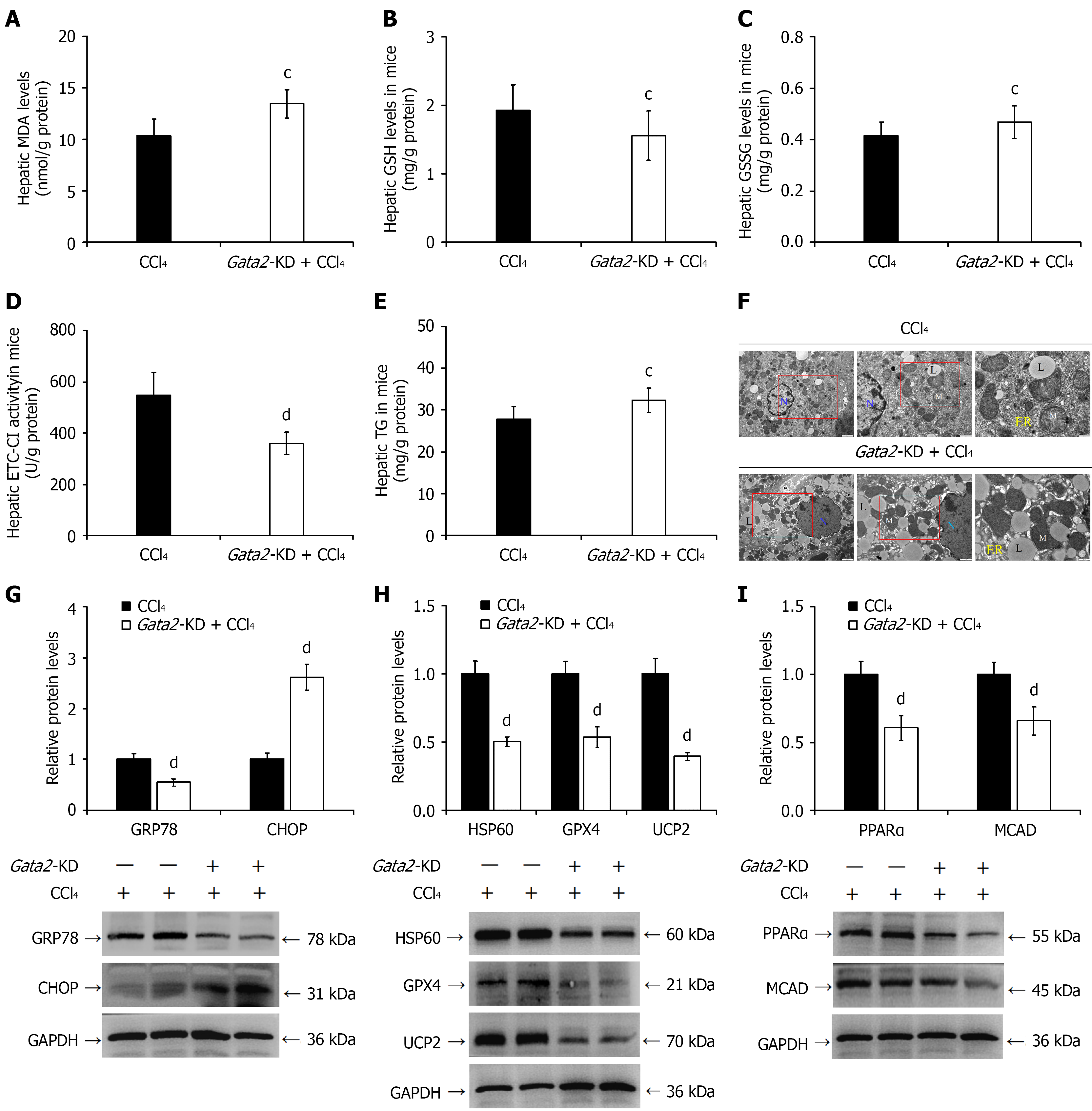
Figure 9 Hepatocyte-specific Gata2 knockdown impairs hepatic stress adaptation and exacerbates triglyceride metabolic dysregulation in chronic liver injury mice.
A: Hepatic malondialdehyde content; B: Glutathione levels; C: Oxidized glutathione levels; D: Electron transfer chain complex I activity; E: Triglyceride levels; F: Representative transmission electron microscope images showing ultrastructural morphology: Nucleus (N), mitochondria (M) with cristae disruption, dilated endoplasmic reticulum (ER), and lipid droplets (L); G: Analysis of endoplasmic reticulum stress-related protein expression; H: Western blot analysis of oxidative stress-related protein expression levels; I: Western blot analysis of triglyceride metabolism-related protein expression levels. cP < 0.05, dP < 0.01 vs chronic liver injury group (CCl4). MDA: Malondialdehyde; GSH: Glutathione; GSSG: Oxidized glutathione; ETC-CI: Electron transfer chain complex I; TG: Triglyceride; p-MLKL: Phosphorylated mixed lineage kinase domain-like protein; MLKL: Mixed lineage kinase domain-like protein; HSP60: Heat shock protein 60; GRP78: Glucose-regulated protein 78; GPX4: Glutathione peroxidase 4; UCP2: Uncoupling protein 2; PPARα: Peroxisome proliferator-activated receptor alpha; MCAD: Medium chain acyl-CoA dehydrogenase.
- Citation: Chen YF, Li SQ, Zhang J, Ma WT, Zhou Y, Rao JX, Yi Y, Cheng QJ, Zhong WW, Chen H, Chen YH, Luo YW, He YH. GATA2 deficiency exacerbates chronic liver injury via disrupting hepatocyte death-regeneration balance: Clinical, histopathological, and molecular evidence. World J Stem Cells 2026; 18(2): 112940
- URL: https://www.wjgnet.com/1948-0210/full/v18/i2/112940.htm
- DOI: https://dx.doi.org/10.4252/wjsc.v18.i2.112940