
















©Author(s) (or their employer(s)) 2026.
World J Stem Cells. Feb 26, 2026; 18(2): 112940
Published online Feb 26, 2026. doi: 10.4252/wjsc.v18.i2.112940
Published online Feb 26, 2026. doi: 10.4252/wjsc.v18.i2.112940
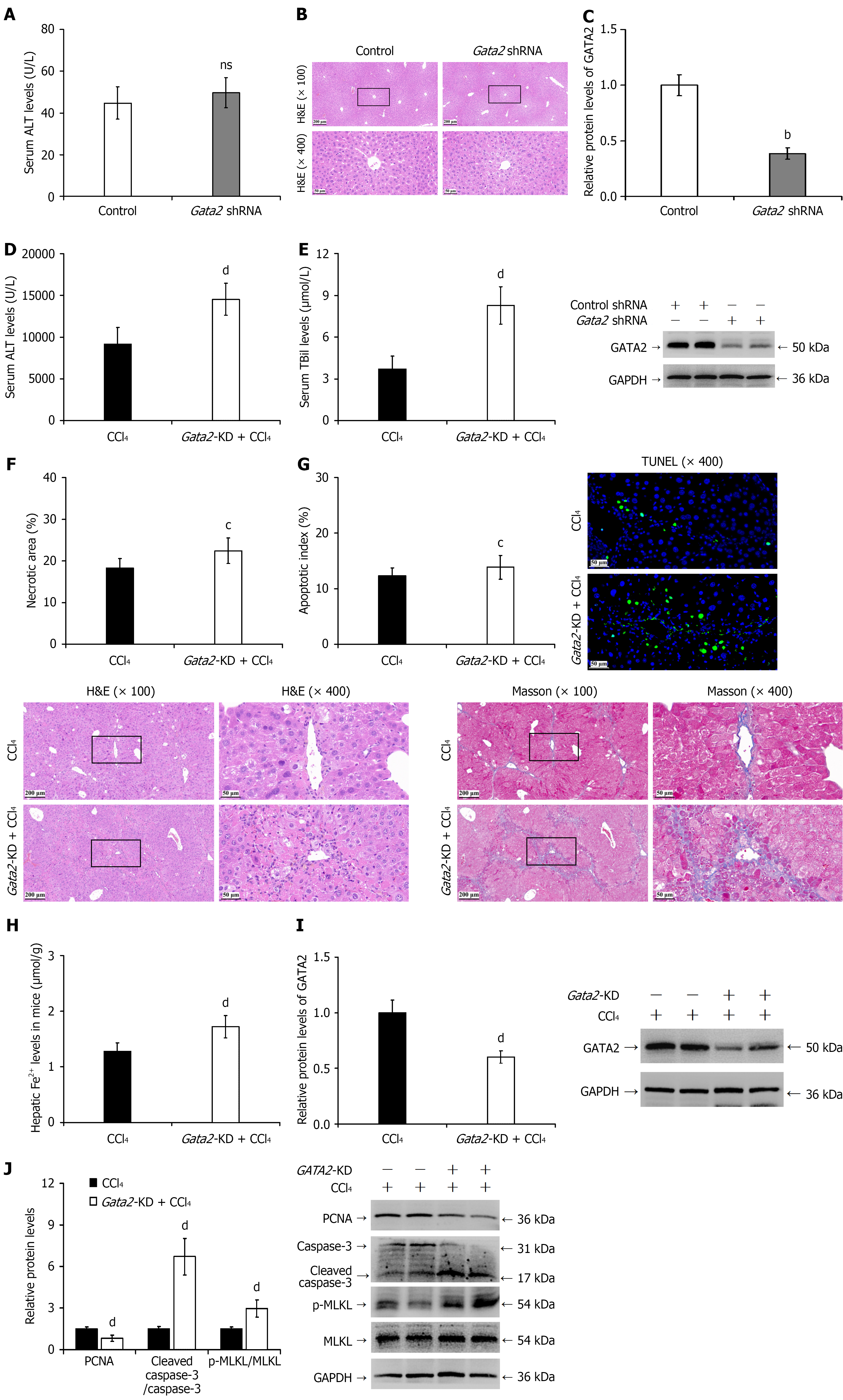
Figure 8 Hepatocyte-specific Gata2 knockdown exacerbates hepatocyte death-regeneration imbalance in chronic liver injury mice.
A-C: Gata2 shRNA-transfected healthy mice: Serum alanine aminotransferase levels (A); hepatic histopathology by hematoxylin and eosin staining (B); western blot analysis of GATA2 protein expression (representative blots shown) with quantification (C); D-I: Gata2 knockdown intervention in chronic liver injury mice: Effect of Gata2 knockdown on serum alanine aminotransferase levels in chronic liver injury mice (D); serum total bilirubin levels (E); quantitative analysis of necrotic areas with representative hematoxylin and eosin and Masson’s trichrome staining images (F); fluorescent Terminal deoxynucleotidyl transferase-mediated dUTP nick-end labeling staining analysis of hepatocyte apoptosis rate (representative images shown) (G); ferrous ion content (H); western blot analysis of GATA2 protein expression (blots displayed) with quantification (I); J: Western blot analysis of proliferating cell nuclear antigen, cleaved caspase-3, and phosphorylated mixed lineage kinase domain-like protein expression (representative blots shown) with quantification. ns: P > 0.05, bP < 0.01 vs control group; cP < 0.05 vs chronic liver injury group (CCl4), dP < 0.01 vs chronic liver injury group (CCl4). ALT: Alanine aminotransferase; H&E: Hematoxylin and eosin; TBil: Total bilirubin; PCNA: Proliferating cell nuclear antigen; p-MLKL: Phosphorylated mixed lineage kinase domain-like protein; MLKL: Mixed lineage kinase domain-like protein.
- Citation: Chen YF, Li SQ, Zhang J, Ma WT, Zhou Y, Rao JX, Yi Y, Cheng QJ, Zhong WW, Chen H, Chen YH, Luo YW, He YH. GATA2 deficiency exacerbates chronic liver injury via disrupting hepatocyte death-regeneration balance: Clinical, histopathological, and molecular evidence. World J Stem Cells 2026; 18(2): 112940
- URL: https://www.wjgnet.com/1948-0210/full/v18/i2/112940.htm
- DOI: https://dx.doi.org/10.4252/wjsc.v18.i2.112940