
















Copyright: ©Author(s) 2026.
World J Stem Cells. Nov 26, 2026; 18(11): 126709
Published online Nov 26, 2026. doi: 10.4252/wjsc.126709
Published online Nov 26, 2026. doi: 10.4252/wjsc.126709
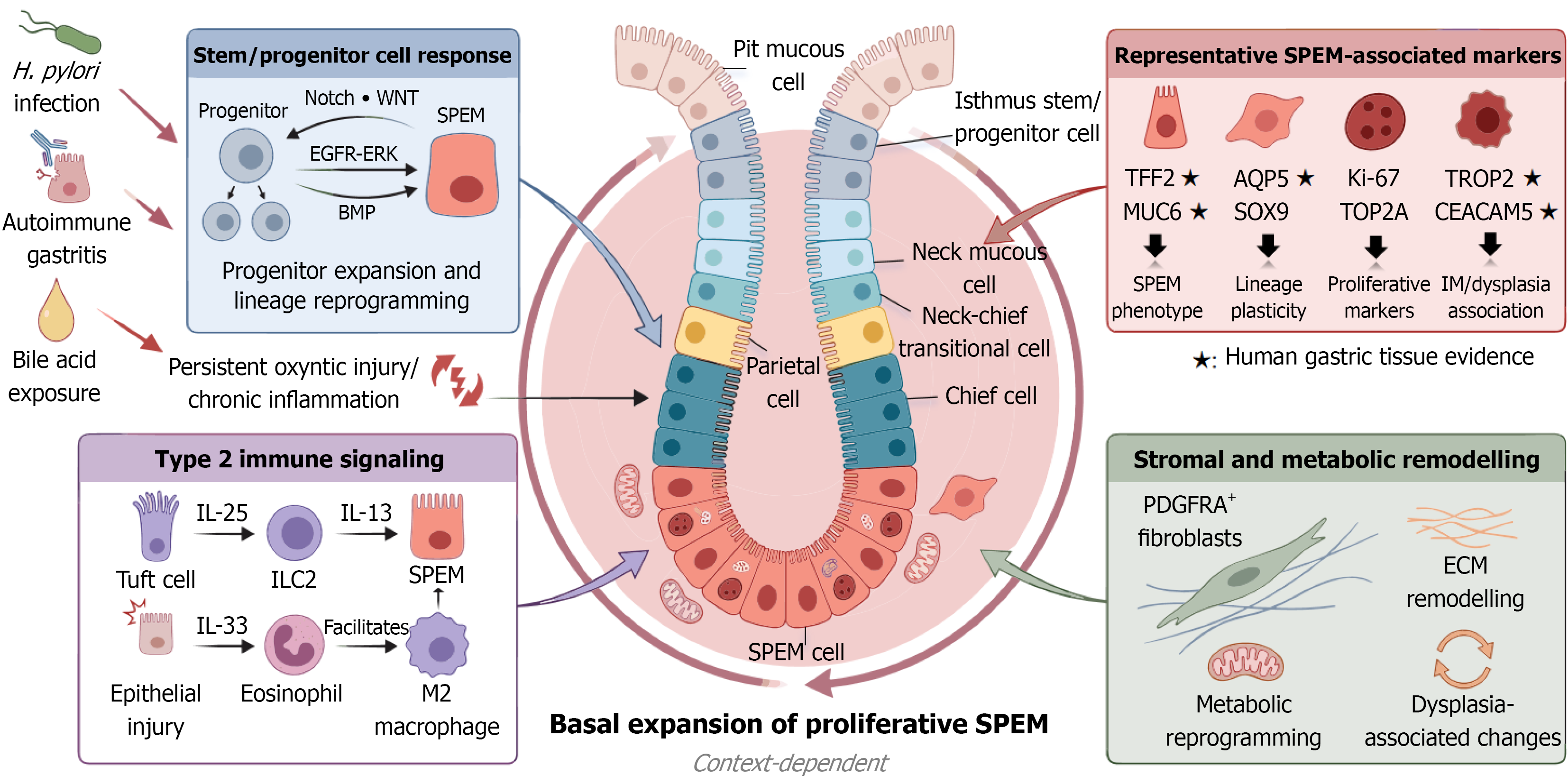
Figure 2 Microenvironmental regulation and phenotypic features of proliferative spasmolytic polypeptide-expressing metaplasia.
Persistent oxyntic injury and chronic inflammation are associated with epithelial stem/progenitor responses, type 2 immune signaling, and stromal and metabolic remodeling, which may support context-dependent basal expansion of proliferative spasmolytic polypeptide-expressing metaplasia. TFF2 and MUC6 represent the spasmolytic polypeptide-expressing metaplasia phenotype; AQP5 and SOX9 are associated with lineage plasticity; Ki-67 and TOP2A reflect proliferative activity; and TROP2 and CEACAM5 are associated with intestinal metaplasia and dysplasia-associated changes. Evidence is predominantly preclinical, with complementary evidence from human gastric tissues and organoid systems, and the markers shown do not constitute a validated diagnostic or risk-stratification panel. Asterisks indicate markers with reported expression in human gastric tissues; they do not indicate validated diagnostic thresholds or independently validated clinical biomarkers. SPEM: Spasmolytic polypeptide-expressing metaplasia.
- Citation: Zhang WJ, Huang YZ, Chen Q, Zheng ST, Yuan HS, Chen XB, Liang YZ, Hong XX, Xu YF, Li HW, Gao Y, Guo SJ. Proliferative spasmolytic polypeptide-expressing metaplasia in gastric carcinogenesis: Stem cell origins, lineage plasticity, and clinical implications. World J Stem Cells 2026; 18(11): 126709
- URL: https://www.wjgnet.com/1948-0210/full/v18/i11/126709.htm
- DOI: https://dx.doi.org/10.4252/wjsc.126709