
















Copyright: ©Author(s) 2026.
World J Stem Cells. Nov 26, 2026; 18(11): 123837
Published online Nov 26, 2026. doi: 10.4252/wjsc.123837
Published online Nov 26, 2026. doi: 10.4252/wjsc.123837
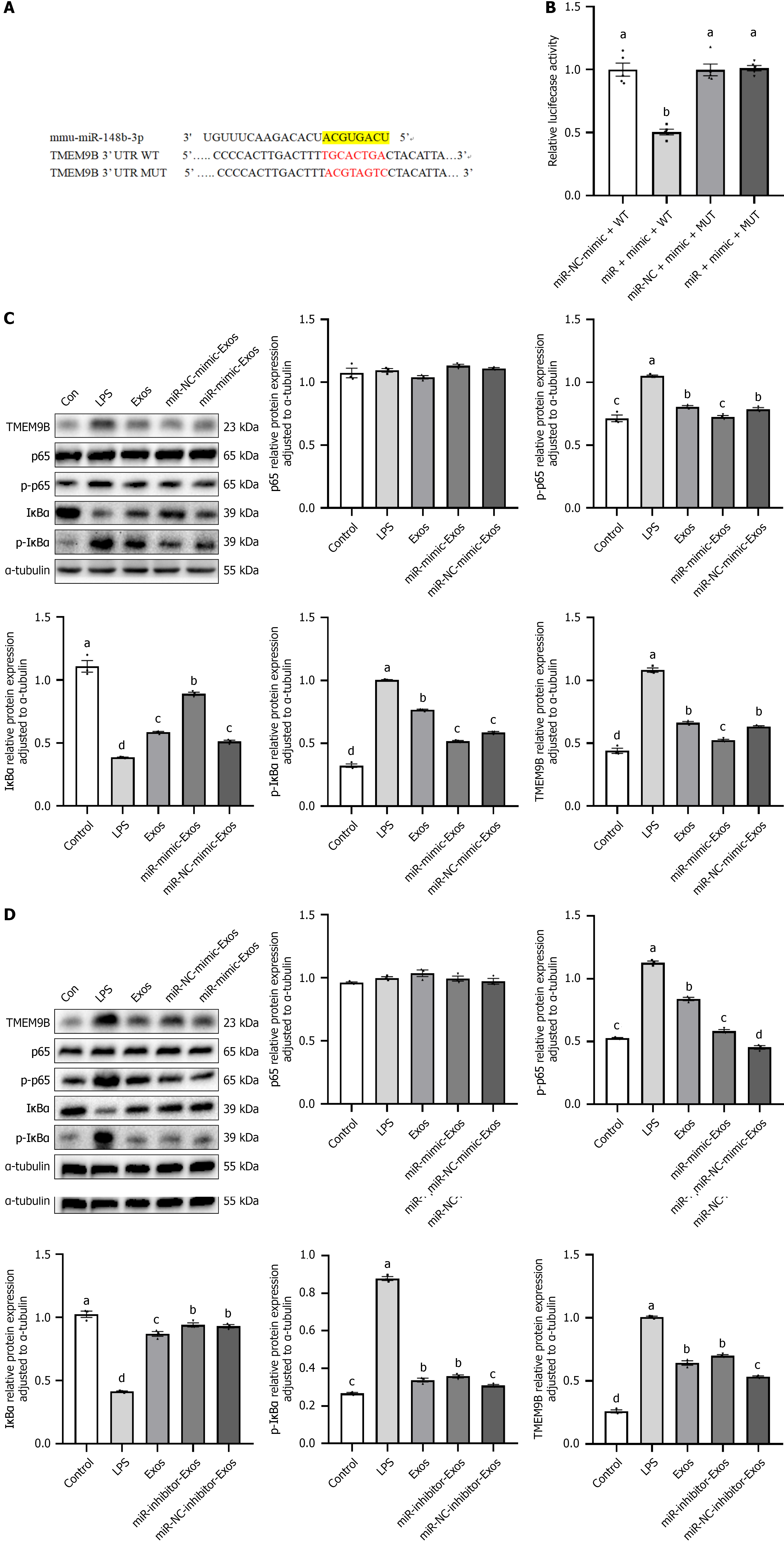
Figure 6 Transmembrane protein 9B is a direct target of miR-148a-3p and mediates nuclear factor-kappa B pathway inhibition.
A: Schematic of the predicted binding sites of miR-148a-3p) in the 3’-untranslated region of transmembrane protein 9B (TMEM9B) mRNA, showing the wild-type and mutated sequences; B: Dual-luciferase reporter assay in 293T cells co-transfected with miR-148a-3p mimic or negative control (NC) mimic and either pmirGLO-wild-type-TMEM9B or pmirGLO-mutated-TMEM9B reporter plasmids. Data are expressed as relative luciferase activity normalized to Renilla luciferase; C: Western blot analysis and quantification of TMEM9B, p-p65, total p65, p-IκBα, and total IκBα in BV2 microglial cells from the Control, lipopolysaccharide (LPS, 200 ng/mL), LPS + adipose-derived stem cell-derived exosomes (100 μg/mL), LPS + miR-148a-3p-mimic-Exos, and LPS + miR-NC-mimic-Exos groups. α-Tubulin was used as a loading control; D: Western blot analysis and quantification of the same proteins in the Control, LPS, LPS + adipose-derived stem cell exosomes, LPS + miR-148a-3p-inhibitor-Exos, and LPS + miR-NC-inhibitor-Exos groups. Data are presented as the mean ± SD (n = 3 independent experiments per group). Groups were compared by one-way analysis of variance followed by Tukey’s post-hoc test. Different superscript letters indicate statistically significant differences (P < 0.05); groups sharing the same letter are not significantly different. TMEM9B: Transmembrane protein 9B; WT: Wild-type; MUT: Mutated; NC: Negative control; LPS: Lipopolysaccharide.
- Citation: Hui XB, Wang X, Qian TD, Gan XK, Li LX. Exosomal miR-148a-3p from adipose-derived stem cells promotes microglial M2 polarization and alleviates traumatic brain injury via the TMEM9B/NF-κB axis. World J Stem Cells 2026; 18(11): 123837
- URL: https://www.wjgnet.com/1948-0210/full/v18/i11/123837.htm
- DOI: https://dx.doi.org/10.4252/wjsc.123837