
















Copyright: ©Author(s) 2026.
World J Stem Cells. Nov 26, 2026; 18(11): 123837
Published online Nov 26, 2026. doi: 10.4252/wjsc.123837
Published online Nov 26, 2026. doi: 10.4252/wjsc.123837
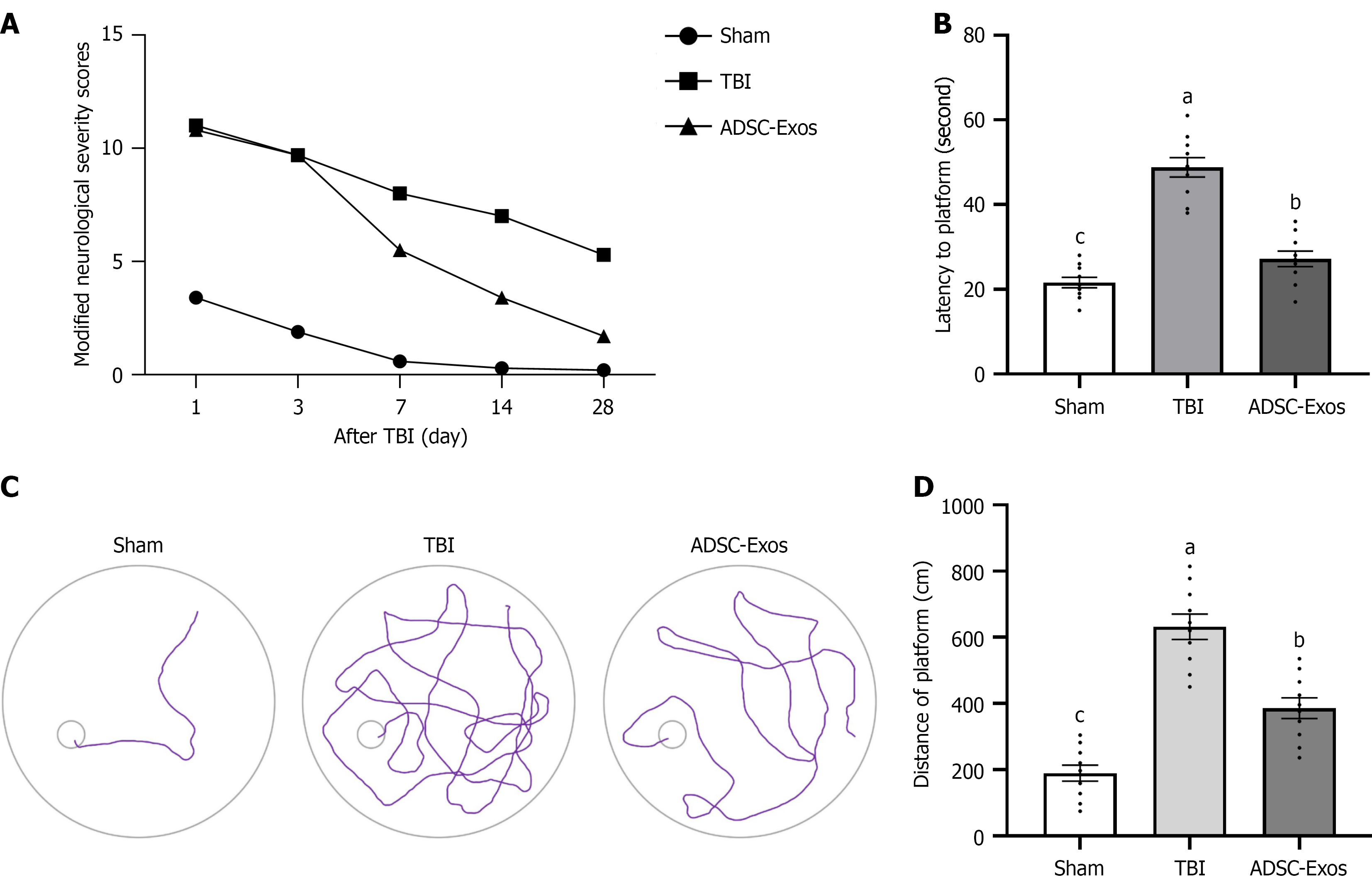
Figure 2 Adipose-derived stem cell exosomes promote functional recovery in rats after traumatic brain injury.
A: Modified neurological severity score evaluated at 1, 3, 7, 14, and 28 days after traumatic brain injury (TBI) in the Sham, TBI, and TBI + adipose-derived stem cell exosome groups; B: Escape latency in the Morris water maze test; C: Representative swim paths during the spatial probe trial on day 13. The gray circle indicates the previous location of the hidden platform; D: Swimming distance in the Morris water maze test. Data are presented as the mean ± SD (n = 10 per group). Groups were compared by one-way analysis of variance followed by Tukey’s post-hoc test. Effect sizes (partial η2) and 95% confidence intervals are provided for all behavioral endpoints. Post-hoc power analysis confirmed > 0.85 power for the primary endpoint. Different superscript letters indicate statistically significant differences (P < 0.05); groups sharing the same letter are not significantly different. ADSC: Adipose-derived stem cell; ADSC-Exos: Adipose-derived stem cell exosomes; TBI: Traumatic brain injury.
- Citation: Hui XB, Wang X, Qian TD, Gan XK, Li LX. Exosomal miR-148a-3p from adipose-derived stem cells promotes microglial M2 polarization and alleviates traumatic brain injury via the TMEM9B/NF-κB axis. World J Stem Cells 2026; 18(11): 123837
- URL: https://www.wjgnet.com/1948-0210/full/v18/i11/123837.htm
- DOI: https://dx.doi.org/10.4252/wjsc.123837