
















Copyright: ©Author(s) 2026.
World J Stem Cells. Oct 26, 2026; 18(10): 125423
Published online Oct 26, 2026. doi: 10.4252/wjsc.125423
Published online Oct 26, 2026. doi: 10.4252/wjsc.125423
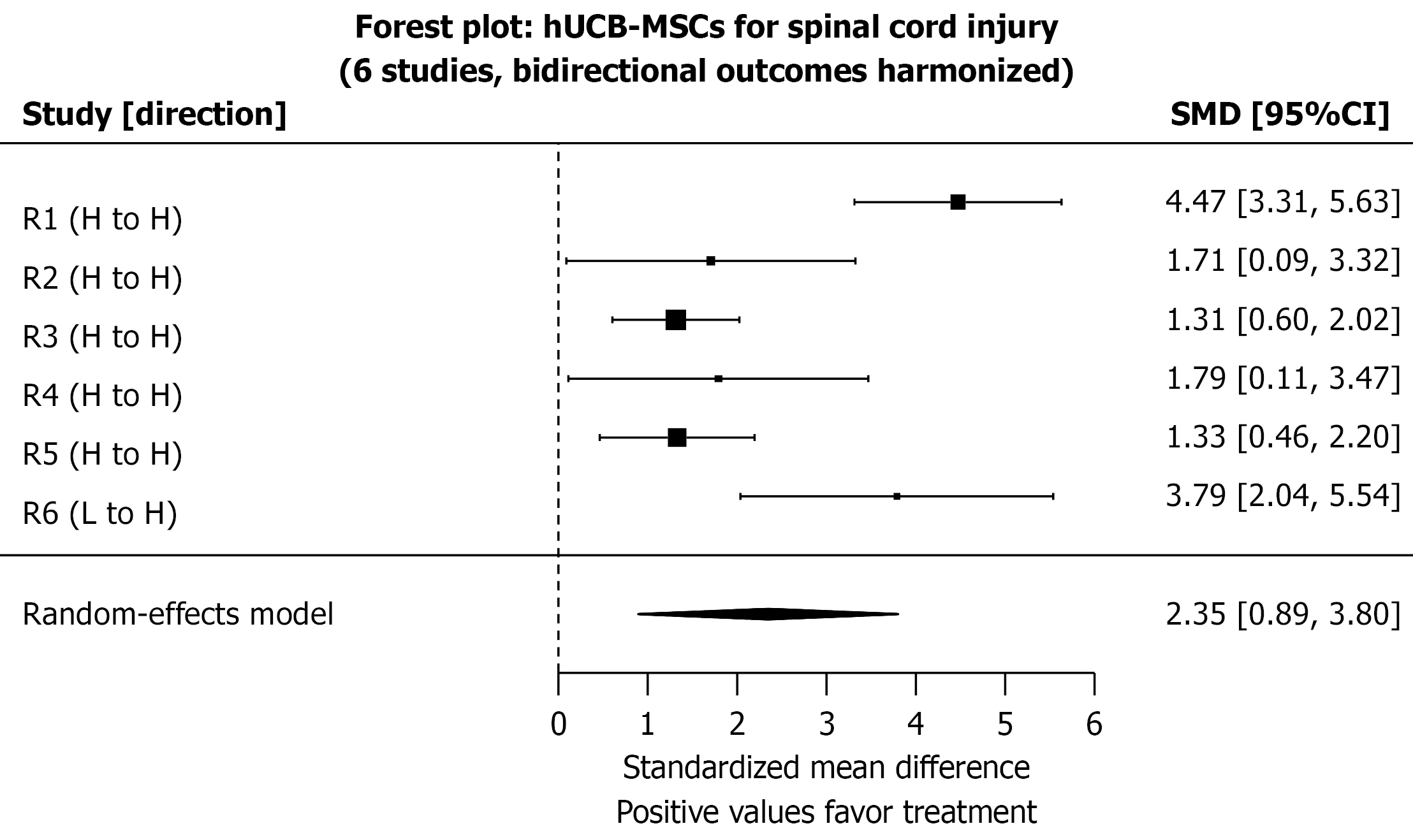
Figure 2 Forest plot of the primary meta-analysis evaluating the effect of human umbilical cord blood-derived mesenchymal stem cell transplantation on functional recovery in experimental spinal cord injury.
The plot displays the standardized mean difference (SMD) with 95% confidence intervals for each of the six included studies (R1-R6). All outcomes have been harmonized to the convention that higher values indicate better functional recovery. The size of each square represents the weight of the study in the random-effects model, with larger squares indicating greater weight. Horizontal lines represent 95% confidence intervals for individual studies. The diamond represents the pooled SMD (2.35, 95% confidence interval: 0.89-3.80). Substantial heterogeneity was observed (I2 = 81.8%, P < 0.001), indicating that while the average effect is positive, the true effect in a new study could range from possible harm to substantial benefit. The dashed vertical line at SMD = 0 indicates no effect. CI: Confidence interval; SMD: Standardized mean difference; hUCB-MSCs: Human umbilical cord blood-derived mesenchymal stem cells.
- Citation: Liao LQ, Liang RX, Ren ZX, Wang YY, Wei W, Li YS. Human umbilical cord blood-derived mesenchymal stem cell therapy in experimental spinal cord injury: A systematic review and meta-analysis. World J Stem Cells 2026; 18(10): 125423
- URL: https://www.wjgnet.com/1948-0210/full/v18/i10/125423.htm
- DOI: https://dx.doi.org/10.4252/wjsc.125423