
















Copyright: ©Author(s) 2026.
World J Stem Cells. Oct 26, 2026; 18(10): 119325
Published online Oct 26, 2026. doi: 10.4252/wjsc.119325
Published online Oct 26, 2026. doi: 10.4252/wjsc.119325
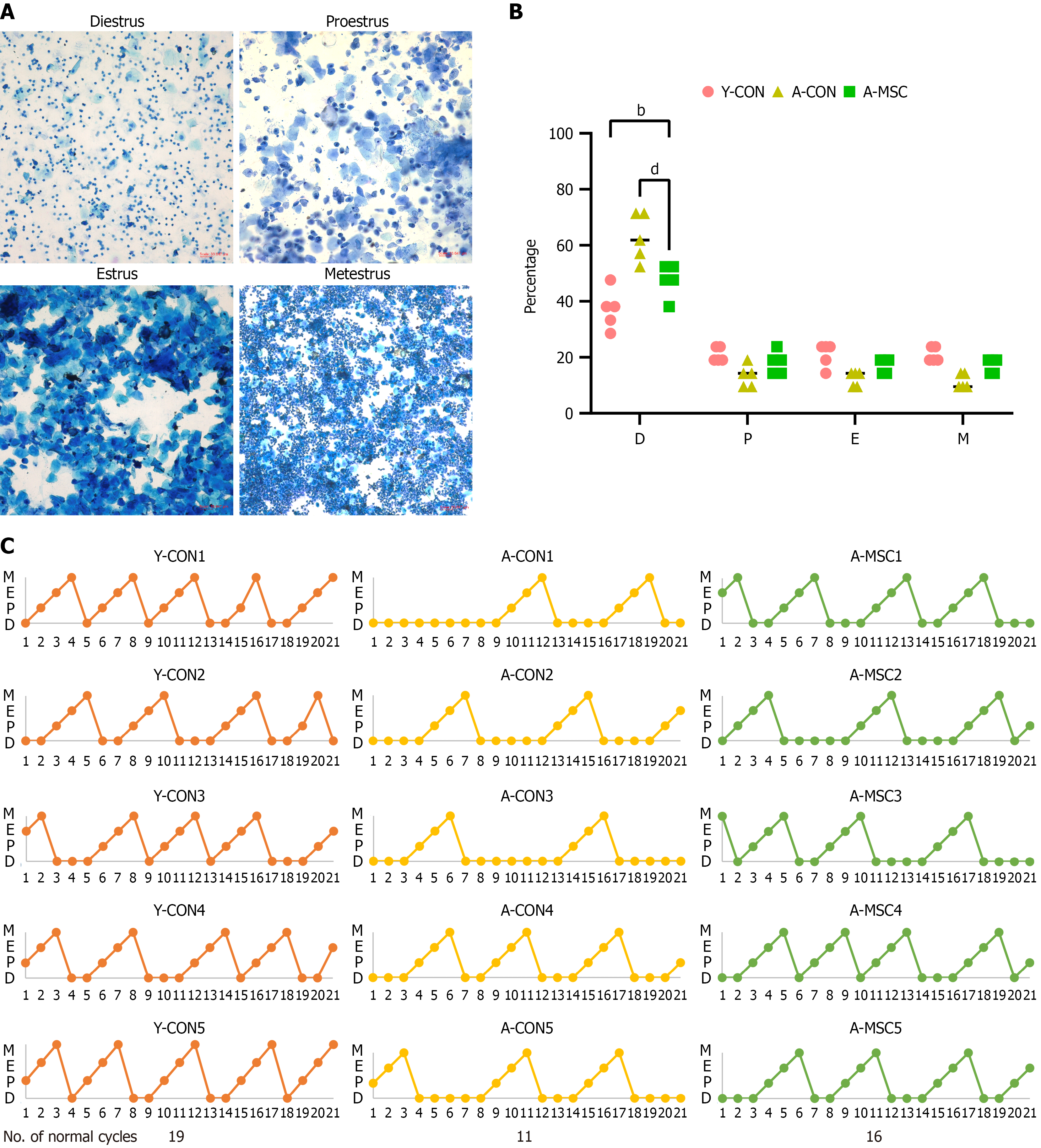
Figure 1 Umbilical cord-derived mesenchymal stem cell transplantation restores estrous cycle regularity in aged mice.
A: Representative cytological images of the four estrous cycle stages. Diestrus is characterized predominantly by the presence of leukocytes. Proestrus shows mainly nucleated epithelial cells, with a small number of cornified epithelial cells and few leukocytes. Estrus is dominated by large numbers of anucleated cornified epithelial cells. Metestrus exhibits small, densely stained leukocytes mixed with a small proportion of cornified cells. Scale bar = 33.647 μm; B: Proportional distribution of each estrous cycle stage among the different groups. Note the significant prolongation of diestrus in the aged control group and its reversal in the umbilical cord-derived mesenchymal stem cell (UCMSC) transplantation group; C: Estrous cycles recorded over the 21-day observation period. UCMSC transplantation increased the total number of normal cycles in aged mice. bP < 0.01, dP < 0.0001. Y-CON: Young control; A-CON: Aged control; A-MSC: Umbilical cord-derived mesenchymal stem cell transplantation.
- Citation: Zhang JN, Tian S, Guo XM, Zhang Q, Shang J, Yao YQ. Therapeutic potential of umbilical cord-derived mesenchymal stem cells in ameliorating ovarian aging: Insights from single-cell analysis. World J Stem Cells 2026; 18(10): 119325
- URL: https://www.wjgnet.com/1948-0210/full/v18/i10/119325.htm
- DOI: https://dx.doi.org/10.4252/wjsc.119325