
















©The Author(s) 2026.
World J Stem Cells. Jan 26, 2026; 18(1): 114119
Published online Jan 26, 2026. doi: 10.4252/wjsc.v18.i1.114119
Published online Jan 26, 2026. doi: 10.4252/wjsc.v18.i1.114119
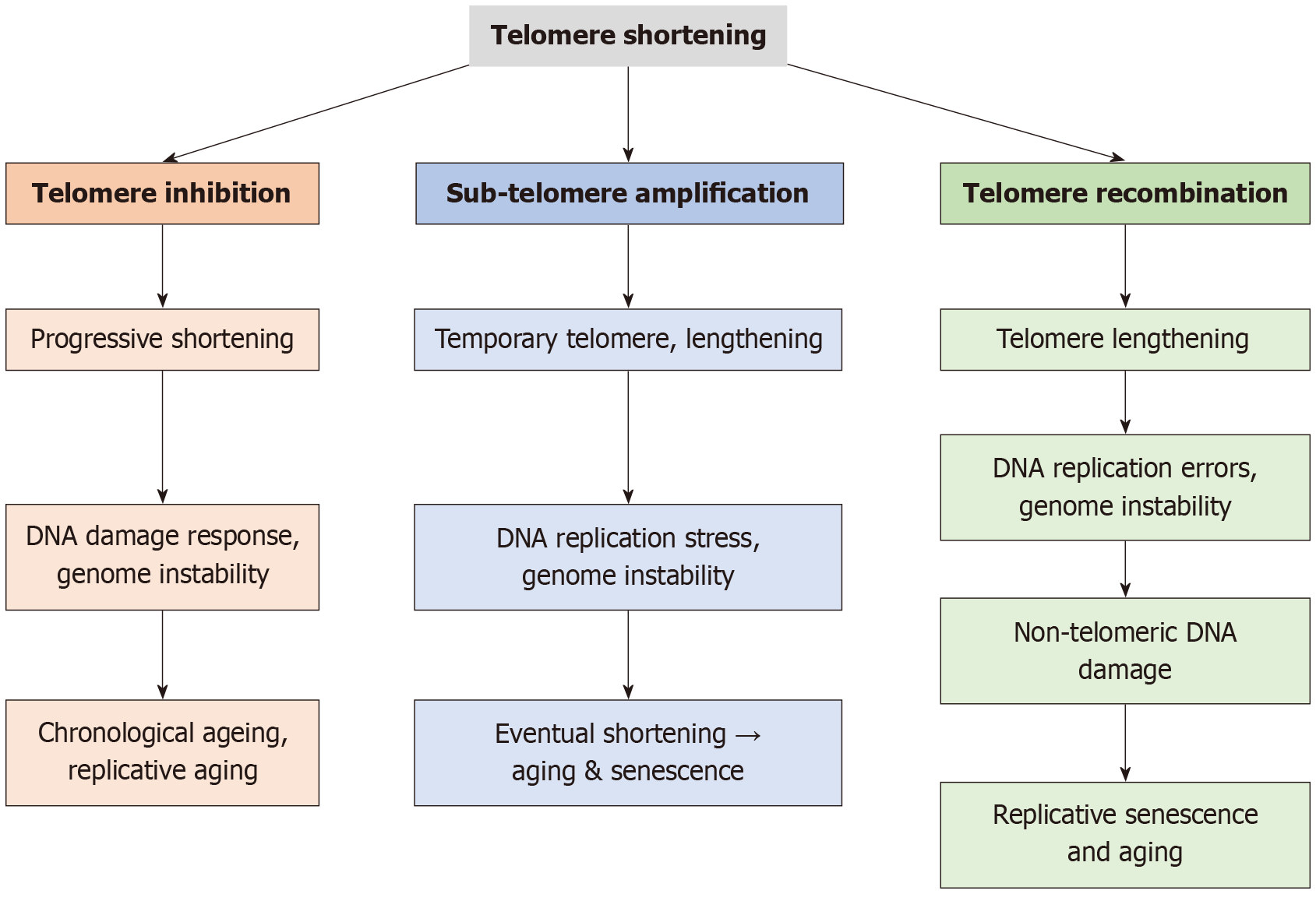
Figure 4 The cellular consequences of telomere shortening through three distinct pathways: Telomere inhibition, sub-telomere amp
- Citation: Choudhery MS, Arif T, Mahmood R. Aging puzzle: A closer look on the complex dilemma of autologous stem cell therapy. World J Stem Cells 2026; 18(1): 114119
- URL: https://www.wjgnet.com/1948-0210/full/v18/i1/114119.htm
- DOI: https://dx.doi.org/10.4252/wjsc.v18.i1.114119