
















©The Author(s) 2026.
World J Stem Cells. Jan 26, 2026; 18(1): 113614
Published online Jan 26, 2026. doi: 10.4252/wjsc.v18.i1.113614
Published online Jan 26, 2026. doi: 10.4252/wjsc.v18.i1.113614
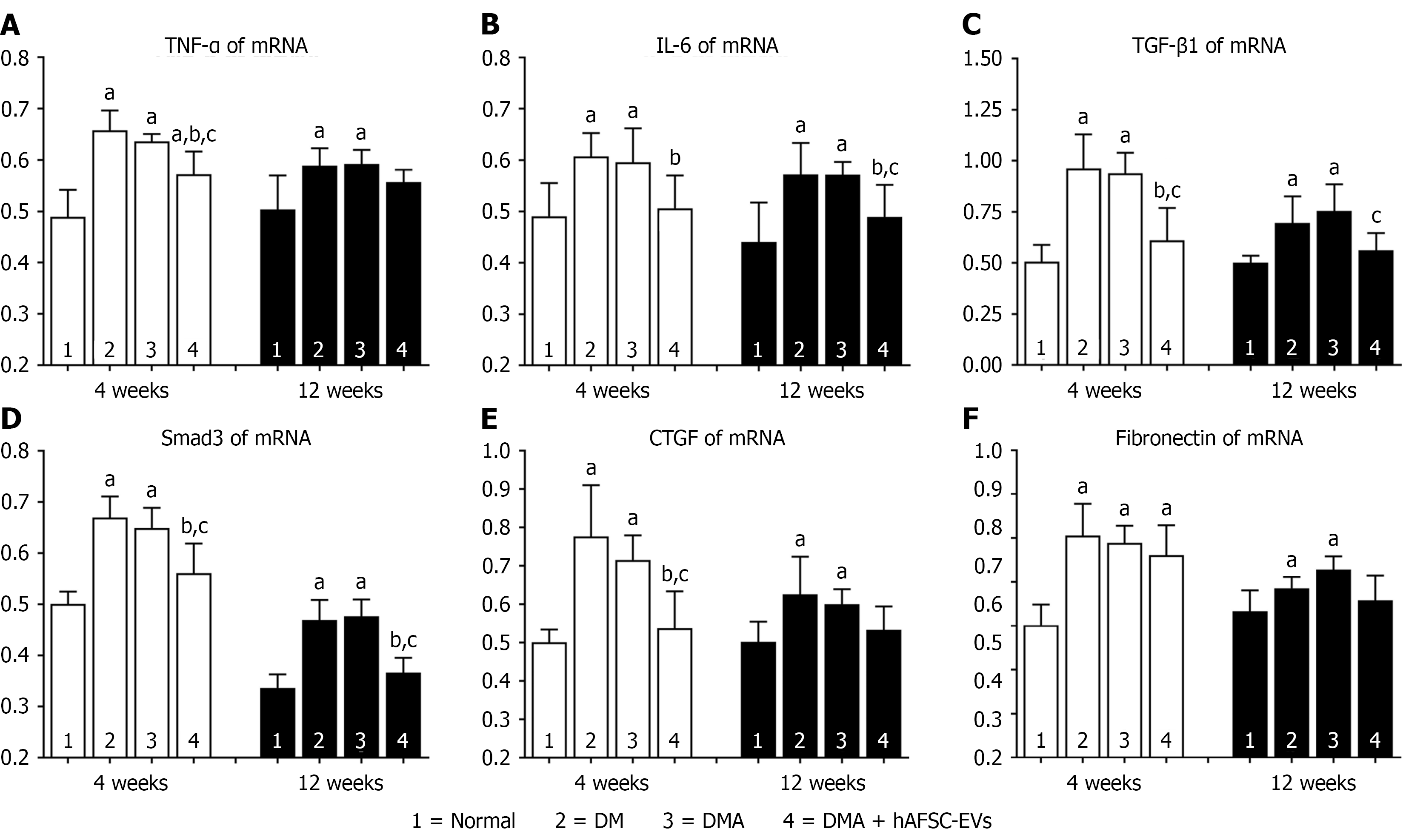
Figure 5 Relative mRNA expressions of tumor necrosis factor-α, interleukin-6, transforming growth factor-β1, Smad3, connective tissue growth factor, and fibronectin in the bladder of control and diabetic groups.
A-F: Compared with the control group, diabetes mellitus and diabetic atherosclerosis (DMA) bladders showed significant increases in the mRNA expression of tumor necrosis factor α (TNF-α), interleukin-6 (IL-6), transforming growth factor β1 (TGF-β1), Smad3, connective tissue growth factor (CTGF), and fibronectin at 4 weeks and 12 weeks after induction. Compared with the diabetes mellitus and DMA groups, the mRNA expression of TNF-α, TGF-β1, and CTGF in DMA rats treated with human amniotic fluid stem cell-derived extracellular vesicles were significantly decreased at 4 weeks after induction, while the mRNA expression of IL-6 and Smad3 were significantly decreased 12 weeks. aP < 0.05 vs normal control (4 weeks and 12 weeks), bP < 0.05 vs diabetes mellitus (4 weeks and 12 weeks), cP < 0.05 vs diabetic atherosclerosis (4 weeks and 12 weeks). TNF: Tumor necrosis factor; IL: Interleukin; TGF: Transforming growth factor; CTGF: Connective tissue growth factor; DM: Diabetes mellitus; DMA: Diabetic atherosclerosis; hAFSC-EVs: Human amniotic fluid stem cell-derived extracellular vesicles.
- Citation: Liang CC, Lin YH, Liang CY, Ro A, Huang YH, Shaw SW. Extracellular vesicles derived from human amniotic fluid stem cells improve bladder dysfunction in rat model of diabetic atherosclerosis. World J Stem Cells 2026; 18(1): 113614
- URL: https://www.wjgnet.com/1948-0210/full/v18/i1/113614.htm
- DOI: https://dx.doi.org/10.4252/wjsc.v18.i1.113614