
















©The Author(s) 2025.
World J Stem Cells. Dec 26, 2025; 17(12): 112207
Published online Dec 26, 2025. doi: 10.4252/wjsc.v17.i12.112207
Published online Dec 26, 2025. doi: 10.4252/wjsc.v17.i12.112207
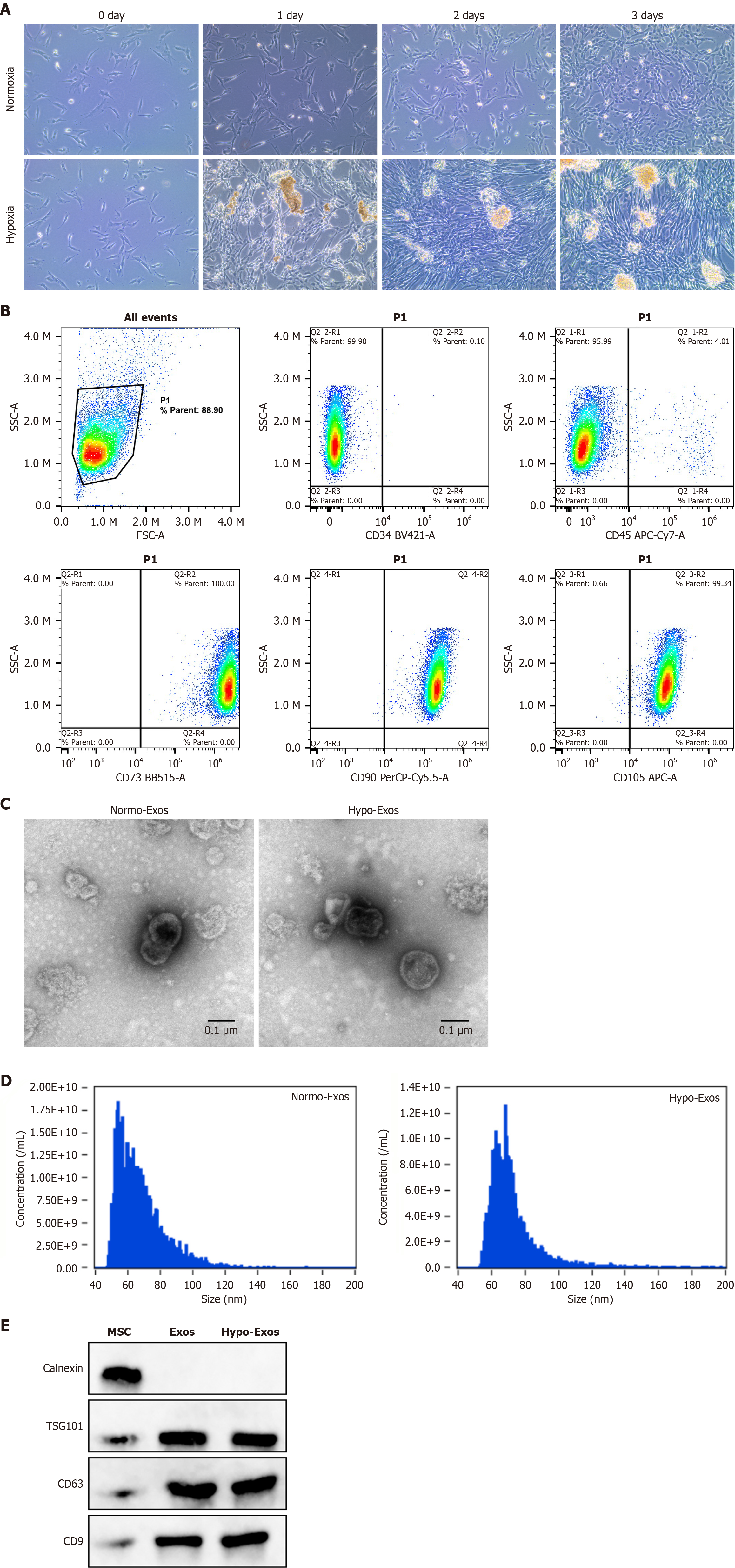
Figure 1 Identification of human umbilical cord-derived mesenchymal stem cells and characterization of exosomes.
A: Representative bright-field microscopy image of human umbilical cord-derived mesenchymal stem cells (HUC-MSCs); B: HUC-MSCs identification by flow cytometry phenotyping; C: Representative electron microscopy image of HUC-MSC-derived exosomes; D: Size distribution of exosomes (Exos) determined by nanoparticle tracking analysis; E: Western blot analysis of the surface markers of HUC-MSCs and exosomes. Hypo-Exos: Hypoxia-preconditioned mesenchymal stem cell-derived exosomes; Normo-Exos: Normoxic exosomes; TSG101: Tumor susceptibility gene 101.
- Citation: Zeng ZF, Rao J, Xia XB, Chen XY, He HX, Liu B, Chen Q, Liu YD, Wang GJ, Cheng PC, Wang JN, Wang P, Yu Y, Wang ZN. Hypoxic preconditioned mesenchymal stem cell-derived exosomes alleviate oxidative stress-induced cardiomyocyte apoptosis through miR-486-5p. World J Stem Cells 2025; 17(12): 112207
- URL: https://www.wjgnet.com/1948-0210/full/v17/i12/112207.htm
- DOI: https://dx.doi.org/10.4252/wjsc.v17.i12.112207