
















©The Author(s) 2025.
World J Stem Cells. Dec 26, 2025; 17(12): 110564
Published online Dec 26, 2025. doi: 10.4252/wjsc.v17.i12.110564
Published online Dec 26, 2025. doi: 10.4252/wjsc.v17.i12.110564
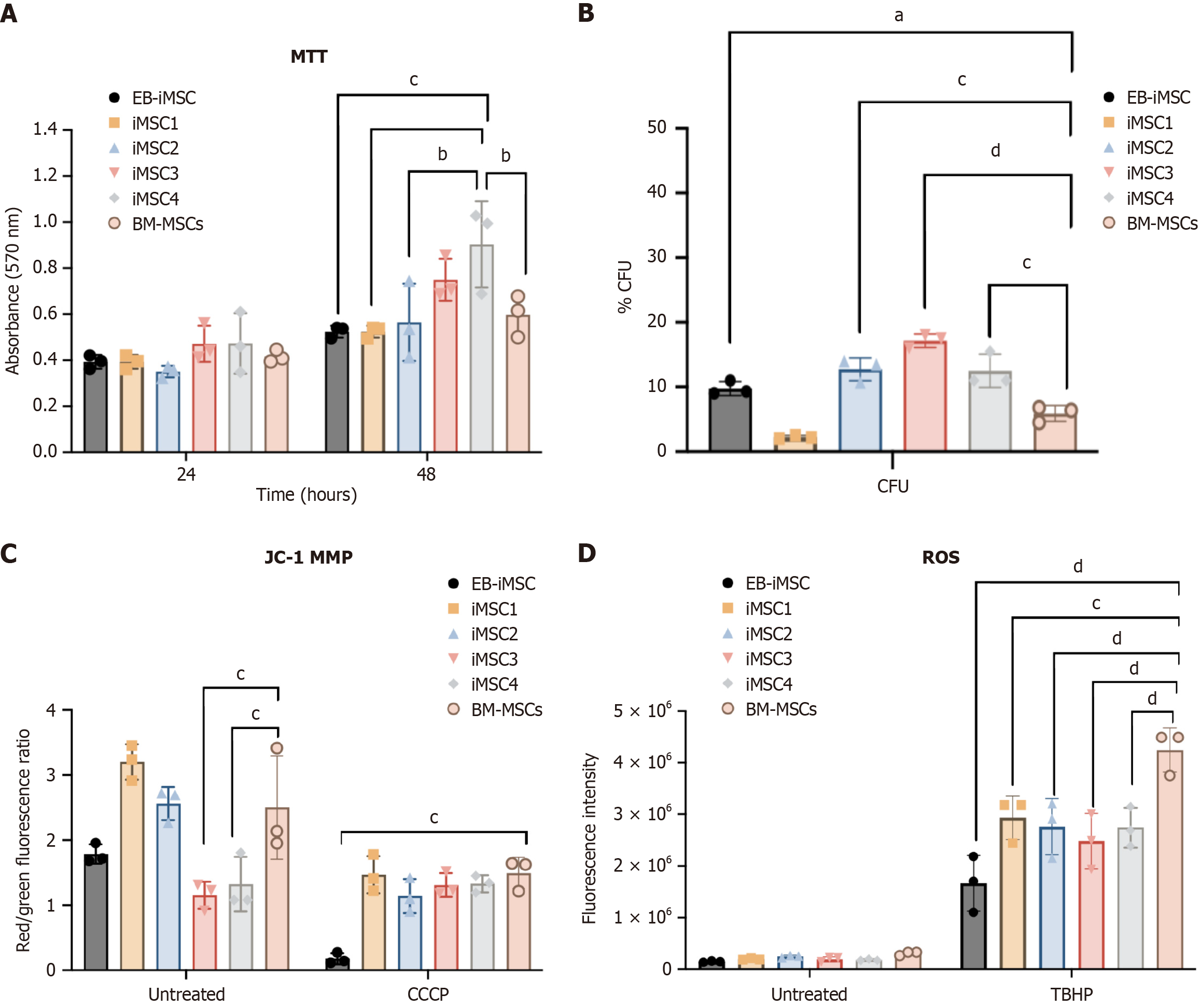
Figure 4 Analysis of cell viability, mitochondrial membrane potential, and intracellular reactive oxygen species cellular for induced pluripotent stem cells-derived mesenchymal stem cell lines.
A: Absorbance results of MTT assay showing viable cell numbers in induced pluripotent stem cells-derived mesenchymal stem cell (iMSC) lines compared to bone marrow mesenchymal stem cells at 24 hours and 48 hours after cell seeding; B: Percentage of colony-forming units among iMSC lines compared to bone marrow mesenchymal stem cells (control); C: Red/green fluorescence ratio indicating mitochondrial membrane potential in untreated and carbonyl cyanide 3-chlorophenylhydrazone-treated iMSC samples; D: Fluorescent intensities of total reactive oxygen species production in iMSC lines. Tert-butyl hydroperoxide was used as a positive control to induce reactive oxygen species production. bP ≤ 0.01; cP ≤ 0.001; dP ≤ 0.0001. BM-MSCs: Bone marrow mesenchymal stem cells; EB-iMSCs: Embryoid body-induced pluripotent stem cells-derived mesenchymal stem cells; iMSC: Induced pluripotent stem cells-derived mesenchymal stem cell; CFUs: Colony-forming units; MMP: Mitochondrial membrane potential; CCCP: Carbonyl cyanide 3-chlorophenylhydrazone; TBHP: Tert-butyl hydroperoxide; ROS: Reactive oxygen species.
- Citation: Ababneh NA, Alwohoush E, AlDiqs R, Ismail MA, Al-Kurdi B, Barham R, Al-Atoom R, Nairat F, Al Hadidi S, Whaibi S, Gharandouq MH, Zalloum S, Al Shboul S, Al-Qaisi T, Abuhammad A, Saleh T, Awidi A. Impact of differentiation protocols on the functionality of mesenchymal stem cells derived from induced pluripotent stem cells. World J Stem Cells 2025; 17(12): 110564
- URL: https://www.wjgnet.com/1948-0210/full/v17/i12/110564.htm
- DOI: https://dx.doi.org/10.4252/wjsc.v17.i12.110564