
















©The Author(s) 2025.
World J Stem Cells. Nov 26, 2025; 17(11): 112393
Published online Nov 26, 2025. doi: 10.4252/wjsc.v17.i11.112393
Published online Nov 26, 2025. doi: 10.4252/wjsc.v17.i11.112393
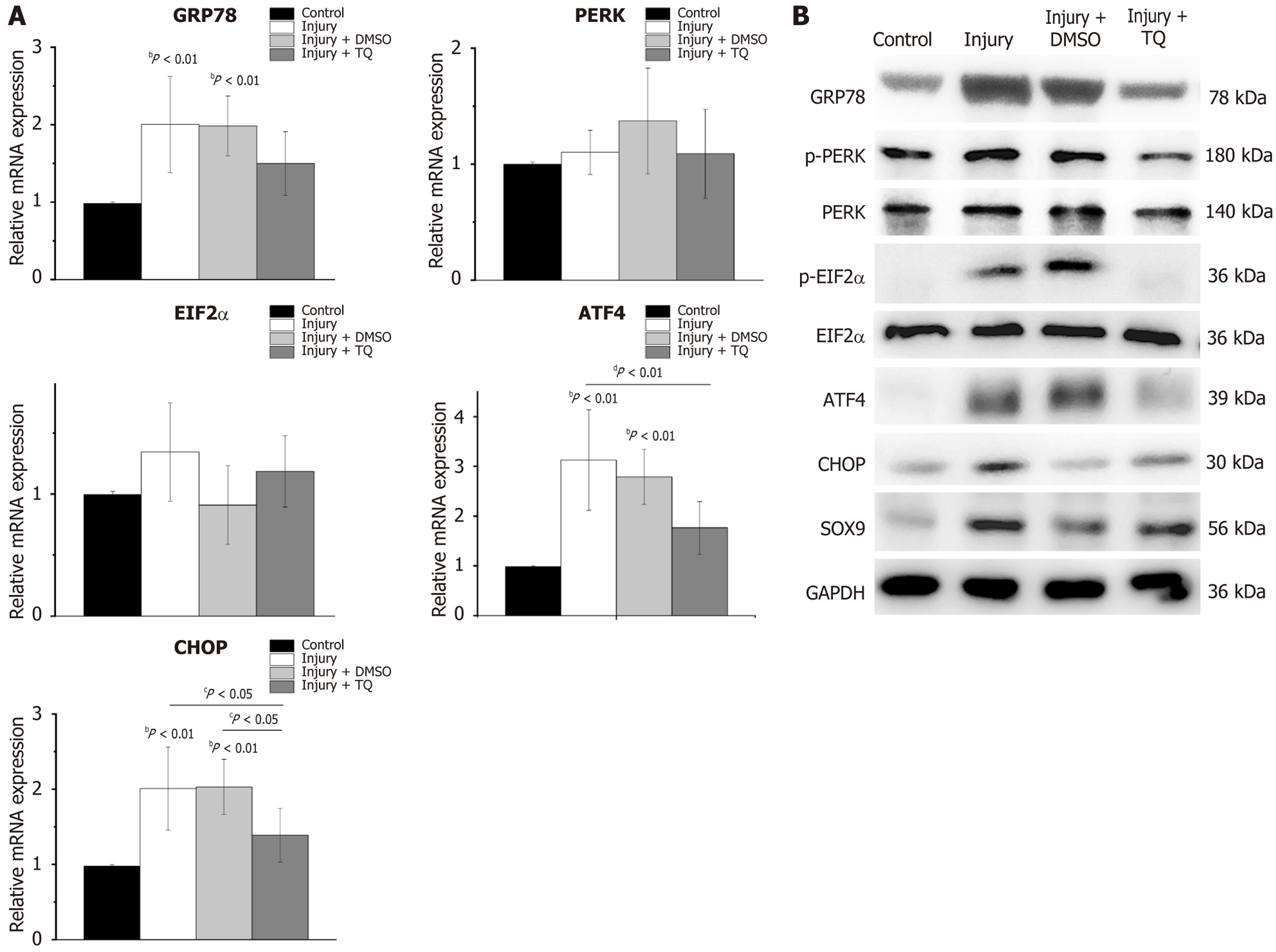
Figure 6 Thymoquinone mitigated endoplasmic reticulum stress in injured rat tendons.
A: Reverse transcription-quantitative polymerase chain reaction analysis of the expression levels of endoplasmic reticulum stress-related markers, including glucose-regulated protein 78, protein kinase RNA-like endoplasmic reticulum kinase, eukaryotic initiation factor 2α, activating transcription factor 4, and CCAAT/enhancer-binding protein homologous protein. bP < 0.01, compared to the control group; cP < 0.05, comparisons between the experimental groups; dP < 0.01, comparisons between the experimental group; B: Western blot analyses evaluating the protein expression of glucose-regulated protein 78, SOX9, and components of the protein kinase RNA-like endoplasmic reticulum kinase/eukaryotic initiation factor 2α/activating transcription factor 4/CCAAT/enhancer-binding protein homologous protein signaling pathway. The control group refers to tendons from rats maintained under standard cage activity conditions; the injury group refers to tendons from rats subjected to treadmill running without subsequent treatment; the injury + dimethyl sulfoxide group refers to tendons from rats subjected to treadmill running that subsequently received injections of saline solution containing dimethyl sulfoxide; the injury + thymoquinone group refers to tendons from rats subjected to treadmill running that subsequently received injections of thymoquinone. DMSO: Dimethyl sulfoxide; TQ: Thymoquinone; GRP78: Glucose-regulated protein 78; PERK: Protein kinase RNA-like endoplasmic reticulum kinase; EIF2α: Eukaryotic initiation factor 2α; ATF4: Activating transcription factor 4; CHOP: CCAAT/enhancer-binding protein homologous protein.
- Citation: Tu YJ, Liu YQ, Pan YY, Cai HY, Liu C. Thymoquinone inhibited the chondrogenic differentiation of tendon-derived stem cells caused by tendon injury. World J Stem Cells 2025; 17(11): 112393
- URL: https://www.wjgnet.com/1948-0210/full/v17/i11/112393.htm
- DOI: https://dx.doi.org/10.4252/wjsc.v17.i11.112393