
















©The Author(s) 2025.
World J Stem Cells. Oct 26, 2025; 17(10): 110190
Published online Oct 26, 2025. doi: 10.4252/wjsc.v17.i10.110190
Published online Oct 26, 2025. doi: 10.4252/wjsc.v17.i10.110190
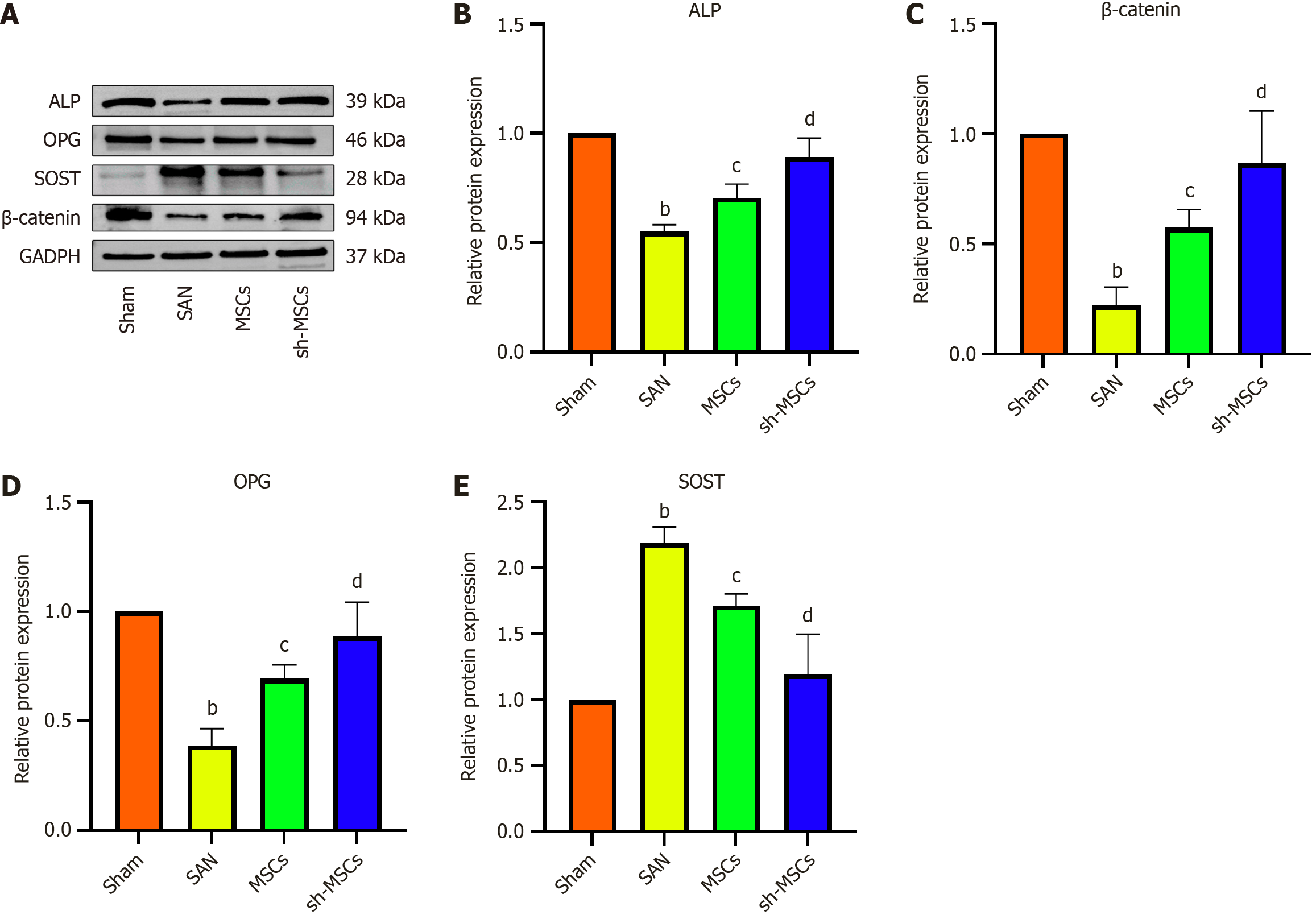
Figure 8 Effect of sclerostin inhibitor-silenced human umbilical cord mesenchymal stem cells on the expression of bone metabolic factors in the bone marrow of mice with steroid-induced avascular necrosis of the femoral head.
A: Western bolt original picture; B-D: The expression level of alkaline phosphatase, β-catenin and osteoprotegerin were the lowest in the SAN group, the highest in the sham group, and the expression level of alkaline phosphatase, β-catenin and osteoprotegerin in the sh-MSCs group was less than that in the MSCs group; E: The expression level of sclerostin was the lowest in the sham group, the highest in the SAN group, and the expression level of sclerostin in the sh-MSCs group was less than that in the MSCs group. Data represent mean ± SEM from three independent experiments. bP < 0.01 vs sham; cP < 0.05 vs SAN; dP < 0.01 vs SAN. ALP: Alkaline phosphatase; OPG: Osteoprotegerin; SOST: Sclerostin; GADPH: Glyceraldehyde-3-phosphate dehydrogenase.
- Citation: Lv H, Zheng CF, Chen XY, Wei JH, Tao YZ, Feng L, Feng Z, Lu SJ. Sclerostin-silenced human umbilical cord mesenchymal stem cells ameliorate bone metabolism in steroid-induced femoral head necrosis. World J Stem Cells 2025; 17(10): 110190
- URL: https://www.wjgnet.com/1948-0210/full/v17/i10/110190.htm
- DOI: https://dx.doi.org/10.4252/wjsc.v17.i10.110190