
















©The Author(s) 2025.
World J Stem Cells. Oct 26, 2025; 17(10): 110190
Published online Oct 26, 2025. doi: 10.4252/wjsc.v17.i10.110190
Published online Oct 26, 2025. doi: 10.4252/wjsc.v17.i10.110190
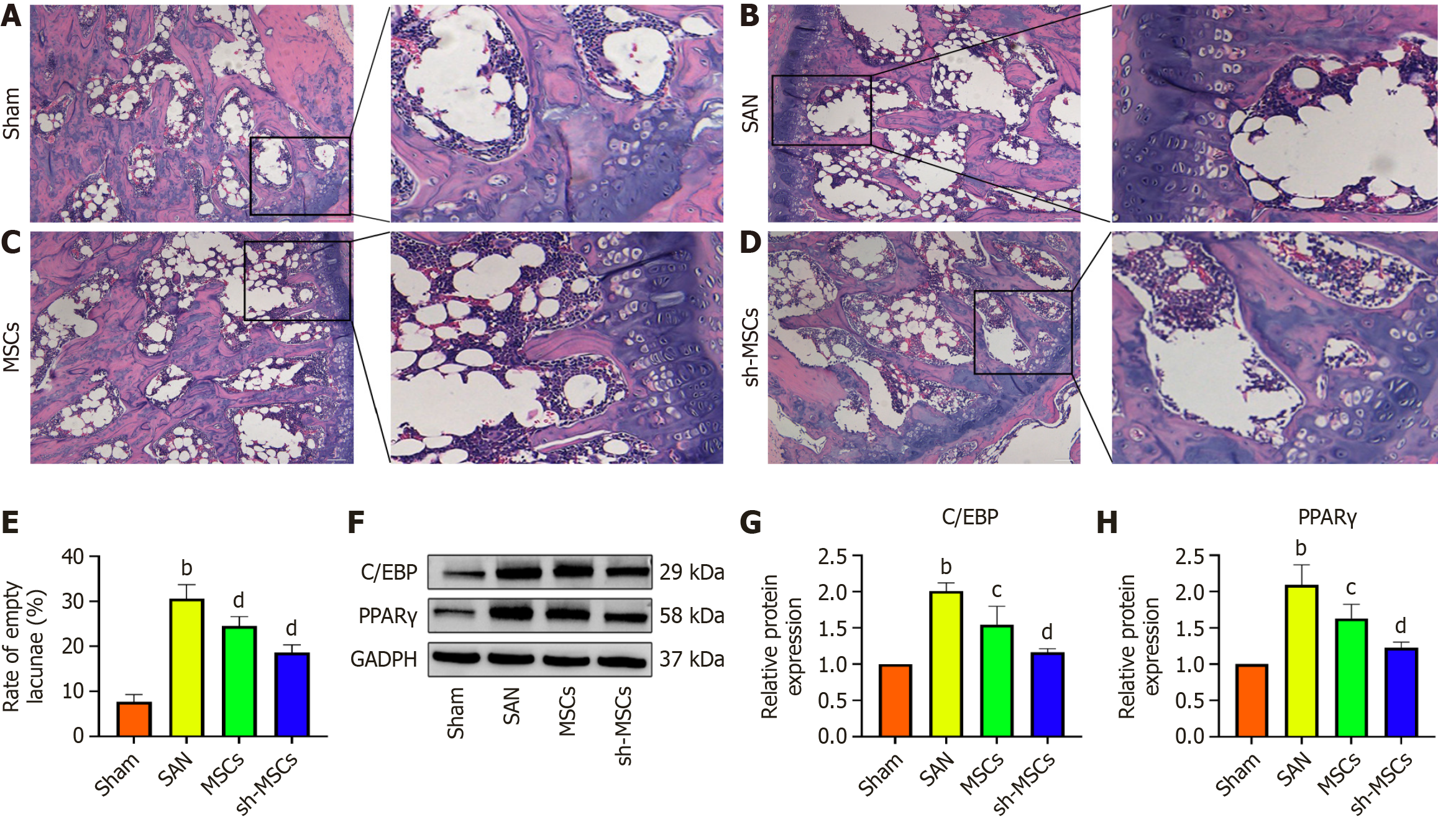
Figure 4 Sclerostin inhibitor-silenced human umbilical cord mesenchymal stem cells can inhibit the formation of adipose tissue in mice with steroid-induced avascular necrosis of the femoral head.
Histological and molecular analysis of femoral heads. A-D: Hematoxylin and eosin staining of: Sham, SAN + NS, SAN + hUCMSCs (MSCs), and SAN + SOSTi-hUCMSCs (sh-MSCs) groups; E: Quantification of empty bone pits; F: Representative western blot; G and H: Protein expression of CCAAT/enhancer-binding protein (G) and peroxisome proliferator-activated receptor gamma (H), showing lowest levels in sham, highest in SAN, with sh-MSCs < MSCs < SAN. Statistical comparisons: aP < 0.05, bP < 0.01 vs sham; cP < 0.05, dP < 0.01 vs SAN. C/EBP: CCAAT/enhancer-binding proteins; PPARγ: Peroxisome proliferator-activated receptor γ. Data represent mean ± SEM from three independent experiments.
- Citation: Lv H, Zheng CF, Chen XY, Wei JH, Tao YZ, Feng L, Feng Z, Lu SJ. Sclerostin-silenced human umbilical cord mesenchymal stem cells ameliorate bone metabolism in steroid-induced femoral head necrosis. World J Stem Cells 2025; 17(10): 110190
- URL: https://www.wjgnet.com/1948-0210/full/v17/i10/110190.htm
- DOI: https://dx.doi.org/10.4252/wjsc.v17.i10.110190