
















Copyright: ©Author(s) 2026.
World J Gastroenterol. Jan 14, 2027; 33(2): 125931
Published online Jan 14, 2027. doi: 10.3748/wjg.125931
Published online Jan 14, 2027. doi: 10.3748/wjg.125931
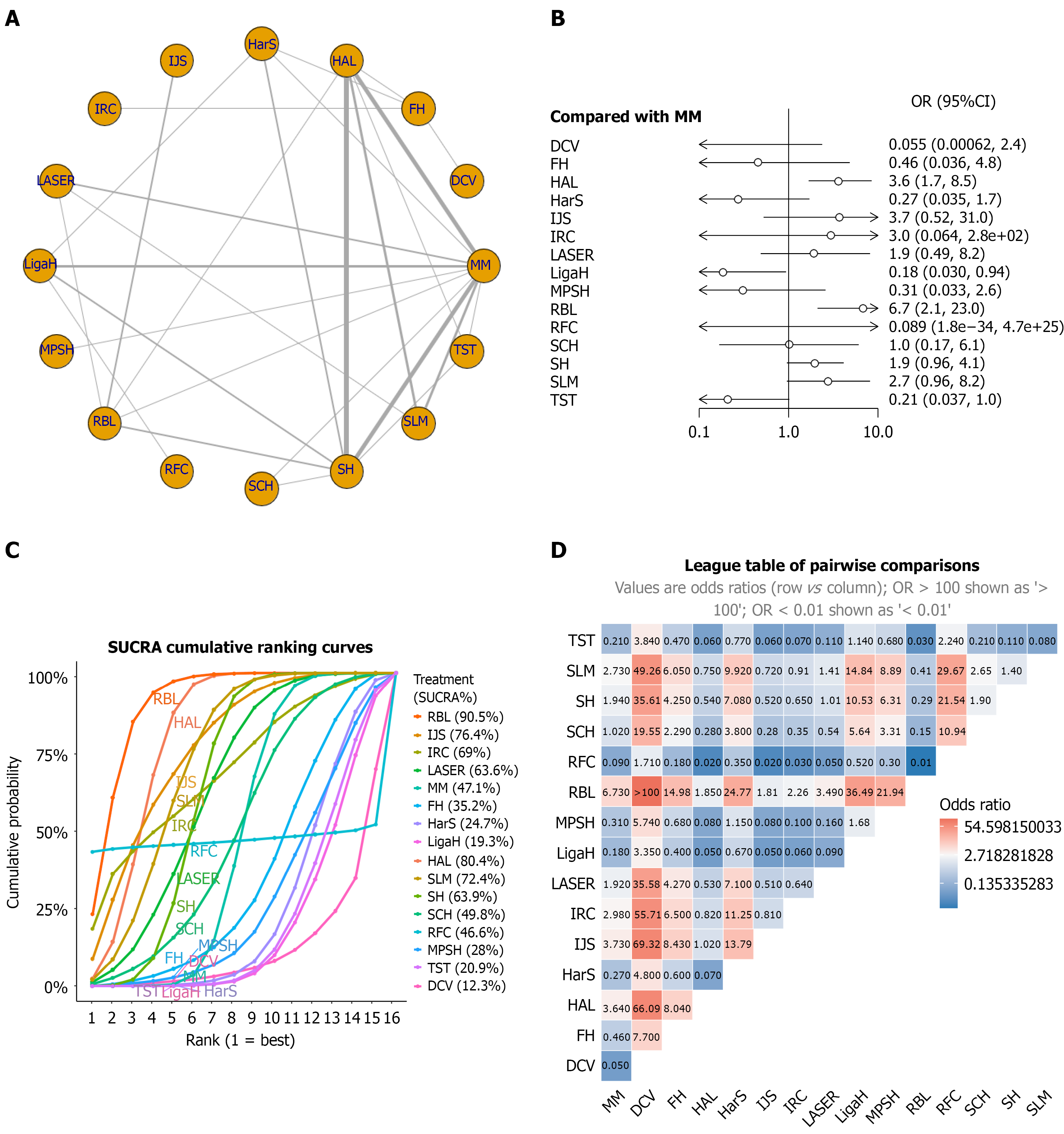
Figure 3 Network meta-analysis results for recurrence.
A: Network geometry of the evidence for recurrence, with node size proportional to the number of patients and edge width proportional to the number of direct comparisons; B: Forest plot of odds ratios for recurrence, with Milligan–Morgan hemorrhoidectomy as the reference; C: Surface under the cumulative ranking curve values for recurrence (higher values indicate a greater probability of being the most recurrence-prone intervention); D: League table of pairwise comparisons, showing odds ratios and 95% credible intervals for recurrence. 95%CI: 95% credible interval; DCV: Direct current electrotherapy; FH: Ferguson hemorrhoidectomy; HAL: Hemorrhoidal artery ligation; HarS: Harmonic scalpel hemorrhoidectomy; IJS: Injection sclerotherapy; IRC: Infrared coagulation; LASER: Laser hemorrhoidectomy; LigaH: LigaSure™ hemorrhoidectomy; MM: Milligan–Morgan hemorrhoidectomy; MPSH: Modified Park’s submucosal hemorrhoidectomy; OR: Odds ratio; RBL: Rubber band ligation; RFC: Radiofrequency coagulation; SCH: Semi-closed hemorrhoidectomy; SH: Stapled hemorrhoidopexy; SLM: Suture ligation with mucopexy; TST: Tissue-selecting technique.
- Citation: Chen B, Xiong XR, Zhang ZG, Chen QQ. Comparison of efficacy and safety of different treatment modalities for hemorrhoids: A network meta-analysis. World J Gastroenterol 2027; 33(2): 125931
- URL: https://www.wjgnet.com/1007-9327/full/v33/i2/125931.htm
- DOI: https://dx.doi.org/10.3748/wjg.125931