
















Copyright: ©Author(s) 2026.
World J Gastroenterol. Jan 14, 2027; 33(2): 125855
Published online Jan 14, 2027. doi: 10.3748/wjg.125855
Published online Jan 14, 2027. doi: 10.3748/wjg.125855
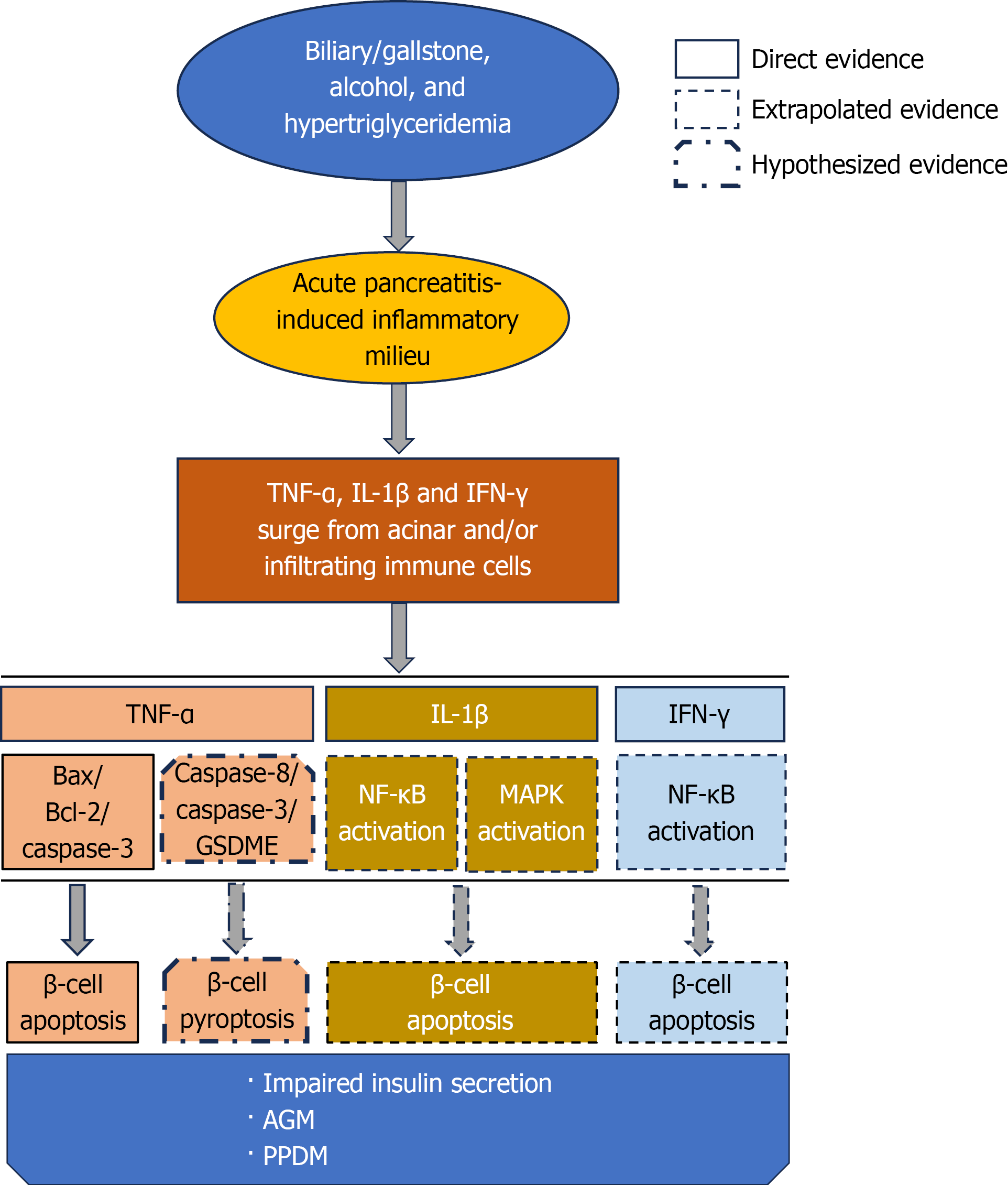
Figure 1 Proposed conceptual model of inflammatory cytokine-mediated β-cell stress during acute pancreatitis.
Etiological factors such as biliary/gallstone, alcohol, and hypertriglyceridemia can lead to trypsinogen activation, thereby inducing acute pancreatitis (AP). AP induces a strong inflammatory milieu that triggers the release of substantial amounts of inflammatory cytokines from acinar cells and/or infiltrating immune cells, including tumor necrosis factor-α (TNF-α), interleukin (IL)-1β, and interferon-γ (IFN-γ). TNF-α can induce pancreatic islet β-cell death through the Bax/Bcl-2/caspase-3 apoptosis pathway and/or the hypothetical caspase-8/caspase-3/GSDME pyroptosis pathway (extrapolated from non-β-cells or β cells under non-AP conditions and not yet validated in AP-related β-cell injury). IL-1β is hypothesized to induce β-cell apoptosis through activation of nuclear factor kappa B (NF-κB) and/or MAPK signaling pathways. IFN-γ is hypothesized to induce β-cell apoptosis through activation of NF-κB. Damage to β cells induced by multiple inflammatory cytokines ultimately results in reduced insulin secretion, leading to abnormal glucose metabolism and increasing the risk of post-pancreatitis diabetes mellitus. Solid lines and arrows indicate direct evidence, dashed lines and arrows indicate extrapolated evidence, and dash-dot lines and arrows indicate hypothetical evidence. MAPK: Mitogen-activated protein kinase; AGM: Abnormal glucose metabolism; PPDM: Post-pancreatitis diabetes mellitus; GSDME: Gasdermin E.
- Citation: Chen HF, Wang TT, Li WP. Letter to the Editor: Tumor necrosis factor-α-mediated β-cell death in acute pancreatitis-addressing etiology, cytokine crosstalk, and pyroptosis. World J Gastroenterol 2027; 33(2): 125855
- URL: https://www.wjgnet.com/1007-9327/full/v33/i2/125855.htm
- DOI: https://dx.doi.org/10.3748/wjg.125855