
















Copyright: ©Author(s) 2027.
World J Gastroenterol. Jan 7, 2027; 33(1): 123681
Published online Jan 7, 2027. doi: 10.3748/wjg.123681
Published online Jan 7, 2027. doi: 10.3748/wjg.123681
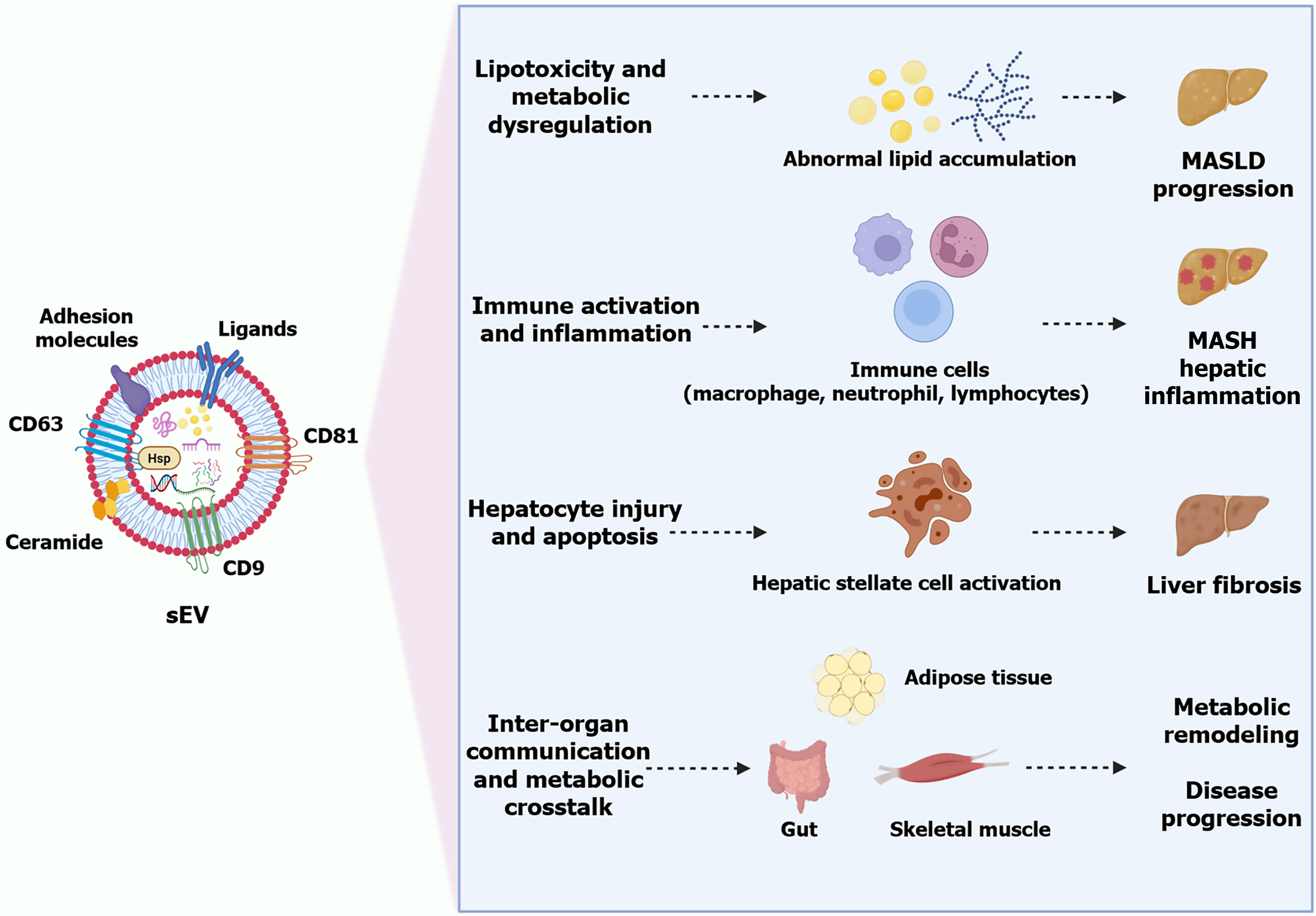
Figure 2 Conceptual schematic of pathological roles of small extracellular vesicles in metabolic dysfunction-associated steatotic liver disease progression.
Small extracellular vesicle-mediated signaling contributes to major pathological processes in metabolic dysfunction-associated steatotic liver disease, including lipotoxicity and metabolic dysregulation, immune activation and inflammation, hepatocyte injury and apoptosis, fibrogenic remodeling, and inter-organ metabolic crosstalk. These processes are associated with abnormal lipid accumulation, activation of hepatic immune cells and hepatic stellate cells, and metabolic communication involving the gut, adipose tissue, and skeletal muscle, collectively contributing to metabolic dysfunction-associated steatohepatitis, liver fibrosis, metabolic remodeling, and disease progression. The depicted mechanisms are primarily supported by preclinical and experimental evidence. MASLD: Metabolic dysfunction-associated steatotic liver disease; MASH: Metabolic dysfunction-associated steatohepatitis; sEV: Small extracellular vesicle.
- Citation: Ding LL, Liu H, Yu Y, Liu XC, Zhang SQ, Qian H, Hao DL. Small extracellular vesicles as liquid biopsy targets and precision therapeutics for metabolic dysfunction-associated steatotic liver disease. World J Gastroenterol 2027; 33(1): 123681
- URL: https://www.wjgnet.com/1007-9327/full/v33/i1/123681.htm
- DOI: https://dx.doi.org/10.3748/wjg.123681