
















Copyright: ©Author(s) 2027.
World J Gastroenterol. Jan 7, 2027; 33(1): 123490
Published online Jan 7, 2027. doi: 10.3748/wjg.123490
Published online Jan 7, 2027. doi: 10.3748/wjg.123490
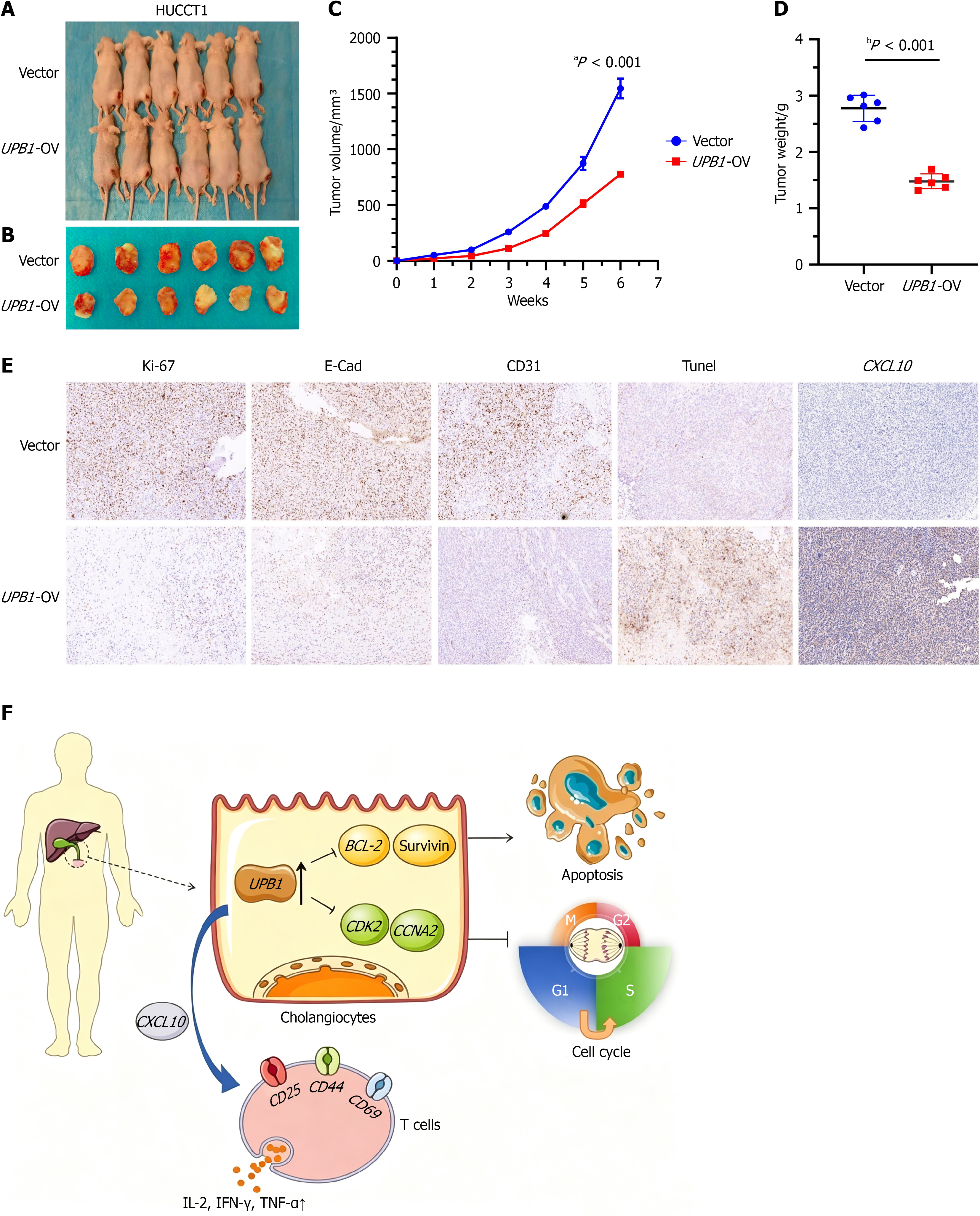
Figure 7 The overexpression of UPB1 moderately inhibits tumor growth in vivo.
A and B: BALB/c-nudes (n = 6 per group) were sacrificed 6 weeks after the injection and tumors dissected from respective groups were shown; C: Tumor growth curves after the injection of HUCCT1/UPB1-over-expression (OV) and control cells. Tumor volume was calculated every week; D: Tumor weight was measured in UPB1-OV and control groups; E: Immunohistochemistry staining of Ki67, E-Cadherin, TUNEL, cluster of differentiation 34, and CXCL10 in tumors from UPB1-OV and control groups; F: A schematic diagram integrated findings from in vitro and in vivo experiments, for a novel regulatory mechanism that UPB1 induced apoptosis by BCL-2/BIRC5 axis, caused G1/S phase arrest through CDK2/CCNA2 pathway and also contributed to tumor immune infiltration by enhancing T-cell activation and promoting the release of immune factors in cholangiocarcinoma. Scale bars: 200 μm. OV: Over-expression; CD: Cluster of differentiation; E-Cad: E-Cadherin; IL: Interleukin; IFN: Interferon; TNF: Tumor necrosis factor.
- Citation: Sun ZH, Zeng BC, Sun J, Li BL, Ma ZY. Identification of UPB1 as a tumor suppressor associated with immune infiltration in cholangiocarcinoma. World J Gastroenterol 2027; 33(1): 123490
- URL: https://www.wjgnet.com/1007-9327/full/v33/i1/123490.htm
- DOI: https://dx.doi.org/10.3748/wjg.123490